
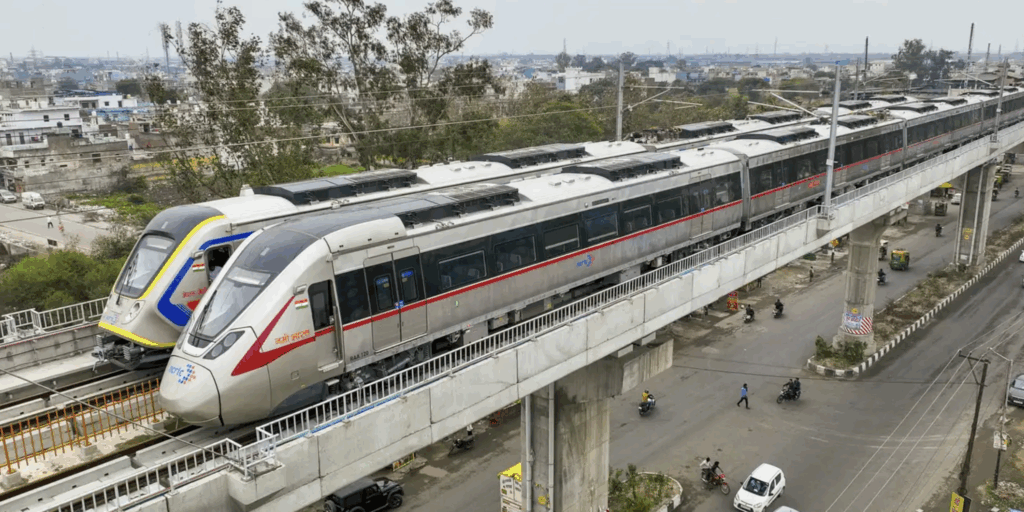

India is about to witness a major leap in urban mobility with the launch of what is poised to become the fastest metro system in the country — the 120 Km Per Hour, 3 Coaches: India To Get Fastest Metro System In Meerut. The project, inaugurated by Prime Minister Narendra Modiwill introduce a metro service operating at a maximum speed of around 120 km/h — significantly faster than conventional metro systems in India.
High Speed Meets Metro Comfort
Unlike typical metro trains that max out at about 80–100 km/hthe new Meerut Metro raises the bar with a top operational speed of 120 km/hmaking it the fastest metro service in India upon launch. The metro is part of the broader Delhi-Meerut Regional Rapid Transit System (RRTS) corridor and runs on shared infrastructure with the advanced Namo Bharat semi-high-speed system.
This integration allows not just faster travel speeds but also seamless connection between urban transit and longer intercity travel. The metro stretch from Meerut South to Modipuram covers around 21 km with all scheduled station stops included, promising commuters a 30-minute end-to-end journey.
Sleek 3-Coach Trains for Modern Commuters
The new metro trains consist of three coaches — compact yet highly efficient transit units that carry passengers in comfort even at high speeds. Designed with modern amenities and engineered for both agility and safety, these trains mark a shift toward faster, more reliable urban rail transport in India.
These train sets also feature elements that make them stand out:
- Estimations suggest a design speed up to 135 km/hthough they will operate at 120 km/h in service.
- The coaches are built for energy efficiency and passenger comfort.
- The system leverages advanced signalling to support high-speed operations.
Impact on Daily Mobility and the Region
The introduction of this high-speed metro will reshape the daily commute for thousands of people in the Uttar Pradesh NCR regionoffering an efficient alternative to road traffic and significantly reducing travel times. By linking regional and metropolitan transit systems, the project aims to catalyse economic activity, connectivity, and urban development along the corridor.
Image Source

Comments are closed.