
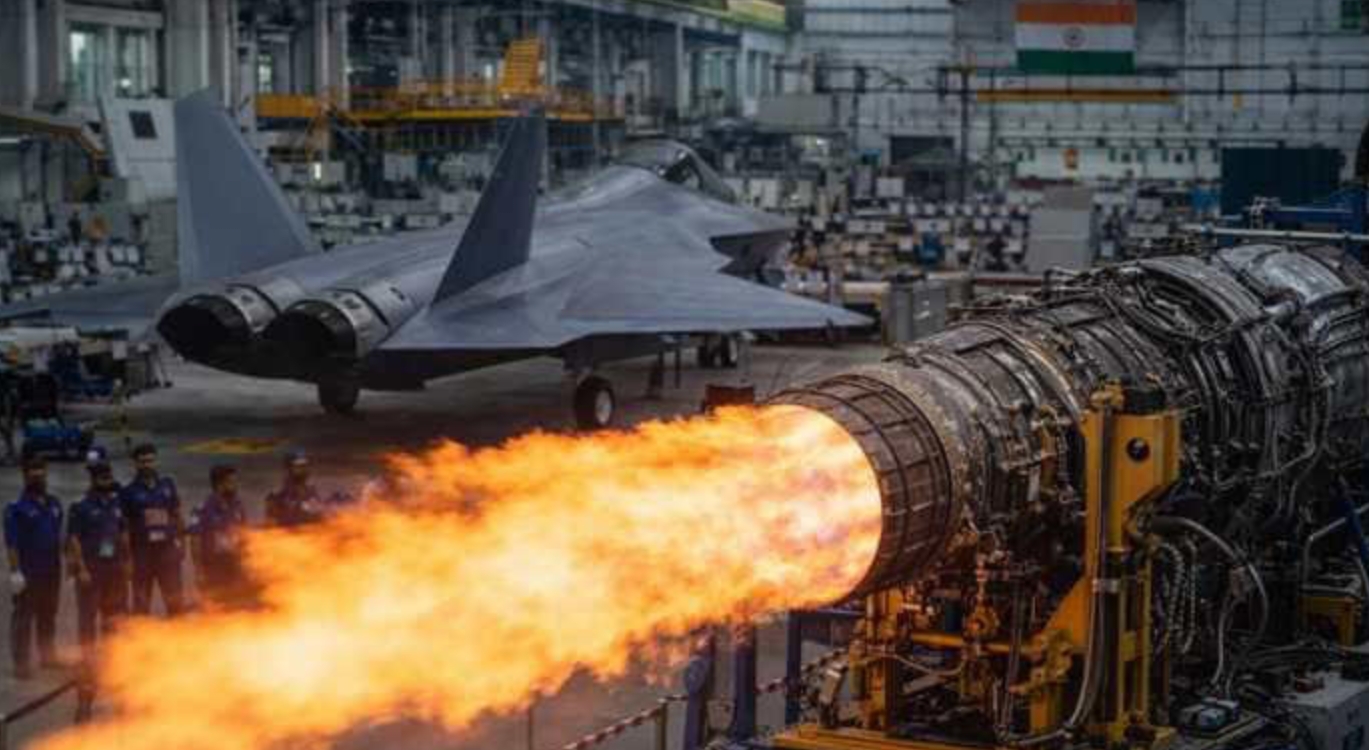

The ongoing capability gap with neighbors like China aptly reflects India’s rapidly growing efforts for indigenous fighter jet engines amid the recent Rafale procurement and the **Advanced Medium Combat Aircraft (AMCA)** programme.
– **Rafale Deals**: In February 2026, India’s Defense Acquisition Council approved proposals including 114 Rafale jets for the Indian Air Force (MRFA programme) and additional Rafale Marines for the Navy (in addition to the earlier 26-jet deal). Reports confirm initial approval for these multi-billion-dollar purchases to address squadron shortages, although final contracts are pending.
– **Kaveri Engine**: DRDO Chairman Sameer V. Kamat had said in early February 2026 that Kaveri gives 72 kN thrust but is less than the 83-85 kN requirement of LCA Tejas, making it not true to its original form. Derivatives (dry variants) are reused for components such as Unmanned Combat Aerial Vehicles.
– **AMCA and Engine Partnership**: AMCA, which is India’s fifth generation stealth fighter, requires high-thrust engines (110-140 kN class). India is pursuing co-development with **Safran** of France through DRDO’s Gas Turbine Research Establishment (GTRE). The partnership entails 100% technology transfer, pan-India IP rights, a clean-sheet design (initially scalable from 110-120 kN to 140 kN), and a ~$7 billion, 12-year timeline targeting prototyping by 2028-2032. Its purpose is to power the AMCA Mk2 and naval variants. – **Rolls-Royce Partnership**: The UK firm has offered to co-develop a next generation (probably 120 kN-class) combat engine core, with full ToT and IP rights, for future platforms including AMCA. Conversations are focused on 6th generation propulsion elements (e.g., advanced materials, AI integration), although Safran appears to be the frontrunner for a primary 5th generation engine.
– **Statement by Rajnath Singh**: During his visit to GTRE in Bengaluru on February 16, 2026, Defense Minister Rajnath Singh appealed for reducing the typical 25-year engine development timeline to 5-7 years (considering that “20 years have already been lost”), and called it a strategic challenge for self-reliance by ~2030-2032. He stressed on immediately starting the sixth generation work including AI, ML and new materials under the National Aero Engine Mission.
Supported by government funding and private sector participation (e.g., Tata, L&T, Adani in the AMCA prototype), these efforts demonstrate progress in reducing foreign dependence. Although the initial AMCA phase may use imported engines (e.g., GE F414), the jointly developed indigenous option targets self-sufficiency by the 2040s.

Comments are closed.