
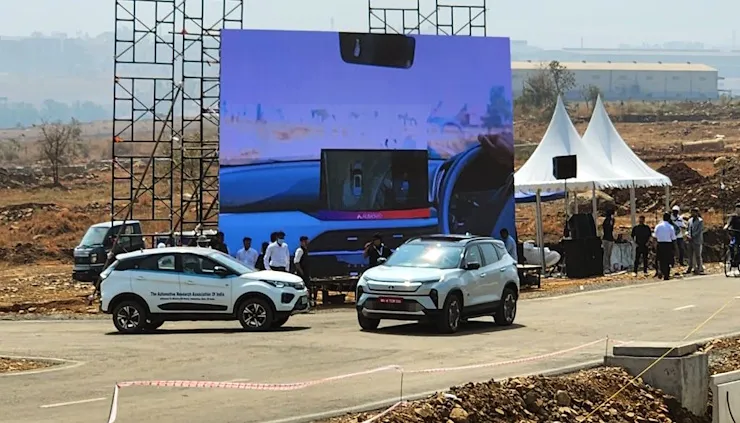

The country now has its first dedicated ADAS test city, and it is already changing how car safety tech will be validated before it reaches public roads. ARAI has started operations at its ADAS Test City in Takwe, near Talegaon in Pune, with an investment of Rs 200 crore across a 20-acre site.
That number matters because this is not a small proving ground. It is a full pseudo-urban environment built specifically to mirror local traffic behaviour, road layouts, and unpredictable real-world conditions that global test templates often miss.
This launch comes at a time when crash numbers are still uncomfortably high. In 2023, the country recorded 4,80,583 road crashes, 1,72,890 fatalities, and 4,62,825 injuries. Over-speeding alone accounted for more than two-thirds of total crashes and deaths.
Two-wheeler users made up 44.8 percent of fatalities, and pedestrians were 20.4 percent. Those are not abstract statistics. They show why basic passive safety alone is not enough, and why reliable active safety systems like automatic emergency braking, lane support, and driver monitoring need serious local validation before large-scale rollout.
A facility built around local traffic reality
Most ADAS systems sold globally are first tuned for orderly lane discipline, predictable merges, and rule-following traffic flows. That is not what most daily commutes look like here. The Takwe facility is designed to close exactly that gap between simulation and actual public-road behaviour.
ARAI has said the site supports repeatable and controlled testing for functions including adaptive cruise control, automatic emergency braking, lane departure warning, blind spot detection, traffic sign recognition, driver monitoring, pedestrian detection, traffic jam assist, and automated parking.
The practical value here is consistency. When a feature fails on public roads, engineers often struggle to reproduce the same condition. A controlled city-format track allows faster debugging, calibration, and re-testing under repeatable conditions.
There is another big operational signal from the launch: ARAI has already indicated strong demand from companies and pressure on slot allocation, with phase-two expansion likely to be accelerated. That tells you the ecosystem is not treating this as a showcase project. Carmakers and tech suppliers are lining up because homologation and calibration lead times directly affect launch schedules.
ADAS demand is rising, but the quality question is now central
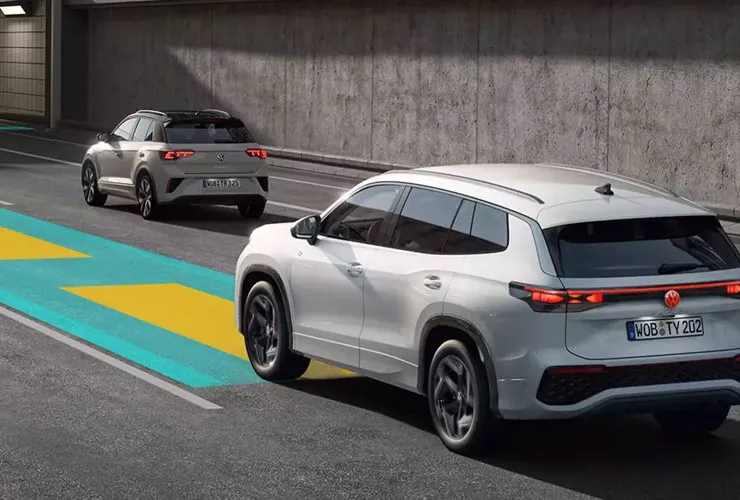
ADAS fitment is no longer confined to the top end. Market studies show penetration has risen sharply, including in lower price bands where these features were rare just a couple of years ago.
That creates a new challenge. As ADAS moves into higher-volume models, tolerance for false alarms, missed detection, or jerky interventions drops drastically. Early adopters may tolerate quirks. Mass buyers will not.
This is where the Takwe facility can have outsized impact. It gives OEMs, tier-one suppliers, and local start-ups a shared infrastructure to test city-edge scenarios before software updates and feature packs go public. It can also reduce dependence on overseas validation cycles that do not map neatly to local operating conditions.
For start-ups working on perception stacks, fusion logic, and edge-case mapping, access to a certified local track can lower entry barriers. Building private infrastructure at this scale is capital-heavy and unrealistic for most early-stage players. A common proving ground can improve speed, interoperability, and certification readiness.
What changes

No single test city can solve road safety by itself. Enforcement, road design, rider protection, and emergency response still remain core pillars. But ADAS validation quality is a missing piece that has now been addressed in a serious way.
For automakers, this means fewer excuses for poorly tuned safety assists in local conditions. For suppliers, it means a clearer path from prototype to production. For buyers, it should mean better-calibrated systems over time, especially as ADAS becomes more common below premium segments.
The bigger point is simple. If active safety is going mainstream, testing standards must mainstream with it. A dedicated ADAS city does exactly that. It converts safety talk into measurable engineering work, and that is the only kind of progress that eventually lowers crash numbers.

Comments are closed.