
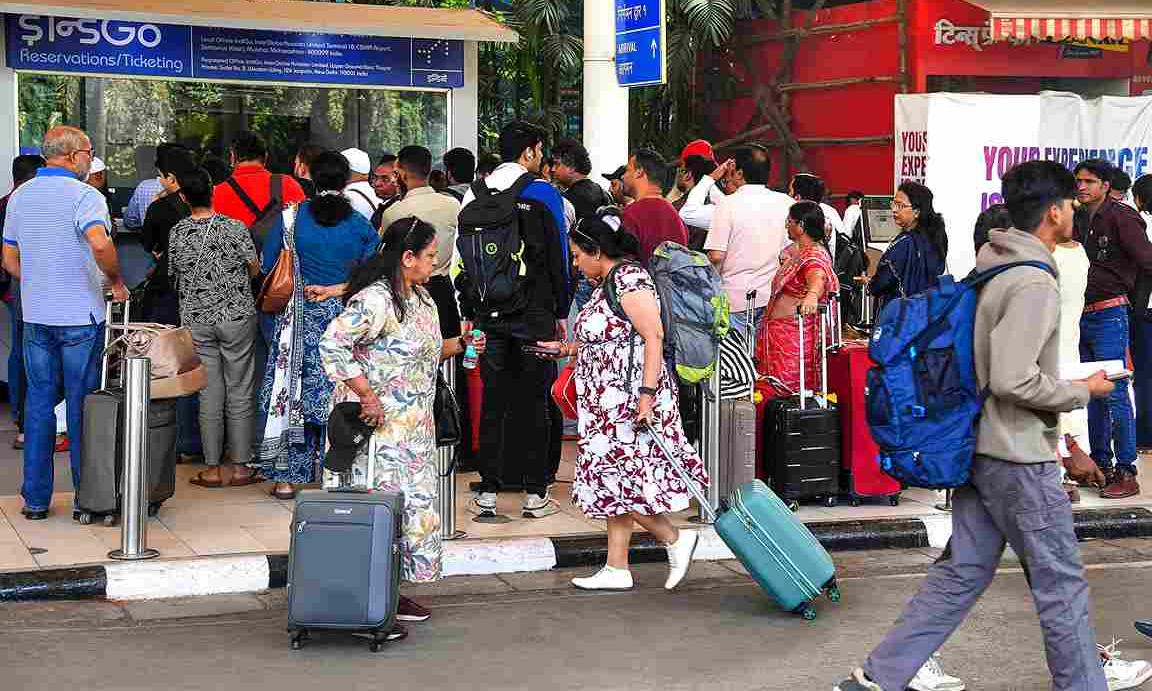

Aviation watchdog DGCA has set up a four-member committee to carry out a comprehensive review and assessment of the circumstances that led to the massive flight disruptions.
The panel members are Joint Director General Sanjay K Bramhane, Deputy Director General Amit Gupta, Senior Flight Operations Inspector Captain Kapil Manglik and Flight Operations Inspector Captain Rampal, as per an order on Friday (December 5).
Earlier in the day, the Directorate General of Civil Aviation (DGCA) rolled back a key fatigue-protection rule and took the unprecedented step of asking its own Flight Operations Inspectors (FOIs) to operate IndiGo aircraft—moves that have stunned pilots’ unions and raised nationwide conflict-of-interest questions. This triggereding a storm of protest from pilots’ unions and raising questions over conflict of interest in the middle of a nationwide flight meltdown.
The aviation regulator issued a fresh circular revising an instruction it had itself laid down earlier this year on crew rest. The earlier order stated that “no leave shall be substituted for weekly rest”— ring-fencing one day off in seven that airlines could not merge with casual leave while rostering pilots and cabin crew under India’s new FDTL (Flight Duty Time Limitations) regime.
Also read: IndiGo crisis escalates with suspension of all departing Delhi flights till midnight
FDTL is the scientific fatigue-management framework that decides maximum flying hours, night-duty limits, and mandatory rest.
Roster flexibility
Citing “ongoing operational disruptions” and airline representations about the need to maintain “continuity and stability”, the new DGCA circular withdraws this line entirely – “with immediate effect”. In practice, the rollback restores airlines’ flexibility to stretch rosters, a loophole that pilot bodies say was deliberately removed to curb chronic fatigue in Indian cockpits.
India needs an aviation ecosystem driven by competence and public interest, not monopolistic policies and improvised exemptions: Karthikeya Sivasenapathy, chairman of Tamil Nadu’s Non-Resident Tamils Welfare Board.
The timing is explosive. IndiGo, India’s largest airline, has cancelled or delayed more than 500 flights over two days as it struggles with acute crew shortages during the fog-season schedule and peak holiday demand.
Terminals are overcrowded, thousands of passengers are stranded, and fares on rival airlines have shot up overnight.
Inspectors in cockpit
Even as it eased rest rules, the DGCA has gone further: it has directed its own FOIs, who are career pilots hired to audit airlines and enforce safety norms, to temporarily operate IndiGo flights.
FOIs are normally barred from flying commercially during their 5-year DGCA tenure to avoid conflict of interest.
Pilots said this is unheard of. “A regulator working to ensure the smooth operations of an airline? To ensure its profits?” asked a senior pilot.
In a break from that firewall, inspectors qualified on IndiGo aircraft types have been asked to step in as operating crew. Critics said the optics are “unmistakable”— a regulator rewriting safety margins while simultaneously lending its own staff to a private airline under severe reputation and schedule pressure.
Also read: IndiGo chaos deepens as pilot-fatigue crisis and lean-manning strategy collide
In a separate “Appeal from DGCA” issued the same day, director general Faiz Ahmed Kidwai framed these moves against the backdrop of IndiGo-triggered nationwide disruptions. He warned that winter fog, heavy seasonal travel and “operational constraints” have placed the sector under “significant strain”.
He appealed for “full cooperation” from pilots to keep operations stable. The DGCA, he insisted, remains “committed to safety and implementation of FDTL CAR in letter and spirit”.
‘Selective relief’
Pilot unions do not buy the reasoning. The Airline Pilots’ Association of India (ALPA India) has issued a blistering, two-page letter accusing the DGCA of granting “selective and unsafe dispensations” to IndiGo under Phase II of the revised FDTL CAR.
The union recounted a November 24 meeting at which it said the DGCA had explicitly assured that no operator would receive any dispensation or variation during Phase II, especially not those motivated by commercial pressure.
Yet IndiGo, ALPA said, has been given special relaxations even though Phase II already provides transitional buffers to help airlines adapt.
The letter warned that by permitting IndiGo to stretch night duties and weaken weekly-rest protections, the DGCA has “destroyed regulatory parity”, compromised scientific fatigue barriers and exposed “millions of passengers to heightened risk”.
Biggest flashpoint
The biggest flashpoint is the decision to place DGCA inspectors in IndiGo cockpits.
ALPA India argued that a safety regulation that can be bypassed to accommodate one operator’s staffing issues “cannot be considered a safety regulation at all”. Selective exemptions, it warned, create a dangerous precedent in which rules become negotiable depending on an airline’s commercial needs.
Also read: IndiGo flies into more trouble as over 300 flights cancelled across India
By blurring the line between regulator and regulated, ALPA said, the DGCA risks eroding public trust in its neutrality. The union has demanded an immediate withdrawal of all relaxations given to IndiGo and asked that the revised CAR be applied “without exemptions or variations” across every airline.
‘Systemic collapse’
More than 550 IndiGo flights have been cancelled in two days, leaving airports jammed and passengers stranded without information, assistance or basic amenities.
“This is not merely an operational lapse, but a systemic collapse,” said Karthikeya Sivasenapathy, chairman of Tamil Nadu’s Non-Resident Tamils Welfare Board. He cites failures in regulation, preparedness, and ministerial oversight. He argued that India needs an aviation ecosystem “driven by competence and public interest, not monopolistic policies and improvised exemptions”.
For now, the DGCA maintained that its actions balance safety with service continuity during an exceptional crisis. But its own letters revealed the extent to which IndiGo’s shortcomings have shaped national aviation policy, from weakening fatigue norms to deploying the country’s safety inspectors into the airline’s cockpits.
Pilots, however, warned that flying deeper into winter on longer duty hours and borrowed inspectors is a gamble that puts both aviation workers and passengers at risk.

Comments are closed.