
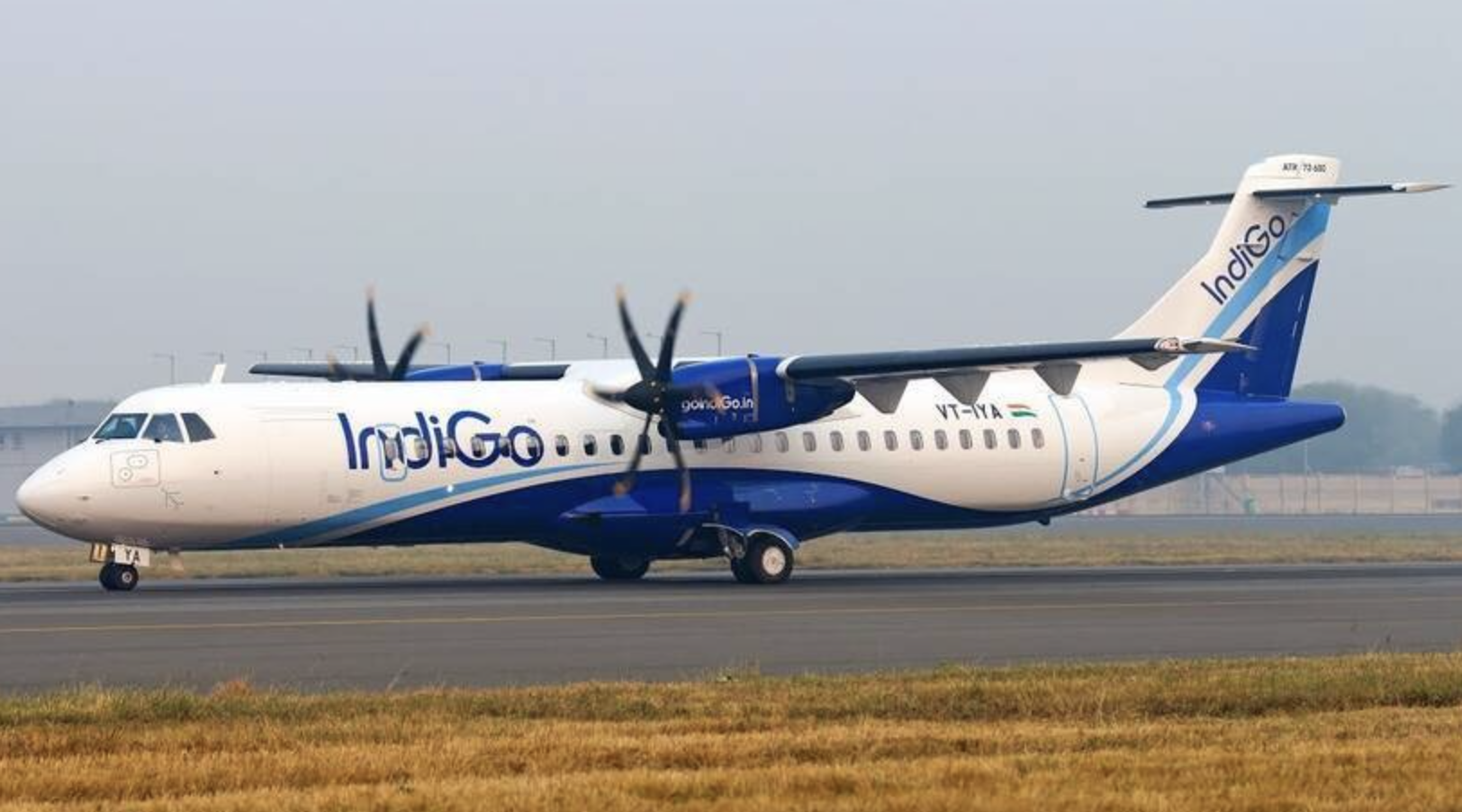

India’s largest airline, IndiGo is about to go on a hiring spree, as the flyer is planning to bring over 1,000 pilots on board.
IndiGo Stepping Up Expansion After December Crew Crunch
This is a positive way forward as this news comes after the aviation giant faced massive operational disruption last December. During that time, the company was forced to cancel more than 5,000 flights within seven days.
Now coming to this hiring requirement, they will take fresh intake which will span trainee first officers, senior first officers and commanders.
Besides this, the carrier is also ready to accept applicants without time on the Airbus A320, the workhorse aircraft across its network, as per the recruitment notice.
Please note that the number of landings permitted between 12 am and 6 am has been limited, while the mandatory weekly rest period for pilots has gone up under the updated framework.
It appears that the airline had neither hired in line with the new rules nor accelerated its training capacity, as concluded by a review carried out by the Directorate General of Civil Aviation.
Moving ahead, this resulted in pilots being stretched through repeated reassignments, lengthier duty spans and greater use of deadheading, in which crew are moved as passengers to operate flights elsewhere, the probe noted.
Creating More Breathing Space
But now it has changed as IndiGo is lining up a steady supply of cockpit crew to keep pace with rapid aircraft additions, said a senior official.
Besides this, the airline’s in-house system is currently upgrading about 20–25 first officers to captain each month.
While this hiring is going on, the carrier has begun adjusting its network planning to create more breathing space in daily operations now.
Interestingly earlier there was almost no buffer in December but now the margin has been raised to 3% this month and standby crew availability has also been lifted to a minimum of 15%.
In the meantime, the fleet expansion is continuing at a brisk rate pertaining to the fact that roughly four aircrafts join the airline every month on average.
During this time, training remains a long lead activity as trainee first officers require around six months before they are cleared to operate, while promotion to captaincy demands at least 1,500 hours of flying, though airlines may prescribe stricter benchmarks.
While the regulator’s baseline requirement is three sets of pilots per aircraft, including one captain and one first officer, IndiGo’s intense utilisation levels push its need to well over twice that figure.
Why Would This Happen?
All this started after the airline’s December episode showed that the airline needed 2,422 captains but had 2,357 as per the figures placed during the inquiry.
After this disruption, the DGCA stepped in with temporary relaxations, suspending night-duty restriction rules until February 10.
According to the Directorate General of Civil Aviation, there was an overriding focus on maximising utilisation of crew, aircraft, and network resources, which significantly reduced roster buffer margins in its assessment.
Further DGCA added that the airline structured its crew schedules to extract the longest possible duty hours, leaning heavily on deadheading, tail swaps and stretched work patterns while leaving very little room for recovery.
Such planning weakened roster integrity and hurt operational resilience , DGCA emphasized.

Comments are closed.