
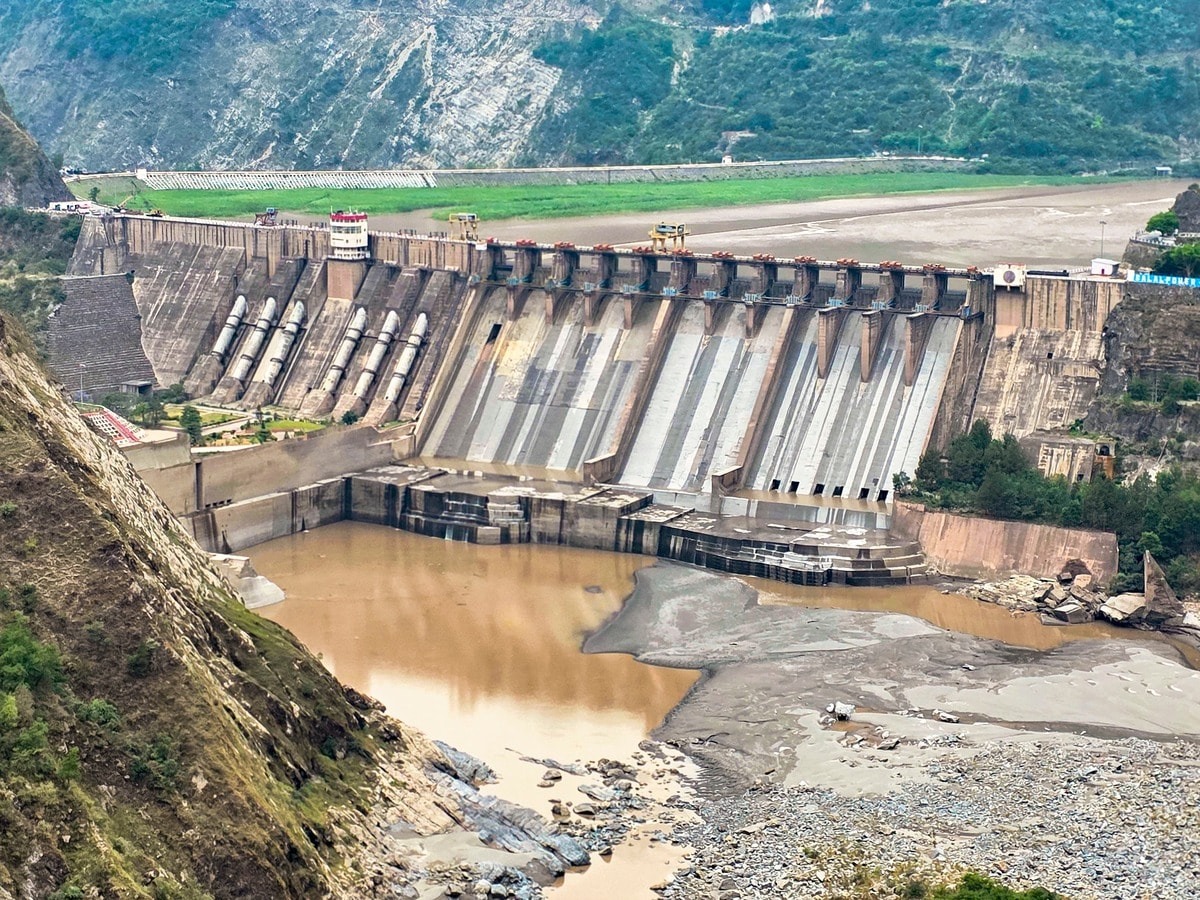
Indus Water Treatment: Pakistan shivers due to India’s Jhelum-Chenab project, Shahbaz government cries foul, will die of hunger and thirst

News India Live, Digital Desk: Amidst allegations of violation of Indus Water Treaty (IWT), India has made it clear that it will use the water of its rivers for its development. Pakistan has started making noise at the international level regarding these projects, which India has completely rejected.1. What is Pakistan afraid of? (Terror in Pakistan)Pakistan claims that the dams and power houses that India is building on the Jhelum and Chenab rivers are a violation of the Indus Water Treaty of 1960: Water shortage: Pakistan alleges that India will store water through these projects, due to which there will be no water left for irrigation in Pakistan’s Punjab and Sindh provinces.Fear of hunger and thirst: Pakistani media and politicians have given statements that if India diverts the rivers. Or if water is stopped, agriculture in Pakistan will be destroyed and people will die of thirst. Strategic threat: Pakistan is considering this as India’s ‘Water War’, due to which it can stop Pakistan’s supply in a war-like situation. 2. Those ‘master’ projects of India which have created a stir India is working on many important projects to meet its electricity needs in Jammu and Kashmir: Kishanganga Project: Pakistan has the most objection to this project located on the tributary of Jhelum. Ratle Hydroelectric Project: Pakistan wants to stop this 850 MW project being built on the Chenab River. Pakal Dul: This is also a part of the Chenab Basin. And Pakistan says it is against the terms of the treaty.3. India’s strong and clear stand: India has termed Pakistan’s objections as ‘baseless’ and a conspiracy to hinder development: Rights under the treaty: India says that under the Indus Water Treaty, it has the full right to build ‘run-of-the-river’ projects on the western rivers (Jhelum, Chenab, Indus). New notice: India has recently sent a notice to Pakistan for modification of the treaty, because Pakistan is repeatedly creating hurdles by taking the matter to the World Bank and the Hague’s ‘Court of Arbitration’. No compromise: India has made it clear that it will not compromise with its security and energy needs.4. What does the Indus Water Treaty (1960) say? According to this treaty brokered by the World Bank: Eastern rivers (Sutlej, Beas, Ravi): India has complete control over them. Western rivers (Indus, Jhelum, Chenab): Most of their water goes to Pakistan, but India has the right to generate electricity and limited irrigation on them.

Comments are closed.