
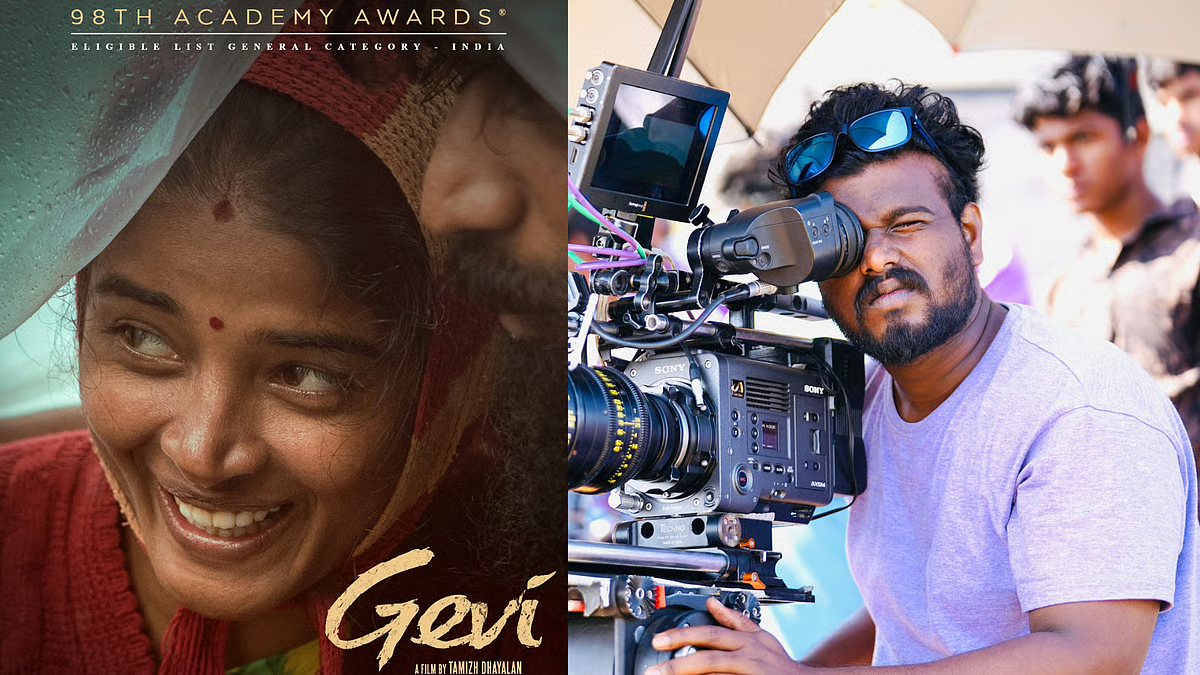

He goes on to elaborate on the perils that even a small misstep would cause in such a terrain. “The causes of death in those areas were mind-boggling. Apart from the obvious reasons, the casual way in which people over there spoke about those things made me jump out of my skin,” he says, further adding that another crucial balance he wanted to maintain was not by making this a film about Man vs Nature, but also pointing towards the systemic apathy. The village where our film was set is near the tourist hub Kodaikkanal, but with zilch facilities or access. People casually shared, during filming, about the places where their loved ones were buried after succumbing to illness, unable to access healthcare facilities. In some instances, what they needed was just proper first aid. But they did not have that. That’s the reason why I did not want the film to be understood as a Man vs Nature work. Even though we city-dwellers faced floods and even a Tsunami two decades ago, the response to it was rapid as opposed to the landslides or other occurrences in Western Ghat villages. Which is a clear administrative issue.”
He took a moment to thank the Vellagavi villagers, who not just cooperated from the background but also featured in the film. “It took 128 days for us to film. The villagers had no idea how things work in films, yet they were in absolute sport, and they balanced between their routine work and shooting,” Jagan says, as he concludes with hopes that Giver‘s global recognition will also have a positive effect on such far-flung regions lacking basic amenities.

Comments are closed.