

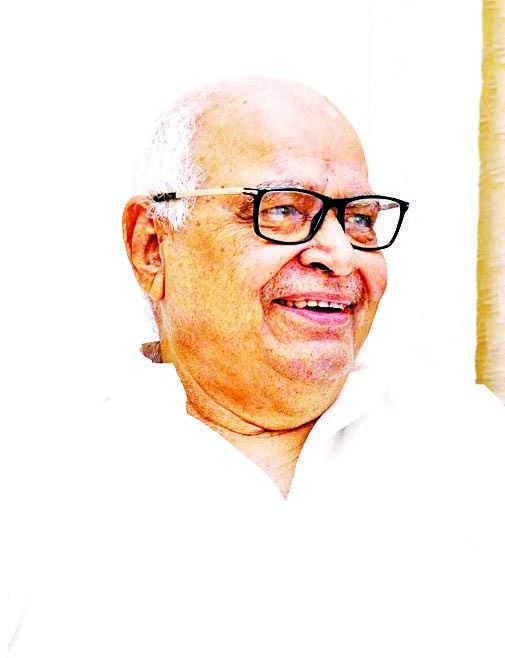
Hridaynarayan Dixit,
Former Assembly Speaker UP
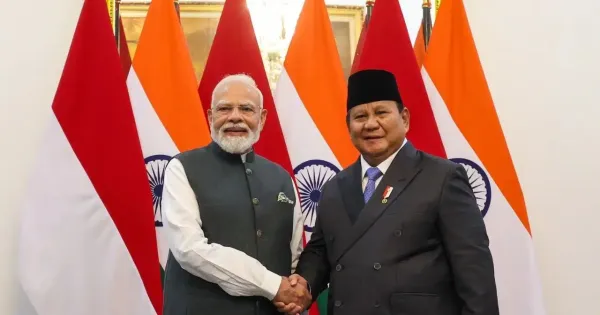
The country with the largest Muslim population in the world is Indonesia. He has declared family ties with India. Indonesian President Prabowo Subianto has beautifully mentioned Indonesia’s relations with India. While welcoming Prime Minister Narendra Modi on his visit to Indonesia, President Subianto went ahead and praised Modi. Indian culture is thousands of years old. This culture and civilization has deep roots in its birthplace India. Those who leave India for business or other reasons and live abroad feel proud of Indian civilization and culture.
Indonesia, with a population of 28 crores, is full of Indian culture. There are about 10000 places of worship and temples here. Shri Ram is prevalent in the culture of Indonesia. Ramkatha keeps happening in every corner of the entire country. Relations between Indonesia and India are very old. The people of Indonesia feel India in their conscience.
The name of Indonesia’s air service has been Garun Airways. In India, the Sub-District Magistrates are administrators, in Indonesia they are called Mahipal. People of Indonesia enjoy Indian festivals like Vijayadashami, Holi etc. Ramlila takes place in Indonesia and the religion of most of its characters is Islam. The people of Indonesia believe that they are Islamic by religion and religion, but Indian by culture. This culture creates the unitary nature of Indonesia and India.
Naturally, during this visit of the Prime Minister, both the sides could have welcomed each other with great enthusiasm, but here the matter was different. President Prabowo Subianto emotionally said that he had got his DNA test done and found that his DNA is Indian. This is why they find their body moving while listening to Indian music. What has been said is correct. Connecting with one’s roots makes everyone happy.
The culture of Indonesia and the culture of India have the same roots. It is everyone’s responsibility to keep watering these roots. Just as flowers do not bloom on a tree that is dry from its roots. Birds do not sing on them. Take Pakistan only, the roots of Pakistani and Indian culture are the same. The development of this civilization comes from the roots of Indus and Saraswati rivers. Pakistan is separated from its original culture. Jinnah and Muslim League considered India as two countries. Creating a country on the basis of religion has caused national loss. There is sadness in Pakistani territory. Rivers flow sadly.
Due to religious fundamentalism, Pakistan has become a university of terrorism. They do not accept cultural truth. This culture has developed over thousands of years of association. The ancestors have coined it with great love based on long-term experiences. Philosophy and science have led this cultural movement. There is cultural continuity here dating back thousands of years. In the society before the Vedic period, there was a loving current towards the entire humanity. Its glimpse is found in Rigveda. Then the same cultural continuity is visible in the later Vedic period also.
President Prabowo Subianto has said, “Indian civilization has a deep influence on our civilization and culture.” “About fifty percent of their language comes from Sanskrit. A lot of our names are in Sanskrit, so we have such a natural closeness,” he said. Culture is formed over a long period of time. Nature creates something new every moment. Humans embrace the truth, beauty and beauty of nature. This is how humans create culture.
This flow and influence of Indian culture was not geographical. This was prevalent in Aryana also. Aryana is Iran today. This was what flowed in Gandhara. Gandhari, wife of Kaurava dynasty king Dhritarashtra, was from there. This Gandhara is today’s Afghanistan. It spread to Khotan, Nepal, Bhutan, Sri Lanka, Myanmar, Thailand, Cambodia, Champa and Malaysia. Indonesia is the largest Muslim country in the world. Once upon a time that too was a Hindu cultural area. Indonesia is still attached to its old cultural traditions.
The same Hindu culture which was prevalent in Philippines, Tibet, Berubari three bigha area also spread in Arabia, the area of Maharishi Aurav. States like Japan, Korea, Mongolia, Siberia, England, Ireland, Italy, Greece, Egypt and Australia were also worshipers of this culture. Its area of influence is well known in countries like South Africa, Fiji, Mauritius, Guyana, Suriname, Trinidad etc. Of course, culture develops only within certain geographical boundaries. Boundaries like country, nation or state get cultural names, but the culture of all the regions/countries/states of the world is manifested in the form of philosophy, style of thought, poetry, literature and various arts.
Indian culture should also be studied on the basis of this material. Rigveda is a mirror of the world’s ancient literature, poetry, sociology and contemporary social culture. The entire Vedic literature is a wish for public welfare. In this, along with social organization, there are also formulas of non-causable and causal. Here physiology, astronomy, zoology, botany, physics and chemicals are discussed. Molecular analysis also makes sense. The Upanishads investigate the primordial principle of creation and call them truth-seekers for the entire humanity. The Puranas inspire us to organize people’s lives and benefit from ancient knowledge, as well as to remain a constant seeker of truth. Ramayana and Mahabharata are epics and also histories. They inspire us to live life with discretion in different circumstances.
Nature is Prasad, deformity is sadness, but culture is Mahaprasad. Culture is not created suddenly. All the constituent components of the nation vibrate in one voice, one rhythm, one love, one rhyme and one essence and create their culture. Culture is the essence of the philosophy, language, religion, art, sensitivity, hope, despair, realization, feeling, patience, courage and restraint dignity of all the people of the country. The culture of India was formed after thousands of years of penance and practice.
Sir John Marshall also said, ‘Many evidences reveal the presence of a highly developed culture in India. There must be a long history behind this on Indian soil. Indian culture is the result of long-term logic, experience and philosophy.

Comments are closed.