
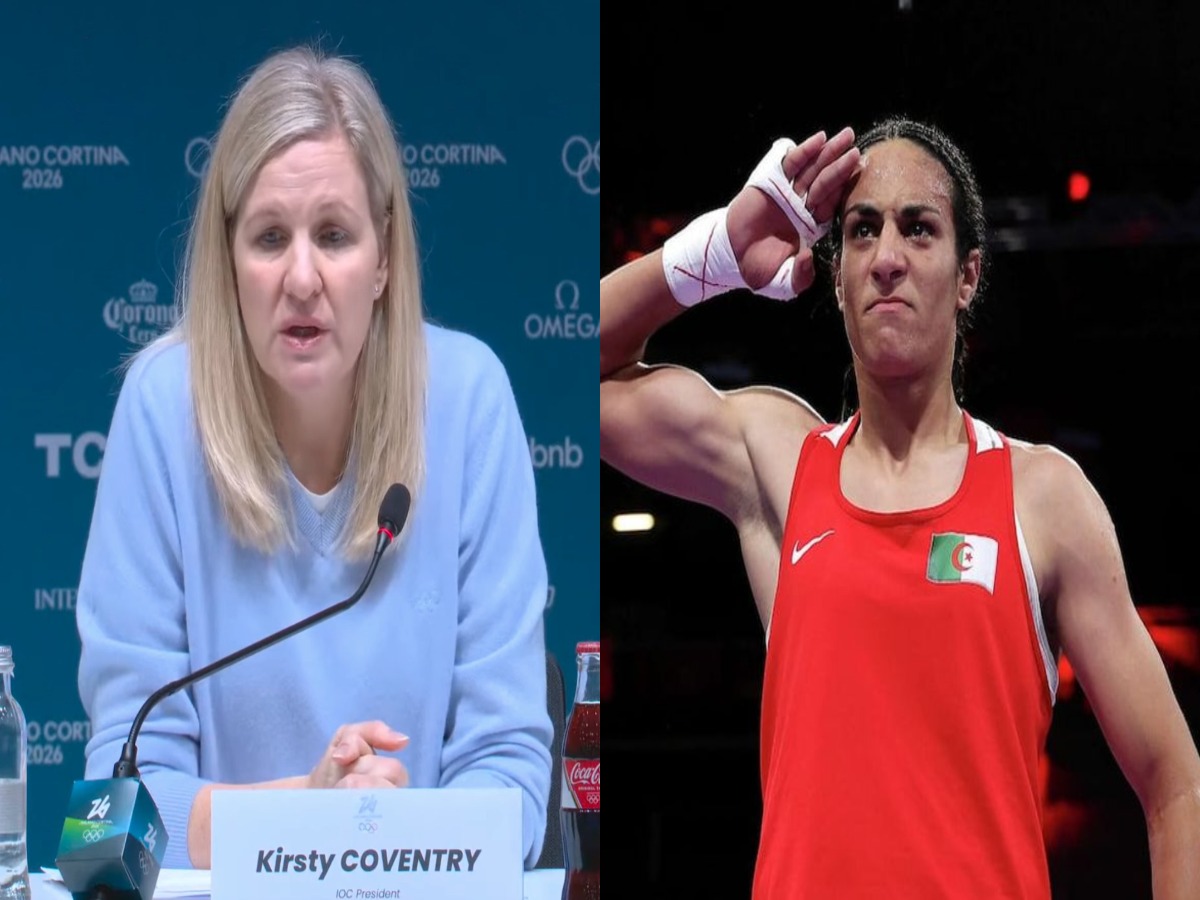
IOC’s Radical Policy Bans Transgender Women Athletes From Taking Part In Olympics On Female Eligibility

181
The International Olympic Committee (IOC) has announced a radical policy of banning transgender women athletes from appearing in the Olympics moving forward. The development emerged on March 26, Thursday as the IOC proclaimed that only biological female athletes, whose gender gets determined by a one-time gene-screening test can partake in the female category events in the Olympic games.
“At the Olympic Games, even the smallest margins can be the difference between victory and defeat” – Kirsty Coventry
The IOC unveiled its new policy on the protection of the female category as part of its initiative to have a universal rule for competitors in female elite sports after years of fragmented regulation that led to some major controversies.
The IOC said all athletes wanting to qualify or take part in female category events at the Games would from now on undergo an SRY gene test to determine their eligibility.
“Based on scientific evidence, the IOC considers that the presence of the SRY gene is fixed throughout life and represents highly accurate evidence that an athlete has experienced male sex development,” the IOC said in a statement.
The IOC has long declined to apply any universal rule on transgender participation in the Olympics and in 2021 instructed international federations to come up with their own guidelines.
New IOC President Kirsty Coventry did a U-turn immediately after taking over in June last year, saying her organisation would take the lead for a uniform approach.
“At the Olympic Games, even the smallest margins can be the difference between victory and defeat,” Coventry said in the statement. So, it is absolutely clear that it would not be fair for biological males to compete in the female category. In addition, in some sports it would simply not be safe.”
The new rules have no retroactive power and have no impact on grassroots or amateur sports. Until Thursday transgender athletes were allowed to take part in the Olympics once cleared by their respective federations.
Only a handful of openly transgender athletes have taken part in the Games. New Zealand’s Laurel Hubbard became the first openly transgender athlete to compete in a different gender category to that assigned at birth when the weightlifter took part in the Tokyo Olympics in 2021. U.S. President Donald Trump last year banned transgender athletes from competing in school, college and pro events in the female category in the United States, as Los Angeles prepares to host the 2028 Summer Olympics.
Trump, who signed the “Keeping Men Out of Women’s Sports” order in February 2025, has said he would not allow transgender athletes to compete at the LA Games. During the Paris 2024 Olympics, the female boxing competition came under scrutiny due to the participation of Algeria’s Imane Khelif and Lin Yu Ting of Taiwan.
Neither were transgender, but the International Boxing Association claimed both had failed an unspecified gender test at a previous competition. In Paris the IOC, not the IBA, ran the boxing competition, leading to claims the IOC was not doing enough to protect the female category. The IOC said that Khelif and Lin were eligible to take part in the Olympics.

Comments are closed.