
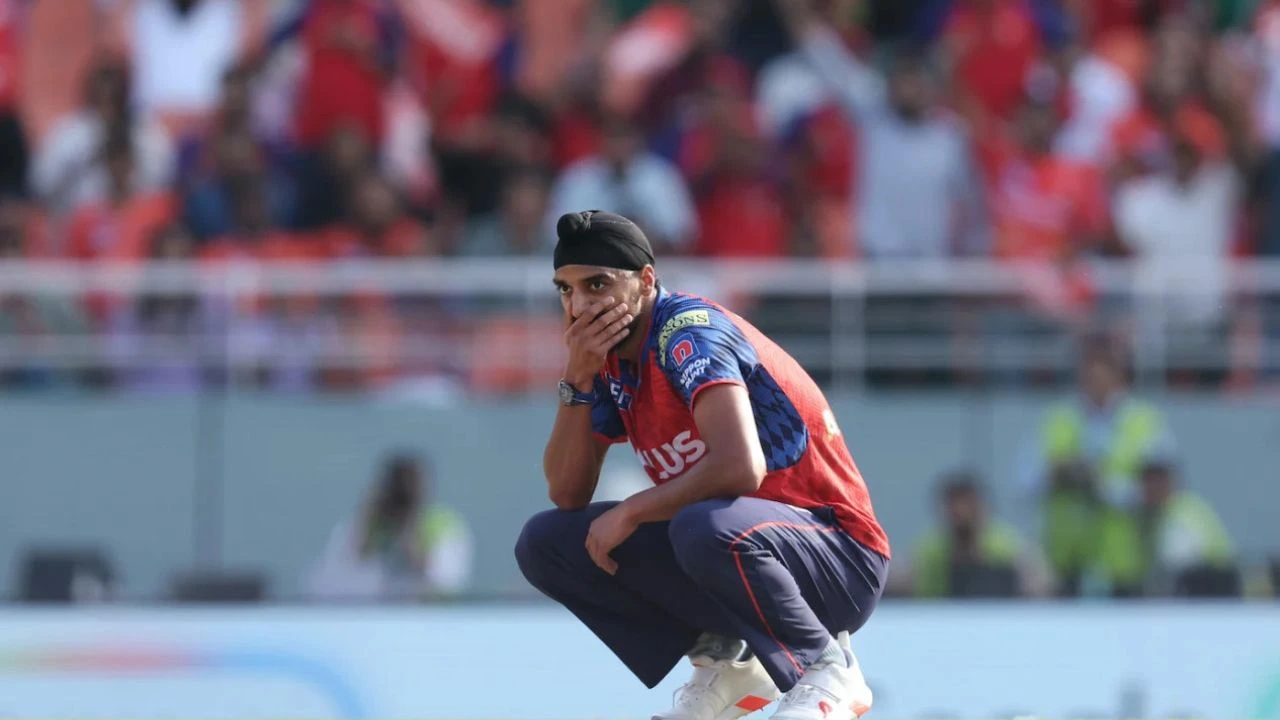

Arshdeep Singh was one of the players that played a crucial role in India winning the T20 World Cup in March. He took 9 wickets across the tournament, was one of the most feared new-ball bowlers on the planet during that campaign, and walked away as one of the defining figures of India’s title defence.
Now, less than a month later, he is wicketless in the powerplay across four IPL matches and the numbers behind that drought make for genuinely uncomfortable reading for Punjab Kings and their fans.
The numbers that tell full story of Arshdeep Singh in IPL
The extent of Arshdeep’s powerplay struggles in IPL 2026 goes beyond just a bad run of form, it is starting to look like a statistical emergency.
Across his last ten IPL outings stretching back into the 2025 season, his powerplay numbers read zero wickets from 20 overs, 216 runs conceded at an economy of 10.8, with a boundary percentage of 27.5 percent meaning nearly one in every four balls he bowls in the first six overs is going to the boundary.
In IPL 2026 specifically the picture is even starker. Against Gujarat Titans he bowled an extraordinary 11-ball over that included four wides and a no-ball, the kind of over that costs a team not just runs but momentum and belief. Against CSK at Chepauk the openers took him apart.
The KKR game was washed out after 3.4 overs. And today against SRH his first two overs in the powerplay went for 33 runs at an economy of 16.50 before he eventually dismissed Ishan Kishan, his first wicket of the season, but at enormous cost.
He has already conceded 15-plus runs in extras alone across his 12 overs this season, giving opposition batters free deliveries at exactly the moments when he needs to be applying pressure.
Why the powerplay wickets have stopped coming for Arshdeep Singh
The tactical picture behind Arshdeep’s struggles is more nuanced than simply poor form. He is bowling shorter in the powerplay in 2026 landing the ball six to eight meters out more frequently compared to the fuller, late-swinging deliveries that made him so dangerous in 2025.
On the flat surfaces at Mullanpur and Chepauk that shorter length is easy pickings for world-class openers like Travis Head and Abhishek Sharma who have the time and space to free their arms.
His average swing in the first two overs has also dropped noticeably. Without that lateral movement he is essentially a 135-140 kilometer-per-hour bowler coming in straight on batting-friendly decks against the best powerplay hitters in the world.
The fact that teammates Marco Jansen and Vijaykumar Vyshak have been finding wickets in the same conditions suggests the pitch is not the only explanation, it is Arshdeep’s execution that has shifted.
Also READ: Here’s why Punjab Kings players are wearing black armbands in PBKS vs SRH game
Bigger picture and what needs to change
None of this means Arshdeep Singh is suddenly a bad bowler. A man who has 99 IPL wickets from 86 matches and just helped India win a World Cup does not lose his ability in the space of four games.
What it does mean is that something specific has gone wrong with his powerplay approach this season and it needs to be identified and corrected quickly.
Punjab Kings paid INR 18 crore using an RTM card specifically for a bowler who strikes early and controls the death, right now they are getting neither of those things in the first six overs.
Shreyas Iyer is a captain astute enough to have managed around it so far and PBKS remain unbeaten, which is a testament to the depth of this squad. But Arshdeep is too important and too good for this drought to continue much longer without becoming a genuine liability in the matches that matter most.
Comments are closed.