
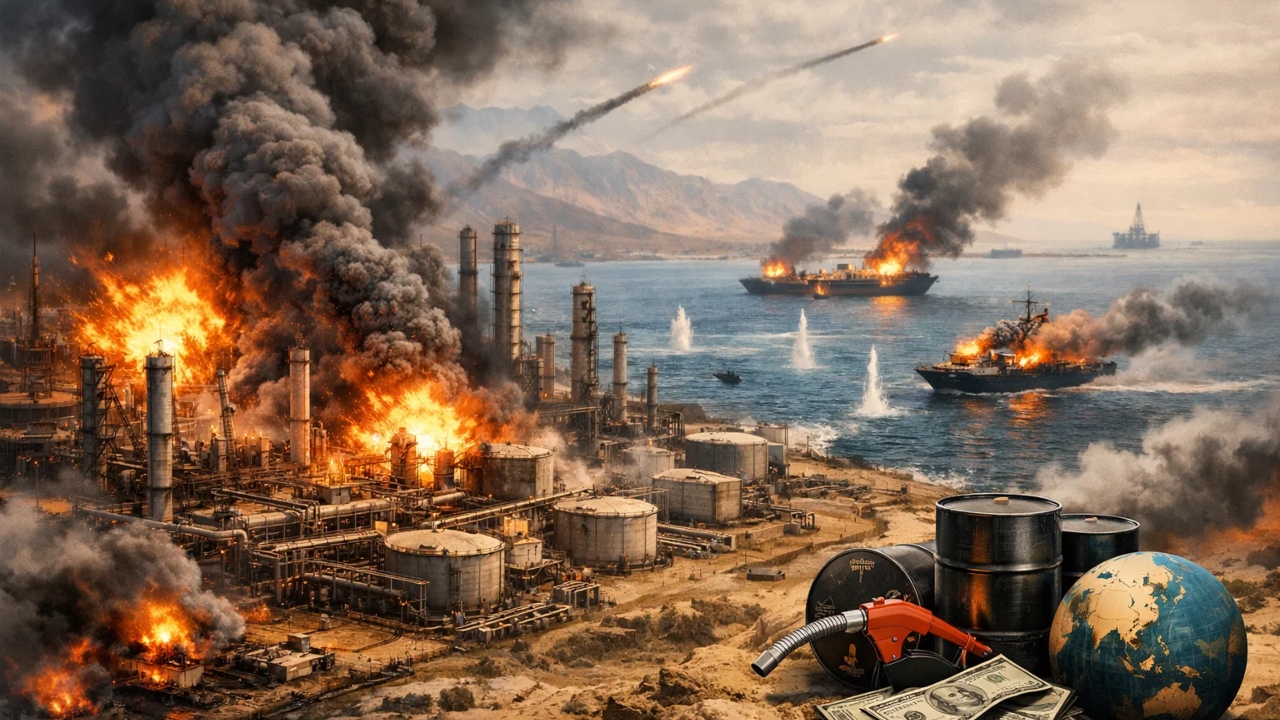

LPG-LNG Crisis 2026: Amid rising tensions in West Asia, Iran has created a stir in the global energy market by targeting several important oil and gas facilities in the Gulf region. These attacks, which intensified after the conflict with Israel, have started having a major impact not only on the military front but also on the global economy. Attacks on strategic targets such as oil refineries, LNG terminals and gas processing plants have disrupted supply chains, increasing the risk of energy crisis and inflation across the world.
Which refineries and energy hubs were targeted?
According to media reports, Iran targeted the major energy centers of the Gulf. Saudi Arabia’s SAMREF refineries located at Ras Tanura and Yanbu came under the attack. Both of these are included in the world’s largest oil processing hubs and play an important role in global supply.
Apart from this, Kuwait’s Mina Al-Ahmadi and Mina Abdullah refineries were also targeted, which are considered the backbone of Kuwait’s economy.
Qatar’s Ras Laffan LNG hub, which is among the world’s largest gas export hubs, is in the news due to the attacks. The Habshan Gas Processing Plant and Bab Oil Field of the United Arab Emirates also came under threat. All these destinations are very important in terms of global energy supply.
Why was there panic in the global oil market?
The most immediate impact of these attacks was seen on crude oil prices. Due to the fear of supply disruption, the prices of Brent crude in the international market increased to close to $ 110 per barrel. This has increased instability and uncertainty in the energy market.
The Gulf region is a major center of global energy supply. In such a situation, the increasing threat to the Strait of Hormuz has become a matter of concern for the world, because about 20% of the global oil supply passes through here. Any obstruction in this route could deepen the energy crisis in both Europe and Asia.
How big is the threat to LNG and gas supply?
Qatar’s Ras Laffan LNG terminal is an important center of the global gas market. Any kind of damage here directly impacts Asian and European countries. Japan, South Korea and many countries in Europe depend on this region for LNG.
According to experts, if the supply is disrupted, gas prices may rise by 15–30%. Apart from this, shipping and logistics costs are also increasing rapidly. Insurance and freight costs are increasing by 20–40%, causing additional economic burden on energy importing countries.
What will be the impact on India?
According to Economics Times, it is sure to have a direct impact on India. India imports about 85% of its crude oil needs and a major part of the LNG comes from Qatar. In such a situation, any kind of interruption in supply may lead to increase in the prices of petrol, diesel and gas.
At the domestic level, this will affect PNG connections, LPG and electricity production. In the industrial sector, the cost of fertilizer, steel and power sector may increase, due to which production will become expensive and its effect will reach the common consumers.
India is already struggling with lack of adequate gas supply for fertilizer production. In such a situation, if the crisis continues for a long period, imports will increase and global prices may rise further. Also, current account deficit (CAD) may also increase due to expensive imports.
What next, how much can the crisis increase?
Experts believe that if tensions in the Gulf region persist for a long time, there will be instability in the global energy market. Even a 2–5% reduction in supply can lead to a 10–20% jump in oil prices. In a large-scale crisis, this impact can reach up to 8–10% supply cut and $100–120 per barrel price.
There will also be pressure in the gas market, where a price increase of 15–30% is possible. Apart from this, there will be pressure on the supply chain due to change in shipping route, expensive insurance and delays.
At present, these attacks by Iran have made it clear that now energy infrastructure has also become a direct target of geopolitical conflict. If the situation does not improve soon, the world may have to face a new phase of expensive oil, rising inflation and economic instability.

Comments are closed.