
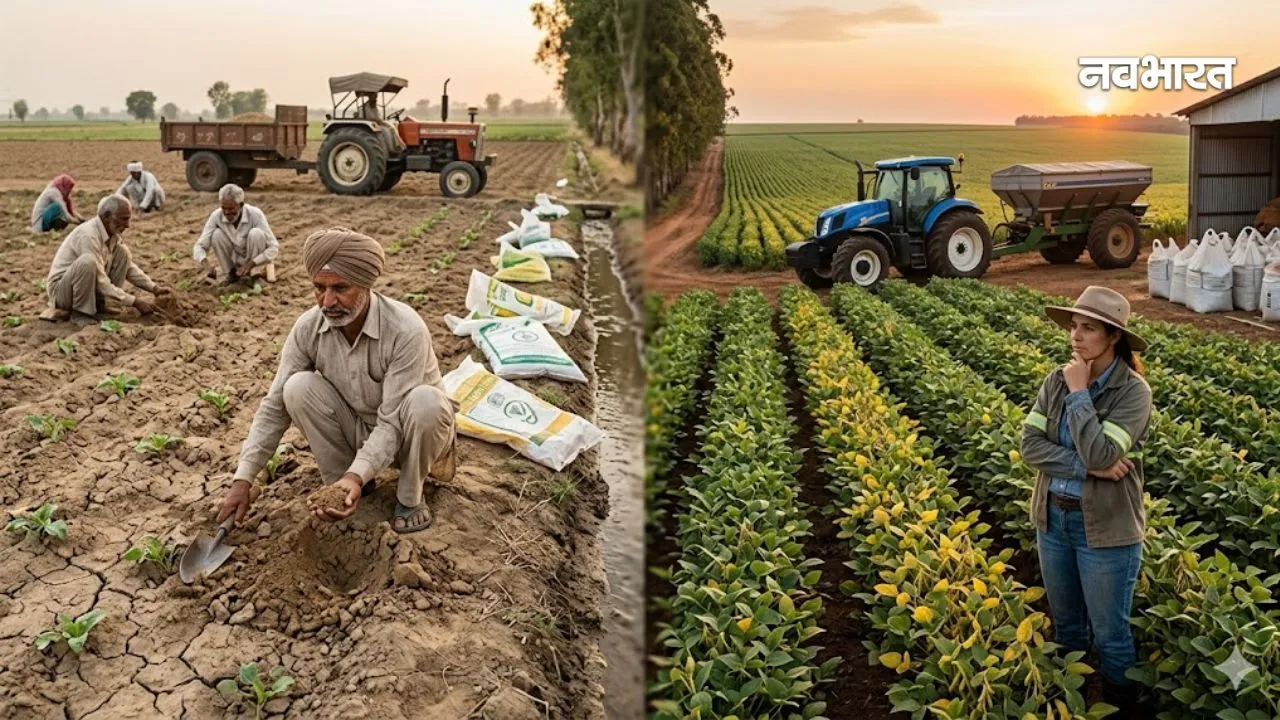
Not only oil, now there is a crisis on the plate too; Fertilizer supply halted due to Iran war, ‘famine’ across the world; increased risk of

Iran War Fertilizer Shortage Impact: The ongoing fierce war in West Asia is no longer limited to just an energy crisis but is moving towards a global food crisis. The Strait of Hormuz, through which 20 percent of the world’s oil and gas passes, has been ‘closed’ by the Iranian Revolutionary Guards (IRGC). After the announcement, crude oil prices have crossed $100 per barrel. But experts believe that parallel to this, another serious crisis is emerging in the form of acute shortage of fertilizers which is a direct threat to global food security.
The world’s ‘fertilizer basket’ attack on
About half of the world’s traded urea and a large proportion of other important fertilizers are exported from the Gulf countries through the Strait of Hormuz. 20 percent of the world’s fertilizer and 46 percent of urea comes from this region. Qatar’s state-owned company ‘Qatar-Energy’ has been hit by gas supply disruptions due to the recent conflict. has stopped production at the world’s largest urea plant. Qatar Fertilizer Company alone supplies 14 percent of the world’s urea, whose collapse could prove disastrous for global agriculture.
Deep crisis on countries like India and Brazil
The worst impact of this crisis is on those agricultural countries which are dependent on imported fertilizers. India sources more than 40 percent of its urea and phosphate requirements from this region. India has already closed three of its urea plants and Bangladesh has closed four of its five due to shortage of the fertilizer. Brazil, the world’s largest soybean exporter, is almost entirely dependent on imports for its fertilizers, half of which comes through this war-torn route.
Skyrocketing prices and sowing season
This disruption has come at a time when the main season of sowing of crops is going on in the Northern Hemisphere. Urea export prices from the Middle East have risen 40 percent to above $700 per metric ton as of last week. Analysts estimate that nitrogen fertilizer prices may double from current levels and phosphate prices may increase by 50 percent. In America too, a 25 percent decrease has been recorded in the supply of fertilizer.
Also read:- Not only Iran, Pakistan is also the biggest nuclear threat for us; Tulsi Gabbard’s big warning amid Iran war
fear of global food insecurity
According to experts, if the shortage of fertilizer continues for a long time, farmers may stop using it, which will lead to a huge decline in the yield of main crops like rice, wheat, maize and soybean. This will not only reduce the global supply of food grains, but will also increase prices wildly. Meanwhile, Iran has confirmed the death of its Intelligence Minister Ismail Khatib and has threatened to target the energy bases of Saudi Arabia, Qatar and UAE, due to which tensions are likely to increase further.

Comments are closed.