
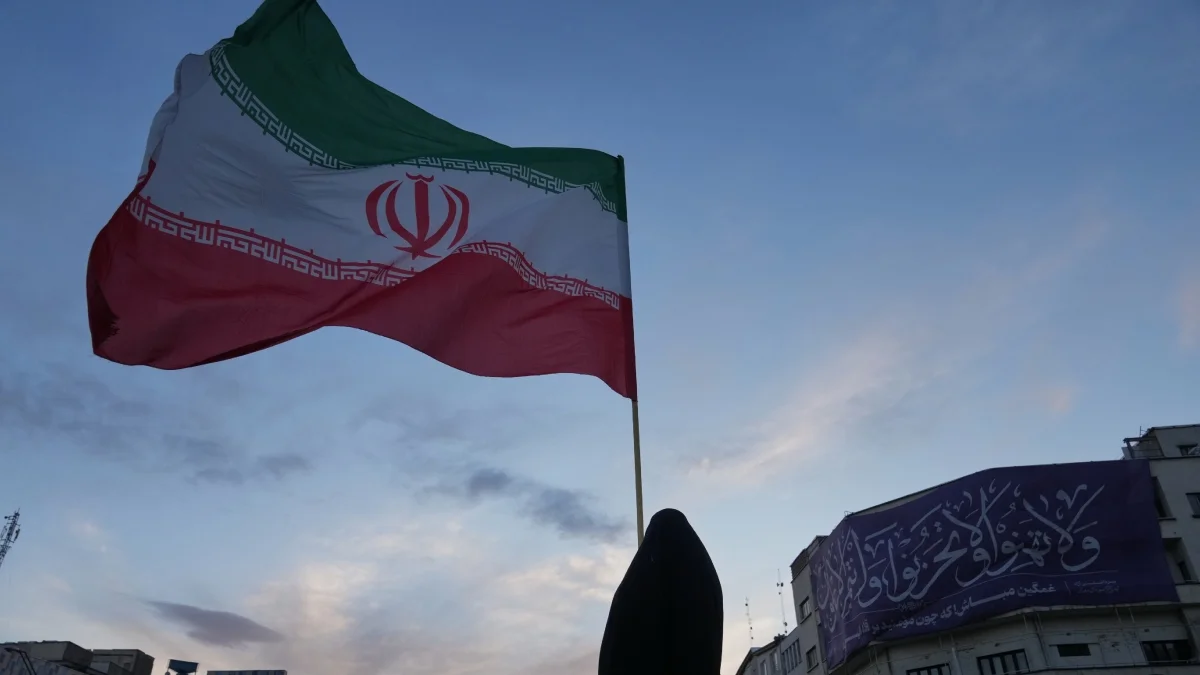
IRGC: Strait of Hormuz Under Strict Control Until US Naval Siege Ends — What It Means for the Deal

Iran’s Islamic Revolutionary Guard Corps has stated that the Strait of Hormuz will remain under “strict control” until the end of the United States naval siege — the clearest and most authoritative statement yet from Iran’s military establishment on the conditions under which the waterway will be freely accessible, and one that directly complicates the diplomatic optimism that had been building through Saturday’s sequence of conflicting signals.
The IRGC statement lands after a chaotic 24-hour period that saw the Strait declared open by Foreign Minister Araghchi, crude oil crash over 11%, Trump say thank you, Iran’s military command announce a reclosure, and Foreign Ministry spokesperson Baqaei clarify that the Strait was not technically closed but enemy ships — US and Israeli — would be blocked. The IRGC has now cut through that noise with a single, unambiguous condition: strict control continues until the US naval blockade ends.
What the IRGC Statement Actually Establishes
The IRGC is not the Foreign Ministry. It is Iran’s most powerful military organisation, the force that has physically enforced Hormuz restrictions since February 28, the institution that laid the mines in the waterway that Iran reportedly lost track of, and the entity whose cooperation is operationally necessary for any Hormuz arrangement to function in practice. When the IRGC speaks on Hormuz, it speaks with the authority of the force that controls the waterway on the ground — or rather, on the water.
The condition it has set is precise and binary. The US naval siege — the blockade of Iranian ports that came into effect on April 13 under CENTCOM command — must end. Until it ends, the Strait remains under strict IRGC control. No exceptions, no partial measures, no creative interpretations of what “open” means in the Foreign Ministry’s framing.
This is a harder position than Baqaei’s Foreign Ministry clarification. Baqaei described a targeted restriction on enemy ships while suggesting commercial traffic could continue. The IRGC is describing something more comprehensive — strict control of the entire waterway as a function of the blockade’s continued existence, not merely as a restriction on US and Israeli military vessels.
The Blockade-Hormuz Deadlock in Full
The IRGC statement crystallises the deadlock that has prevented a deal from closing since the Islamabad talks collapsed on April 12. The structure of the impasse is now completely visible.
The United States will not lift the naval blockade until the deal is 100% complete — Trump stated this explicitly on Friday evening. The blockade is Washington’s primary remaining leverage instrument after the military campaign degraded Iran’s conventional military capability. Lifting it before a signed agreement would remove that leverage and, in Washington’s calculation, reduce Iran’s incentive to make the concessions on uranium enrichment and Hormuz sovereignty that the US is demanding.
Iran will not allow the Strait to operate freely — or at least will keep it under strict control — until the blockade ends. The IRGC’s position is that a naval force actively blockading Iranian ports cannot simultaneously be permitted to enjoy free passage through a waterway Iran considers within its sovereign security perimeter. The blockade and the Hormuz restriction are, in Iran’s framing, linked instruments of the same standoff.
Each side is using its primary leverage tool as a condition for the other side to move first. Washington says open Hormuz and we will talk about the blockade. Tehran says lift the blockade and the Strait opens. Neither will go first. The IRGC statement confirms that Iran’s military establishment — as opposed to its diplomatic corps — is holding this position firmly.
The Gap Between the Foreign Ministry and the IRGC
The divergence between Baqaei’s Foreign Ministry clarification and the IRGC statement is itself significant and should not be glossed over. Baqaei said the Strait is not closed, drawing a distinction between commercial traffic and enemy vessel restrictions. The IRGC says the Strait is under strict control pending the blockade’s end — a formulation that does not make Baqaei’s commercial-versus-military distinction.
This gap between Iran’s diplomatic voice and its military command is not new in the context of this conflict. The Foreign Ministry has consistently tried to maintain diplomatic flexibility while the IRGC has enforced maximalist positions on the water. Whether Araghchi’s Friday evening announcement was coordinated with the IRGC command before it was made — or whether it represented a Foreign Ministry initiative that the IRGC has now effectively overruled — is a question that goes directly to how unified Iran’s decision-making on the Hormuz question actually is.
For Pakistan’s mediators, this gap is the opening. If Munir’s conversations with Araghchi today can produce a formula that the IRGC’s command can accept as satisfying its core condition — some modification of the US blockade’s posture toward Iranian ports — the Foreign Ministry’s more flexible framing gives Tehran the diplomatic language to present such a formula without the IRGC appearing to have backed down.
The Ceasefire Clock
The ceasefire expires in approximately three days. The IRGC has now stated its condition for the Hormuz. Trump has stated his condition for the blockade. The two conditions are structurally incompatible under their current formulations. Pakistan’s Munir is in Tehran today.
The deal that Trump described as mostly negotiated and very close to completion has, within 24 hours of Friday’s apparent breakthrough, revealed the one issue that was never close to resolution — the Hormuz-blockade standoff that sits at the operational heart of the conflict and has no elegant solution that satisfies both sides’ stated positions simultaneously.
Three days. Two incompatible conditions. One mediator. And a ceasefire that both sides know they cannot afford to let expire without a framework in place.
Disclaimer: This article is for informational purposes only and does not constitute investment advice. Geopolitical situations are subject to rapid change. Readers are advised to follow official government communications for the most current verified information on this developing situation.

Comments are closed.