
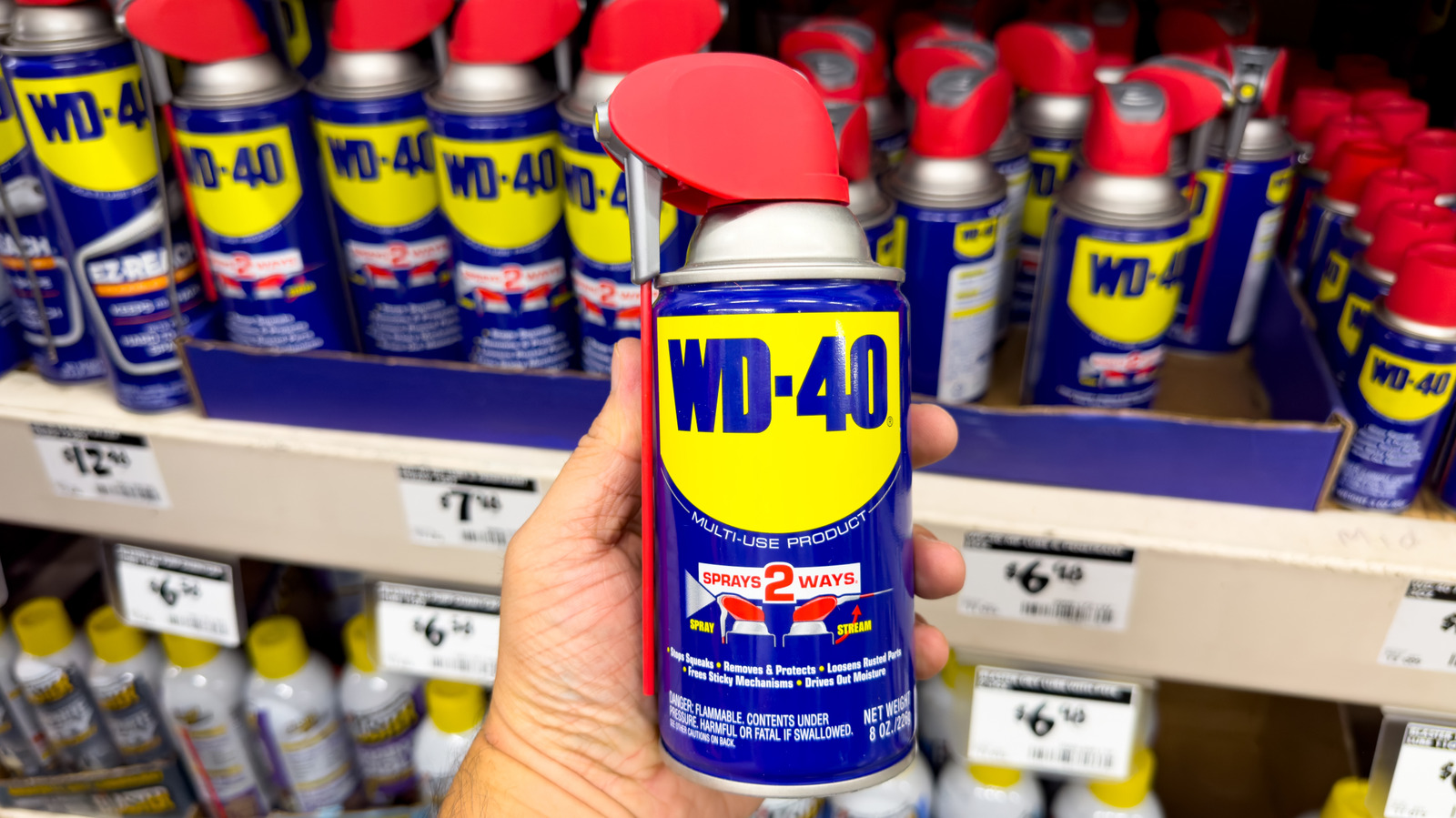

WD-40 has been around for over 70 years now, and although it was originally designed as a solution for rust prevention, there have been countless uses and hacks attributed to the handy spray now. In fact, although there was a primary use highlighted by the founders back in 1953, WD-40 has always been marketed as a multi-use product, perfect for solving everything from squeaky hinges through to shining up stainless steel kitchen appliances, and loosening rusted bolts.
Kroil, on the other hand, is and always has been marketed very differently. The Kroil story actually predates that of WD-40, starting back in 1939. Kroil was designed with one goal in mind: being the best-performing penetrant spray out there, looking to loosen rusted bolts and save scraped knuckles. Rather than promise to shine up your kitchen, or keep the wheel on your wheelbarrow turning freely, Kroil simply promises to ‘loosen stubborn metal parts with ease,’ and that’s where the differentiation between these two products really comes in.
Yes, both WD-40 and Kroil can help to combat seized metal components, but rather than masquerading as a multi-purpose spray, Kroil only has this in mind. Kroil is not so great at general lubrication tasks, as it’s just so thin, but that’s part of its magic. This fineness allows it to creep into spaces that are just 1 millionth of an inch in size, and here it spreads, cleans, displaces moisture, and ultimately loosens one metal component from another. WD-40 cannot compete in this department, and as a water displacer (hence “WD”), it was never really designed to. So, when it comes down to breaking down rusted bonds and freeing frozen components, yes, Kroil is better than WD-40.
Here’s what users have to say
A quick search on any social media site will bring out many answers, but generally speaking, most users who claim to have used both tend to agree with our above decision, that Kroil is the better penetrant. One Facebook post, in which a user describes using Kroil for the first time, as WD-40 was not available, attracted numerous comments. One user comments on how Kroil has helped him in fixing cars for over two decades, while another says it’s so fine it won’t even stay in the can, as it creeps through the seals over time. Generally, these statements sum up the opinion of the entire comments section.
There are numerous users who have turned to YouTube to document their experiences, too. One user was struggling to adjust the steering column on his roller when a CAT technician told him about Kroil, stating it’s the best penetrating oil of its kind. Sure enough, the steering column freed right up, and thus another Kroil advocate was born.
Another user on YouTube was suffering from a sticking pedal on his truck, but a quick spray of Kroil was all it required to spring back into place again. The YouTuber highlights both WD-40 and PB Blaster as alternates, but highlights Kroil as his pick of the bunch. It does appear that, as a penetrating spray, Kroil absolutely is the better choice. However, if you’re after a multi-purpose spray, WD-40 would be the better pick; it’s actually marketed as such, and there are literally thousands of documented ways the product has been used to benefit.
Methodology
This article’s purpose is to place both Kroil and WD-40 under the proverbial microscope and highlight in which circumstances both are at their most useful. From here, we can then establish which is objectively the better spray, whether that be overall or for more specific applications.
Information about the intended purposes of both penetrating sprays has been obtained directly from the manufacturers of both products, and then, in order to bolster our decision on which is best and why, we have taken into account the opinions of those who have tested one or both products out. Such reviews have been obtained primarily from YouTube, so that we can see how the user is testing each product and evaluate their approach, but also from personal accounts posted on social media.

Comments are closed.