
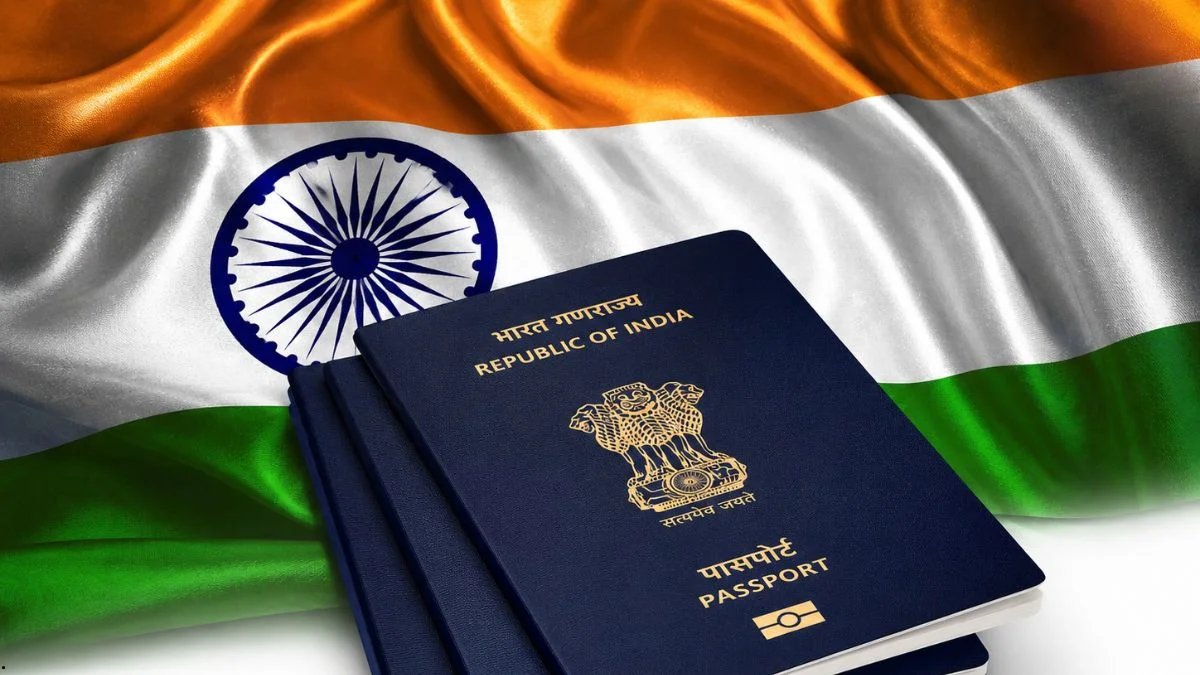

The Ministry of External Affairs set off a wave of debate on Wednesday, June 24, when it clarified that an Indian passport is a travel document and not conclusive proof of citizenship. Speaking on the 14th Passport Seva Diwas, an MEA official said that although passports are issued only to citizens, the document’s primary purpose is to enable international travel and to establish identity abroad, and that it does not by itself establish citizenship. The remark drew sharp reactions, with Rajya Sabha MP Kapil Sibal asking which document then serves as proof of citizenship, and lyricist Javed Akhtar calling the position absurd and questioning how passports could be issued at all if the authorities were not satisfied the holder was a citizen.
The clarification, however jarring it sounded, reflects the legal position. Under Section 20 of the Passports Act, 1967, the central government may issue an Indian passport or travel document to a non-citizen in specified or exceptional circumstances. That single provision is enough to establish that holding an Indian passport is not, in law, conclusive proof of Indian citizenship. The authorities also point out that a passport obtained through false information or misrepresentation can be cancelled or revoked, which is another reason the document is treated as evidence of identity and travel eligibility rather than of citizenship.
If the passport does not settle the question, the other documents most Indians carry do not either. Aadhaar functions mainly as an identity and residency document, and the law allows residents, including certain non-citizens who meet residency requirements, to obtain it. Earlier this year, during the hearing on the Special Intensive Revision of electoral rolls, the Supreme Court said Aadhaar was not conclusive proof of citizenship but only a document of identity. A PAN card is a tax identifier that shows a person earns income or pays taxes in India and proves neither citizenship nor residency. The Voter ID card allows a person to vote and serves as proof of identity and residence, but it too is not treated as definitive proof of citizenship. As far back as 2020, when asked in Parliament whether Aadhaar, passport, voter ID, PAN card or birth certificate could be treated as valid documents to prove citizenship, the Ministry of Home Affairs declined to identify any of them as definitive proof.
This brings the matter to the question many were asking online. Currently, India does not have a single national document that automatically establishes citizenship for every citizen. Who counts as a citizen instead emerges from the Constitution and the Citizenship Act, 1955, under which a person may acquire citizenship by birth, descent, registration, naturalisation, or incorporation of territory. The route that applies to a given person depends largely on when they were born. People born in India between January 26, 1950, and July 1, 1987, are generally citizens by birth. For those born after July 1, 1987, the citizenship status of one or both parents becomes relevant under the changes made to citizenship law over the years.
In practice, this means citizenship in India is usually established not by flashing one card but by assembling a combination of documents, the mix depending on how a person acquired citizenship and when they were born. Experts note that under the current framework, the most definitive proof available is a Certificate of Naturalisation or a Certificate of Registration, issued directly by the Ministry of Home Affairs under Sections 5 and 6 of the Citizenship Act, 1955. For the vast majority of Indians who are citizens by birth and have never needed such a certificate, there is no equivalent single stamp of citizenship, which is precisely why the MEA’s clarification, while legally unremarkable, has struck such a nerve.

Comments are closed.