
Israel released map of buffer zone in southern Lebanon, intensified operations despite ceasefire

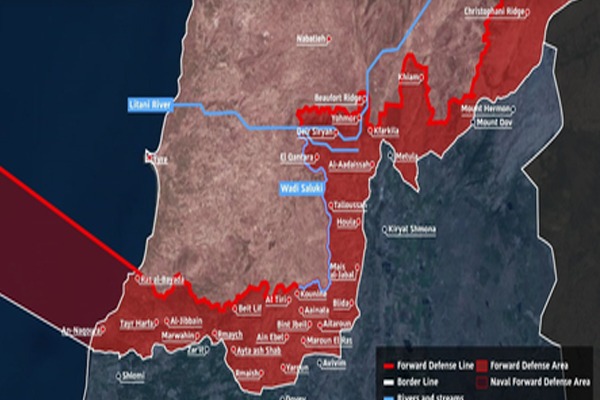
Jerusalem, April 20. The Israeli army has released a map to create a buffer zone in southern Lebanon. It shows a large area extending several kilometers inside Lebanese territory, stretching like a long strip from Lebanon’s Mediterranean waters to the Mount Hermon area near the Syrian border. According to Xinhua news agency, Prime Minister Benjamin Netanyahu and Defense Minister Israel Kautz have said that Israel will not withdraw its troops from the area, even if a temporary ceasefire comes into effect at midnight local time on Thursday and Friday. Kautz also said that Israel would demolish houses and buildings in the area.
He compared it to actions in the Gaza Strip and warned that Israeli forces would execute anyone considered a member of Hezbollah. The army said in a statement that five divisions, along with naval forces, were currently working to create a forward defense line in the Lebanese area; Its purpose is to thwart direct threats to the communities of northern Israel. The map shows a naval portion off the Nakoura-Ras al-Bayda coastline.
The buffer zone is north of key cities and towns such as Bint Jbeil, Aita al-Shaab and Khiyam and in some areas extends to the Litani River, including several villages and ridge lines. Lebanon and Syria have not approved the move. Despite the ceasefire, the Israeli army intensified military operations in southern Lebanon on Sunday, according to Lebanon’s National News Agency (NNA). Forces continued to demolish houses in the name of clearing the security zone in Bint Jbeil, while tanks patrolled the heavily devastated city.
Soldiers also blew up houses in al-Bayda and al-Nakura, blocked roads with mounds of soil, and shelled the town of Kunin. There was no immediate reaction from Israel on this development. The map was released three days after Washington announced a 10-day ceasefire between Israel and Hezbollah. There had been intense tension between Israel and Hezbollah since the beginning of March. During the previous ceasefire, which began in November 2024, Israel continued almost daily attacks in southern and eastern Lebanon.

Comments are closed.