
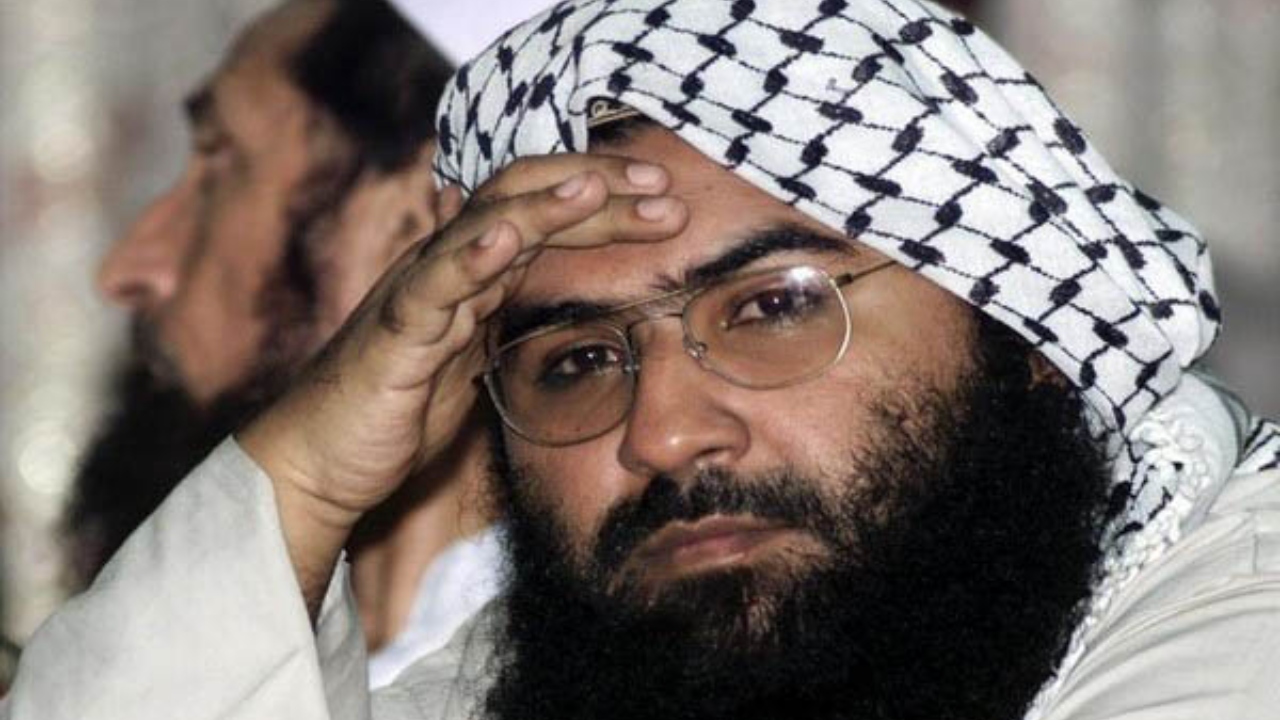

The leader of Jaish-e-Mohammed (JeM), synonymous with terrorism across the world including India. Masood Azhar Once again in the headlines. This time he has remembered an old incident related to Jammu and Kashmir of the 1990s, which he is presenting by linking it to his ‘struggle’ and ‘movement’. This action of his is going viral on social media. This was the same period when terrorism in Kashmir was in its initial and most violent phase and had emerged as a major face of terrorism.
Read now on WhatsApp also, click to subscribe
Terrorist Masood Azhar made a failed attempt to escape from jail in Jammu in 1990. Now he has remembered the beating that took place after that. The consequences of trying to deceive the law proved to be very bad, especially for a ruthless, murderous terrorist like Masood Azhar. Masood Azhar, the leader of Pakistan’s terrorist organization Jaish-e-Mohammed (JeM), has admitted that he had to pay a heavy price for trying to escape from Jammu and Kashmir jail in the 1990s.
In the audio, Masood Azhar was heard getting emotional as he recalled how his attempt to escape by digging a tunnel from Jammu and Kashmir’s Kot Bhalwal jail failed on the very day he had planned to escape. Even today he is afraid of the jail officials, who had beaten him and other terrorists for planning their escape.
What is that incident of the 1990s?
In fact, in the early 1990s, Masood Azhar was part of the terrorist network operating in Jammu and Kashmir. During this time, he was arrested by Indian security agencies in Kashmir and imprisoned. At that time, incidents like jail break, kidnapping and bargaining by terrorist organizations were becoming common in the valley.
The incident that Masood Azhar has now mentioned is related to his experience of being in jail and the terrorist activities of that period. When terrorist organizations used the strategy of kidnapping and pressure to release their cadre.
Why did Masood Azhar remember the incident?
Masood Azhar has done this to boost the morale of his supporters within the terrorist network. He wants to show himself as a ‘leader who emerged from the struggle’. Its objective behind this is also to fuel anti-India propaganda. He wants to show that he too has been in an Indian jail and had escaped from there. Repeating old stories after three decades could be part of its radicalization strategy.
What could be the motive?
The main objective of the terrorists in the 1990s was to secure the release of the terrorists lodged in the jails of Jammu and Kashmir. Creating an atmosphere of fear and anarchy in Kashmir. To draw the attention of the international community towards the independence of Kashmir. To put pressure on the Indian government. Masood Azhar later proved to be the biggest beneficiary of this strategy.
What happened after that incident?
Masood Azhar became stronger in the world of terrorism. He later laid the foundation of an organization like Jaish-e-Mohammed. His name was linked to conspiracies of many major terrorist attacks in India. His release after the 1999 Kandahar plane hijacking made him internationally infamous. India’s most wanted terrorist had planned attacks on Parliament in 2001, Mumbai in 2008 and many other attacks.
Who is Masood Azhar?
Terrorist leader Masood Azhar was born in Pakistan (Bahawalpur). He founded Jaish-e-Mohammed (JeM) to carry out terrorist incidents against India. He is the mastermind of many terrorist attacks in India. Declared a global terrorist by the United Nations. Presently his location is Pakistan.
Masood Azhar came to India in February 1994 with a fake identity and Portuguese passport. In the same year he was arrested in Anantnag. He remained in jail from 1994 to 1999. During the hijacking of Indian Airlines flight IC-814 in December 1999, the government released Masood Azhar in exchange for hostages. After this he formed the terrorist organization JeM.
A day after India launched Operation Sindoor, terrorist Masood Azhar had said that at least 10 of his family members were killed in India’s cruise missile strikes on terror targets inside Pakistan, in response to the killing of 26 civilians by JeM terrorists in Jammu and Kashmir’s Pulwama. Four terrorists, whom India had described as its close associates, were also killed in this attack.

Comments are closed.