
Jammu And Kashmir: Black Bear Movement Near NIT Srinagar Sparks Concern Among Residents | India News

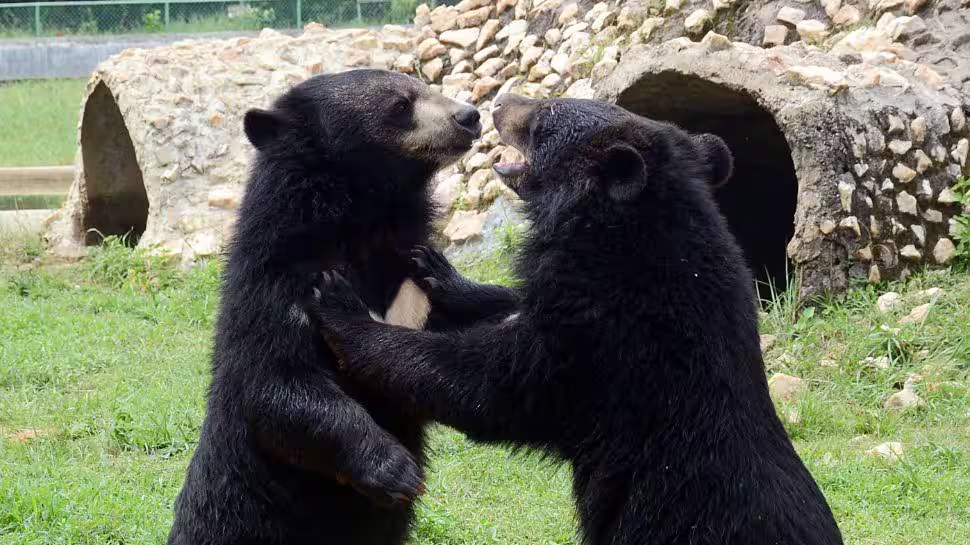
The residents of Nigeen, Hazratbal, and Sadrabala remain on high alert following renewed black bear sightings in the area. While one juvenile bear was successfully captured in the Nigeen (Bota Bagh) area earlier this month, on December 6, sightings of other bears continue to cause concern.
The last sighting of the bears was reported by residents on December 24 and into the night of December 25. The bear was seen roaming near the NIT Srinagar campus and the Nigeen belt. The ongoing bear sightings have forced dozens of residents to remain indoors after dark. Nocturnal advisories are in place for the University of Kashmir and NIT campuses. The Wildlife Department is on its toes round the clock, but people in the area remain angry and dissatisfied with the department’s response, demanding prompt action.
Ghulam Qadir said, “We are very afraid for our children. We don’t go out of our houses after sunset. Dogs keep barking all night. Wildlife officials are searching for the bear; they even have cages. This is the second day. Sometimes they say the bear is in Nigeen, sometimes they say it’s here. We are scared because of these bushes. The bear was in Hazratbal before, but the problem is these bushes.”
Add Zee News as a Preferred Source
Another resident, Abdul Aziz, said, “Four or five bears are roaming around here. We appeal to the government to protect us. We call the wildlife authorities, but they don’t come. The bears hide in this grass from evening until morning. Nobody goes outside; there’s no activity. We are scared. We beg the government for help. We don’t want anything else, just save us from these bears.”
Wildlife Department teams, supported by local police, have redeployed to the Nigeen and Sadrabala areas. They are currently using thermal night-vision drones and night-vision cameras to track the animals’ movement through residential gardens and orchards. Additional cages have been placed strategically in the vicinity of Sadrabala, Hazratbal, and Nigeen to trap the remaining elusive bears.
The Wildlife Department has intensified its operations in the Nigeen, Sadrabala, and Hazratbal areas to capture the remaining Himalayan black bear roaming in the area. Trap cages have been installed at critical locations, including the NIT Srinagar campus, SKIMS Soura, and residential fringes of Nigeen and Sadrabala. Ground teams are conducting round-the-clock patrols, with a focus on nocturnal monitoring since the bears are most active at night.
Fida Hussain, a wildlife ranger, said, “I told you before that there are two of them. We have caged one, and we have set up traps for the other. It usually comes to some houses, and we have told the residents not to empty their garbage cans. We will be monitoring those houses with tranquilizer darts, and as soon as it arrives, we can tranquilize it. They have food and shelter here, and we are trying to tranquilize them as soon as possible. They come out of the forest for food and shelter, and there is very little food available in the forest. There is a study that suggests that weather patterns are changing, which depends on food availability. But I think this one doesn’t have enough fat in the forests and came to the urban areas.”
Officials are using thermal drones to scan dense vegetation and inaccessible terrain, while CCTV footage from institutional campuses is being analyzed to map the animals’ current “green corridor” routes.
Bear Sighting Timeline
December 24: A bear was captured on CCTV roaming the high-security premises of SKIMS Soura hospital.
December 25: A bear was spotted near the NIT Srinagar campus in Nigeen, confirming that the “urban horror” is not yet over.
The J&K Wildlife Protection Department has also issued an advisory urging residents to move only in groups, particularly during early morning and late evening hours.
People have been advised not to attempt to chase, provoke, or photograph the bear, as this increases the risk of a defensive attack.
Residents are also urged to immediately report any sightings to the local police or the Wildlife Control Room rather than attempting to handle the situation independently.
Srinagar has been on high alert due to a series of Himalayan black bear incursions into densely populated and high-profile institutional areas. The following is a full disclosure of the timeline, incidents, and ongoing wildlife response as of late December 2025.
Wildlife experts attribute this “horror” to a “broken nature’s clock.” Experts suggest that late snowfall, warmer winter temperatures, and the unavailability of natural food in forests at this time of year have disrupted the bears’ hibernation cycle. Poorly managed kitchen waste and garbage dumps in Srinagar provide easy food sources, drawing hungry Himalayan black bears from nearby forest fringes into the heart of the city.

Comments are closed.