
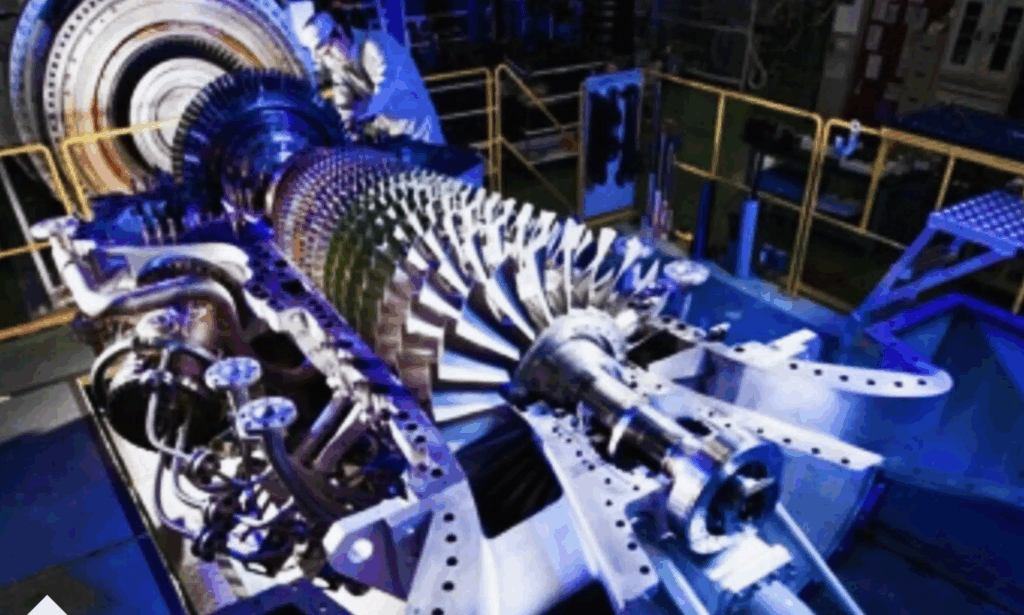

Kawasaki Heavy Industries has opened orders for what it describes as the first commercial gas engine capable of operating on a fuel mix containing up to 30% hydrogen.
The KG series hydrogen co-firing engine became available in late September 2025 after completing an 11-month verification program at the company’s Kobe facility.
Kawasaki Launches World’s First Commercial 30% Hydrogen Co-Firing Gas Engine
The engine runs on a blend of natural gas and up to 30% hydrogen by volume, a proportion that allows use of existing gas pipelines with little modification.
However, hydrogen supply remains limited, especially in Japan, which imports most of its energy and still lacks large-scale hydrogen infrastructure.
The engine is not yet built for 100% hydrogen use; instead, it is designed as a transitional solution compatible with current natural gas systems.
Because of this compatibility, facilities can adopt the engine without replacing pipelines or storage tanks.
Earlier KG models, in service since 2011 with more than 240 orders, can be retrofitted to handle hydrogen co-firing.
This retrofit option enables older natural gas plants to lower emissions gradually without replacing entire power fleets.
Kawasaki Completes Year-Long Verification Testing on Hydrogen Co-Firing Engine
Verification testing between October 2024 and September 2025 examined real-world operational issues such as hydrogen supply integration, maintenance demands, and safety systems.
Engineers focused heavily on hydrogen’s unique risks, including leakage, metal embrittlement, and its wider ignition range compared to methane.
The engine includes hydrogen leak detectors and nitrogen purge systems to neutralize fuel lines during startup, shutdown, or malfunctions.
At the same time, Kawasaki Heavy Industries partnered with Yanmar and Japan Engine Corporation to complete what they called the first land-based operation of marine hydrogen engines on October 28, 2025.
The demonstration used a newly developed liquefied hydrogen fuel system and tested multiple marine engine types.
Medium-speed four-stroke engines showed stable hydrogen combustion, while a low-speed two-stroke hydrogen engine for large container ships is expected to begin operation in spring 2026.
These marine engines are dual-fuel, meaning they can alternate between hydrogen and diesel depending on availability.
This flexibility addresses the slow development of global hydrogen bunkering infrastructure, which may take decades to mature.
The marine initiative is supported by Japan’s Green Innovation Fund, managed by New Energy and Industrial Technology Development Organization (NEDO), backed by about 2 trillion yen (approximately $13 billion) to support carbon neutrality by 2050.
Both power and marine projects depend on infrastructure still under construction.
Image Source

Comments are closed.