
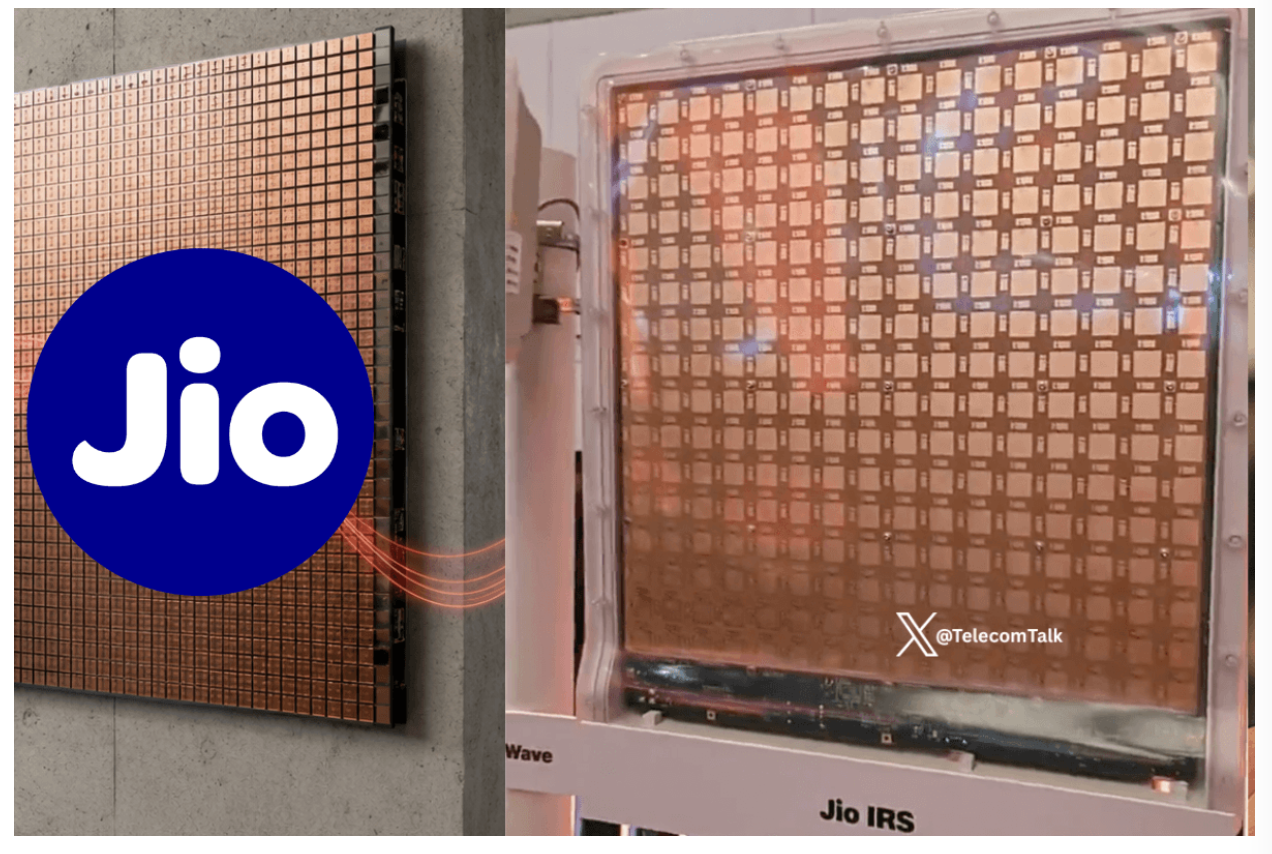

Reliance Jio is exploring a new technology called Intelligent Reflecting Surfaces (IRS)commonly referred to as “Smart Walls,” to improve mobile network coverage in areas where signals are weak. Instead of installing additional mobile towers, these programmable panels redirect existing radio waves towards locations with poor connectivity, potentially improving indoor coverage while consuming very little power.
The technology is being developed as part of Jio’s indigenous 6G research and could play an important role in the evolution of future mobile networks.
How Smart Walls Work
Unlike conventional mobile towers, Smart Walls do not generate new signals. Instead, they contain thousands of tiny programmable reflective elements that can intelligently redirect existing radio waves towards specific locations.
The concept works much like a mirror reflecting light, except these panels redirect mobile signals around obstacles such as walls, buildings and other structures that often block network coverage.
This approach could significantly improve connectivity inside homes, offices, shopping malls and other indoor environments where signals usually weaken.
Powered By AI And Low Energy Consumption
Jio’s prototype uses software-controlled beam steering combined with JioBrainthe company’s AI-powered network optimisation platform.
The intelligent system continuously analyses network conditions and dynamically adjusts signal direction in real time for better performance.
Another key advantage is energy efficiency. According to Jio, the prototype consumes less than 7 watts of powermaking it a highly sustainable solution compared to deploying additional network infrastructure.
Alternative To Installing More Towers
Telecom operators traditionally improve coverage by installing new towers, small cells or indoor network equipment. However, these solutions often require significant investment, regulatory approvals and additional space.
Smart Walls offer a complementary approach by making better use of existing radio signals instead of creating new ones. This could reduce deployment costs while improving coverage in difficult locations.
The technology may become especially valuable for higher-frequency 5G and future 6G networks, where signals deliver faster speeds but struggle to penetrate buildings and physical obstacles.
Global Telecom Companies Also Testing Similar Technology
Reliance Jio is not alone in exploring intelligent reflecting surfaces. Leading telecom operators in Japan and Europe have also conducted pilot projects using similar programmable surfaces to improve mobile coverage and network efficiency.
However, most deployments remain in the research and testing phase, with commercial rollouts yet to begin.
Part Of Jio’s 6G Vision
Jio showcased its Intelligent Reflecting Surface prototype during India Mobile Congress 2025 as part of its indigenous 6G technology stack. Although no commercial launch timeline has been announced, the technology demonstrates India’s growing focus on developing next-generation telecom innovations.
If successful, Smart Walls could become an important addition to future mobile networks by improving indoor connectivity, reducing energy consumption and delivering better user experiences without requiring a large number of additional towers.
Summary
Reliance Jio is testing AI-powered Smart Walls that use Intelligent Reflecting Surface technology to redirect existing mobile signals into weak coverage areas. Consuming less than 7 watts of power, the solution could improve indoor connectivity, reduce dependence on additional towers and become a key component of future 5G and 6G mobile networks.
Image Source

Comments are closed.