

J&K falls in highest earthquake risk category; govt orders audit of buildings, infrastructure

In its revised earthquake zone map for the country, the Bureau of Indian Standards (BIS) has placed the entire Union Territories of Jammu and Kashmir and Ladakh in the newly created highest-risk seismic zone.
“All 20 districts of Jammu and Kashmir, being in the highest-risk seismic zone, are seismically vulnerable. Recently, vide Government Order No. 158-JK(GAD) of 2026 dated 06.02.2026, a committee of experts for Hazard, Vulnerability and Risk Assessment (HVRA) for the Union Territory of Jammu and Kashmir has been constituted,” the government stated in a document tabled on the floor of the Legislative Assembly.
“The Bureau of Indian Standards (Department of Consumer Affairs), Government of India, vide Gazette Notification No. HQ-PUB013/1/2020-PUB-BIS (1361) dated 06-11-2025, has established Standard No. IS 1893 (Part 1): 2025 titled ‘Design Earthquake Hazard and Criteria for Earthquake-Resistant Design of Structures – Code of Practice, Part 1: General Provisions (Seventh Revision)’. The said standard provides a revised earthquake zone map of the country. The entire Union Territory of Jammu and Kashmir has been placed in the newly introduced Zone VI with the highest seismic risk,” the government informed the Legislative Assembly on Monday.
All existing buildings, hospitals, bridges, tunnels to be audited
Replying to a query on whether schools, hospitals, bridges, tunnels, and other critical infrastructure projects are being audited for compliance with Zone VI earthquake-resistant standards, the government admitted that, as of now, all existing and new buildings—including schools, hospitals, bridges, tunnels, and other critical infrastructure—are required to be audited and evaluated for compliance with the standards prescribed under IS 1893:2016.
“Such structural audits and seismic evaluations are being carried out by the Design Inspection and Quality Control (DIQC), the designated technical authority for this purpose,” the government said. It further informed that, following the floods of 2025, the School Education Department conducted a safety audit of over 11,678 school buildings through the PW (R&B) Department.
Regarding steps taken to retrofit existing public buildings, the government stated that once structures requiring seismic strengthening are identified through audits conducted by DIQC/NIT, appropriate and technically sound retrofitting measures are recommended.
“The Public Works Department ensures that suitable retrofitting interventions are carried out in accordance with applicable IS codes and engineering guidelines to enhance the seismic resilience of such structures in both urban and rural areas,” the government added.
Early warning system
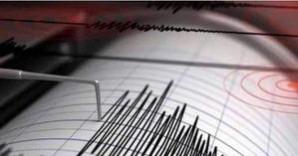
The government informed that research efforts have begun in India to develop an Earthquake Early Warning (EEW) system for the Himalayan region, though these remain at a nascent stage.
However, the National Centre for Seismology (NCS), under the Ministry of Earth Sciences, records earthquakes. Details of earthquakes reported by the NCS are available in the public domain through its social media platforms and official website (seismo.gov.in).
The National Centre for Seismology is the nodal agency of the Government of India for monitoring earthquake activity in the country. It maintains a National Seismological Network of more than 160 stations equipped with state-of-the-art instruments spread across the country.
The NCS monitors earthquake activity round-the-clock through its 24×7 monitoring centre. It also tracks earthquake swarms and aftershocks by deploying temporary observatories near affected regions. In addition to monitoring, the NCS is actively involved in seismic hazard micro-zonation and seismological research.

Comments are closed.