
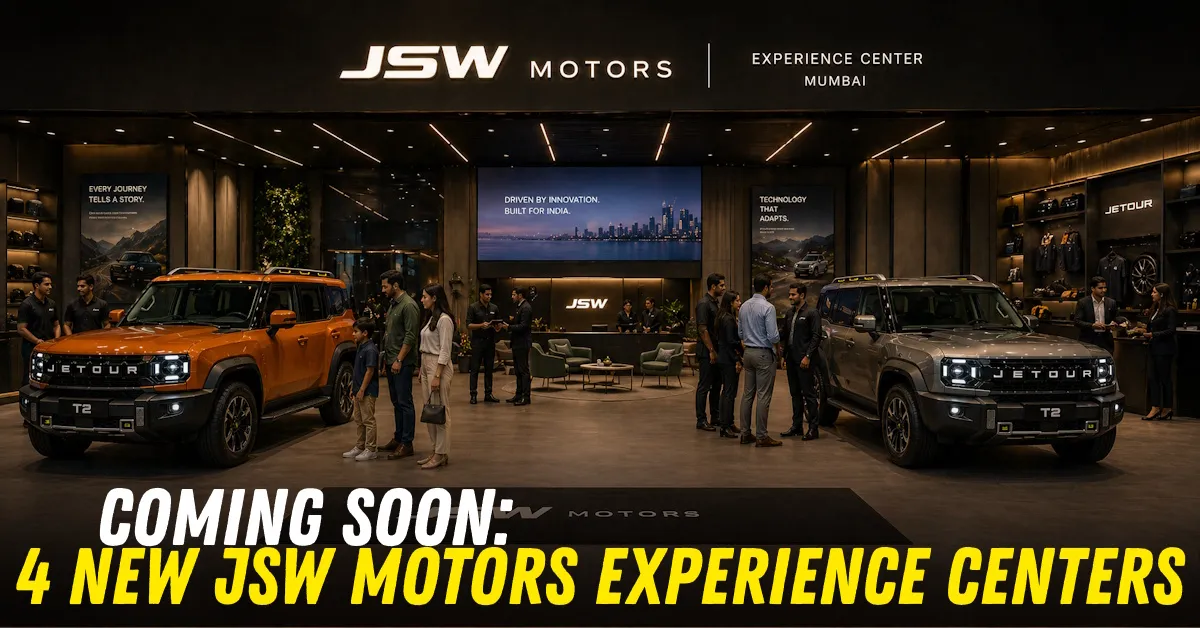

JSW Motors is preparing to open at least four company-owned experience centres before launching its first passenger vehicle in the second half of 2026. The first outlets are planned for Mumbai, New Delhi and Ahmedabad, with more likely to follow.
That by itself is notable, because most new car brands still begin with a dealer-led retail model. JSW is doing the opposite. It wants early customers to walk into brand-controlled spaces, not conventional dealerships.
That tells you two things straight away. First, JSW knows it is entering the market without passenger car brand recall. Second, it believes its first products will need explanation as much as demonstration. The company has already said its initial line-up will include a plug-in hybrid and a range-extender vehicle in 2026.
Those are not body styles or powertrains that sell themselves in one glance. Buyers will need the technology explained properly, and JSW clearly wants to control that conversation from day one.

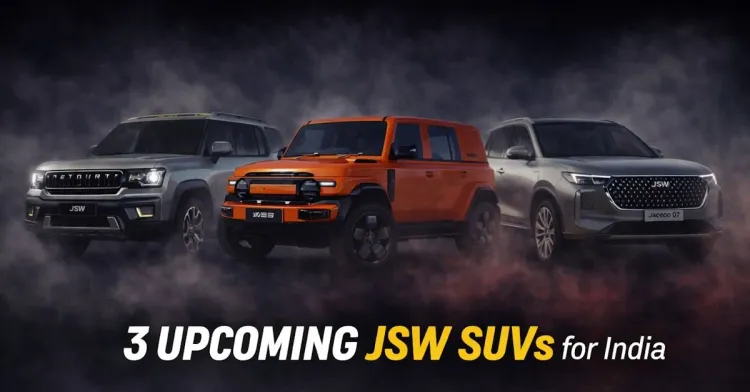
Vehicles under JSW’s separate partnership with Chery Automobile are also expected to carry the JSW badge. That matters because it gives the company faster access to platforms and technology instead of spending years developing everything from scratch. The likely route is local assembly first, followed by deeper localisation once volumes begin to justify it.
The company is also building a manufacturing facility in Maharashtra for new-energy vehicles. The same industrial setup will support electrified trucks and buses under JSW Greentech Ltd, which will first serve the group’s own fleet before expanding outward. In other words, JSW is not testing the waters casually. It is building an automotive business with passenger vehicles on one side and commercial electrification on the other.
A company-owned outlet model gives JSW tighter control over three things in the launch phase: pricing, customer experience and brand positioning. That matters more for an unfamiliar brand than it does for an established one.
If the first product is a plug-in hybrid, sales staff need to explain battery charging, electric-only driving range, fuel efficiency in mixed use, and how the vehicle differs from both a normal hybrid and a full EV. In a conventional dealer setup, that message can get diluted quickly.
Tesla has used this model globally. So have newer EV brands in several markets. The logic is straightforward. When the product itself is unfamiliar, retail has to feel more like guided onboarding than simple selling.
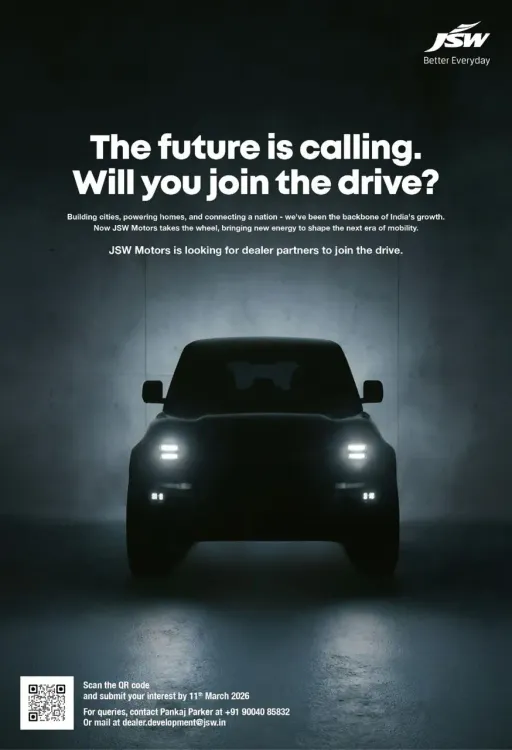
JSW Motors has also started reaching out to dealer partners, which suggests the company-owned phase may only be temporary. That is sensible. Experience centres may work in a handful of metro cities, but they do not scale fast enough on their own if the company plans broader volumes by 2027 and 2028.
The bigger question is whether JSW’s first electrified SUV can stand out in a market that already has strong-hybrid rivals from Toyota and Maruti, premium EVs from BYD and Hyundai, and a growing number of upper-end SUVs around the Rs. 30 lakh to Rs. 50 lakh mark. Brand-new companies do not get much room for error in that price band. JSW Motors has its task cut out.
Comments are closed.