
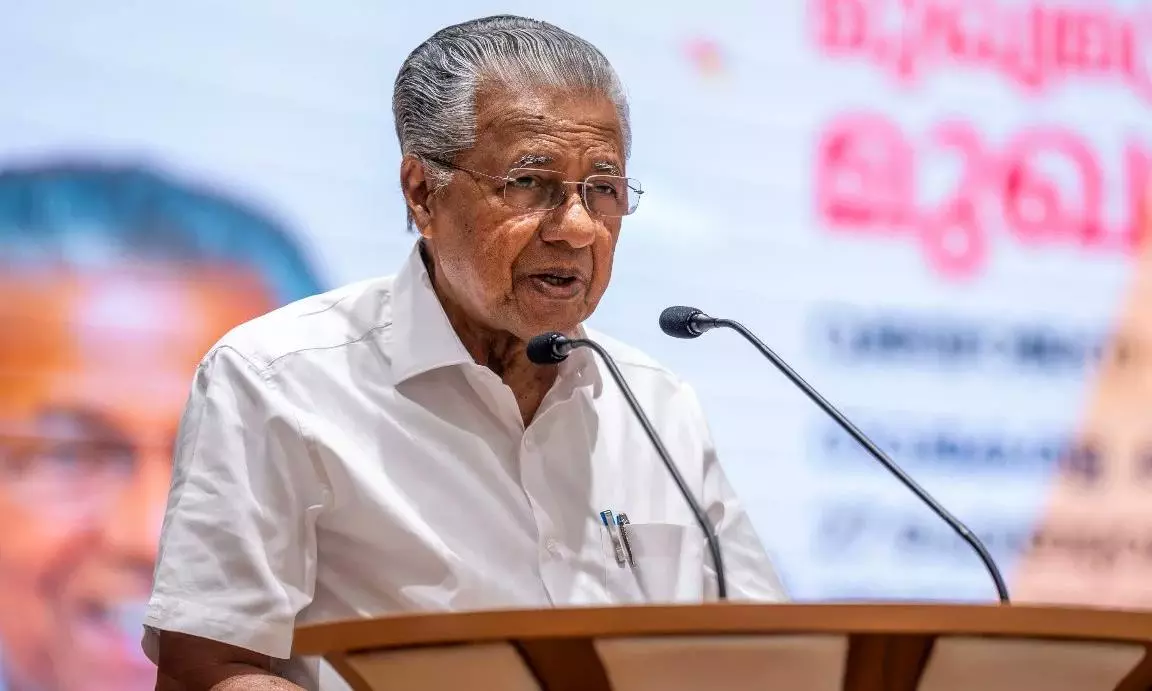

The Left Democratic Front (LDF) government led by Pinarayi Vijayan in Kerala was voted out of power on Monday (May 4) after a gap of 10 years, bringing to a close the last communist-led administration in India.
Not a single Left govt in India now
Except for the period between 1959 and 1967, the Left, in one form or another, had remained in power in at least one state in the country for seven decades. With this verdict, that long continuum has been interrupted, closing a distinctive phase in India’s federal political history.
Follow 2026 Assembly election results LIVE
The story began in Kerala in 1957, when a communist government came to power through elections, a global first. That experiment was cut short in 1959 when the Congress-led Union government dismissed it, invoking Article 356 for the first time in the country, but it went on to set the template for democratic Left politics in India.
The intervening years were marked by instability, including a phase when an elected assembly could not function. The Left’s return in 1967 came through tactical alignments, with a faction, the Communist Party of India, cooperating with the Congress, signalling an early willingness to balance ideology with electoral pragmatism.
A decisive turning point came in 1964 with the split in the Communist Party of India (CPI) and the formation of the Communist Party of India Marxist or CPI(M). The divide reshaped Left politics across the country. The CPI, though smaller, aligned with the Congress during the period from 1967 to 1977, participating in governments and adopting a more accommodative line.
The CPI(M), on the other hand, positioned itself as the principal force of opposition within the Left space, consolidating its base among workers and peasants.
The Emergency (1975-77) and its aftermath altered these alignments. The earlier cooperation between the CPI and the Congress broke down, leading to a reconfiguration of Left politics.
Also read: Bengal’s Didi shield cracks: How Mamata Banerjee lost the state she dominated
By the late 1970s and early 1980s, broader coalitions began to take shape. In Kerala, this resulted in the formation of the LDF, whereas in West Bengal and Tripura, the Left Front emerged as a cohesive political formation. These alliances brought together different Left parties under a common platform, enabling more stable and sustained governance.
In Bengal, Left ruled continuously for 34 years
Bengal became the most enduring example of this consolidation. From 1977 to 2011, the Left Front governed without interruption. Its early years were marked by land reforms and the strengthening of local governance institutions, which helped build a durable rural support base. Yet, over time, patterns that had once sustained this dominance began to erode it.
In West Bengal, the Left was in power for 34 consecutive years, first led by Jyoti Basu (right) as the chief minister for 23 years and then Buddhadeb Bhattacharjee for 11 years.
Economic stagnation, resistance to industrial change, growing political fatigue, and the steady centralisation of power weakened its connection with a changing electorate.
Added to this, an inward-looking sectarianism narrowed its social reach, deepening a sense of distance from the very constituencies that had once formed its core.
Tripura was also under Left rule for a long time
Tripura followed a similar trajectory, with the Left Front playing a dominant role from 1977 to 2018, apart from brief interruptions. Governance there emphasised literacy, social development, and relative stability in a complex social landscape.
Yet, changing political narratives and the rise of new forces such as Hindutva-charged BJP eventually ended its long tenure.
Kerala remained distinct. Unlike West Bengal and Tripura, it did not allow uninterrupted rule. Power
alternated between the CPI(M)-led LDF and the Congress-led UDF, preventing long-term incumbency fatigue.
This cyclical pattern kept political competition sharp and forced constant adaptation. The Left’s return to power in consecutive terms in 2021 broke that pattern, giving it a rare extended mandate in the state.
Also read: Bengal giant killer’s gambit: Suvendu Adhikari and the BJP’s breakthrough
That extended tenure, however, also brought the pressures of continuity. Over a decade in office, issues of governance, economic direction, and political fatigue accumulated.
The model of welfare and administrative efficiency, while widely acknowledged, faced increasing scrutiny in the context of employment generation and growth.
However, it was ultimately the consolidation of minority votes, both Muslim and Christian, combined with a steady erosion of support among OBC and Dalit communities, that undid them this time.
What’s behind Vijayan’s defeat
The defeat of the Vijayan government, therefore, carries layered significance. It is not just a routine electoral outcome in Kerala’s alternating pattern, but the end of a broader historical sequence that linked different states and phases of Left politics.
From the early experiments in Kerala to the long dominance in Bengal and Tripura, and the coalition era that followed the Emergency, the Left had maintained a continuous, if shifting, presence in state power.
This moment does not erase that legacy. The impact of communist governance remains embedded in institutions and social outcomes. Land reforms, expansion of public education and health, and the strengthening of decentralised governance continue to shape these states.
Even political opponents operate within frameworks influenced by these earlier interventions.
At the same time, the context has changed. Economic liberalisation, urbanisation, and shifting social aspirations have altered the terrain on which the Left operates. Class-based mobilisation now intersects with identity, development, and national narratives in more complex ways. The organisational strengths that once sustained long periods in power have, in some cases, struggled to adapt to these shifts.
Also read: Why 2026 Assembly polls were about Opposition vs BJP plus CEC Gyanesh Kumar
The absence of a communist-led state government marks a clear break. Yet it is also a moment of transition. The Left continues to have representation in legislatures and retains an organisational presence that extends beyond electoral cycles.
Whether it can translate that presence into a renewed political strategy remains an open question. What is certain is that an era defined by sustained communist governance at the state level has paused. The arc that ran from the breakthroughs of the 1950s, through ideological splits and coalition building, to long incumbencies and eventual decline, now stands at a point of reflection.

Comments are closed.