
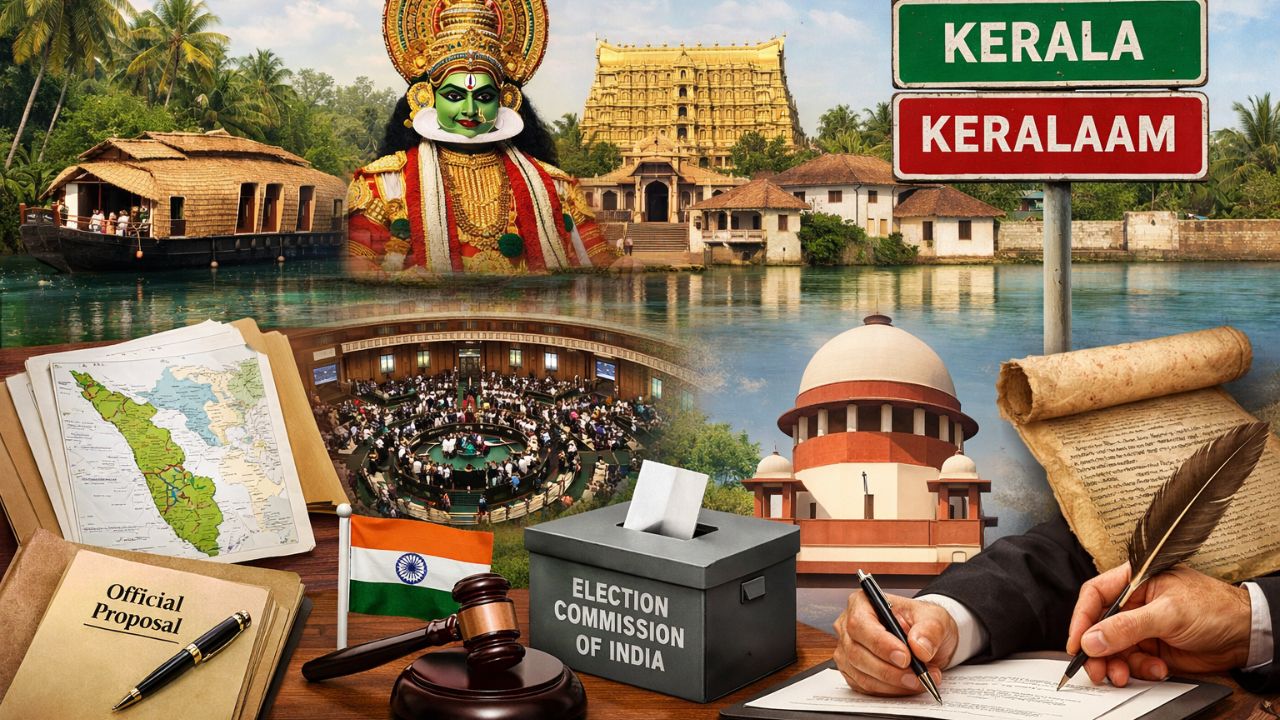
Kerala will now be Keralaam! What exactly is the process of changing the name of a state? Know the legal provisions

- Kerala will now officially become ‘Kerala’!
- Approved by Modi Govt
- Know the legal process of changing the name of the state
How Can Change Name Of State: Over the years we have seen many cities and railway stations in the country changing their names. Now the name of a state is going to be added to this list. of South India Kerala The proposal to change the name of the state to ‘Keralam’ By the Modi Cabinet The green light has been given. After this approval, the bill will now be tabled in both houses of Parliament. However, it is important to know how the process of changing the name of a state technically works and who has the right to do so.
Who has the right to change the name of the state?
According to the Constitution of India, the final authority to change the name of any state in the country rests only with the country’s parliament. Article 3 of the Constitution gives Parliament the exclusive power to enlarge the area, change the boundaries or change the name of any State. It is under this Article that the process of changing the geographical and political identity of any state takes place.
Heartiest congratulations to the people of Keralam. The Union Cabinet’s decision under the leadership of Modi Ji to rename Kerala as ‘Keralam’ is a significant step towards fulfilling the long-standing demand of the people of the state. The name ‘Keralam’ will manifest the… pic.twitter.com/XAdXap5HlA
— Amit Shah (@AmitShah) February 24, 2026
Political News : “When the time came to reply to China..; Rahul Gandhi’s strong criticism of Prime Minister Modi
How is the name change process?
The process of changing the name of a state can be initiated mainly at two levels: Legislative Assembly or Parliament.
- State Assembly Initiative: If the state government wants to change the name, first the proposal has to be approved by a majority in the assembly. The proposal is then sent to the central government.
- Role of Center and NOC: If the Center gives preliminary approval to the proposal, it is mandatory to obtain ‘No-No Certificate’ (NOC) from various departments such as Ministry of Home Affairs, Intelligence Bureau (IB), Survey of India, Department of Posts and Registrar General.
- Approval of Parliament: After the Center gives the green light, the Bill is tabled in the Lok Sabha and then in the Rajya Sabha. The bill must be passed by a simple majority in both houses.
- Seal of the President: After the Bill is passed by both Houses of Parliament, it is sent to the President for final signature. An official notification of name change is issued only after the assent of the President.
A solid reason is required for name change
It is not just a wish, but a strong historical, cultural or linguistic reason for changing the name is mandatory. In 1953, the Ministry of Home Affairs had prepared clear rules regarding this process. The then Deputy Secretary Sardar Fateh Singh had informed the state governments in a letter that the change in name was necessary to preserve the state’s identity and cultural heritage.
A month-long period and administrative changes
The process of changing the name of the state takes several months to complete. Once the name is changed, not only the paperwork changes, but also all the government offices, official seals, transport departments and centre-state agreements have to change. In the case of Kerala, the state is called ‘Kerala’ in the Malayalam language, so the main objective is to gain national recognition of our linguistic identity.
Proud! Srikanth Shinde to lead India again; Delegation to ‘this’ country

Comments are closed.