
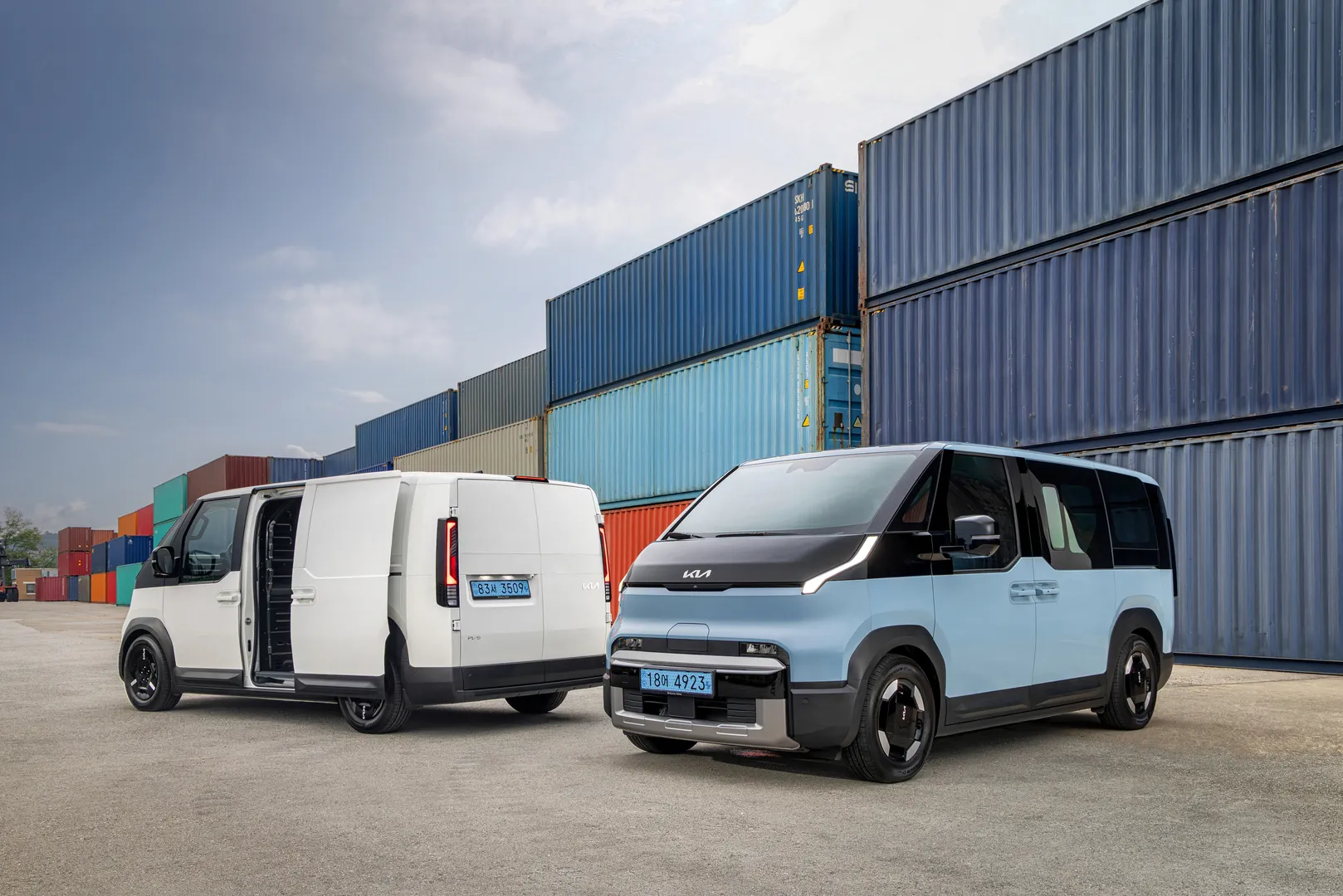

Kia has taken a strategic leap into Canada’s evolving commercial EV space with the debut of the PV5 electric van at the Canadian International Auto Show in Toronto. While it may not be the flashiest reveal on the show floor, this vehicle could quietly reshape urban logistics and last-mile delivery across the country.
At a time when e-commerce continues to surge, demand for efficient, compact delivery vehicles is rising. Kia appears to be stepping in at just the right moment.
Filling a Market Void
Here’s the thing: Canada’s compact van segment has been thinning out. Models like the Ford Transit Connect, Ram ProMaster City, and Nissan NV200 have all exited the market, leaving businesses with oversized and often inefficient full-size vans.
The PV5 positions itself neatly in this gap. It’s smaller than traditional commercial vans but still offers a generous 5,000 litres of cargo space. That makes it ideal for urban deliveries, small businesses, and service professionals who don’t need a massive vehicle but still require practicality.
In simple terms, Kia isn’t just launching a van; it’s reviving a segment.
Built on a Flexible EV Platform
The PV5 runs on Kia’s Electric Global Modular Platform (E-GMP), the same architecture that underpins its successful EV lineup. What this really means is flexibility.
The modular approach allows Kia to create multiple versions of the same vehicle, from cargo vans to passenger carriers, wheelchair-accessible models, and even chassis cabs for custom business applications. While Canada will initially get only the cargo variant, global markets are already seeing more diverse configurations.
There’s also talk of a broader lineup, including smaller and larger variants, hinting at Kia’s long-term commitment to this space.
Performance and Practicality
Under the hood, or rather, under the floor, the PV5 packs a 71.2-kWh battery paired with a front-wheel-drive electric motor producing 161 horsepower. It delivers an estimated range of around 416 kilometres based on overseas testing.
What stands out is how the battery placement improves usability. By integrating it into the chassis, Kia frees up interior space and lowers the centre of gravity. The result is better stability and a more practical loading floor.
And it’s not just about driving. The PV5 can also supply power externally, making it useful for job sites, tools, or even outdoor activities.
Smart Features for Real-World Use
Kia has clearly designed the PV5 with businesses in mind. The van includes features like a removable passenger seat to expand cargo space, a stain-resistant interior, and customizable mounting points for storage solutions.
Tech-wise, it gets a Google-based infotainment system, a 360-degree camera for easier maneuvering, and a Tesla-style NACS charging port—making it compatible with a growing charging network.
Pricing and Market Potential
While official pricing hasn’t been announced, expectations suggest it could land significantly below the cost of larger electric vans, which often start near $90,000. That puts the PV5 in a potentially sweet spot for small and medium-sized businesses.
What this really means is accessibility. If priced right, the PV5 could accelerate EV adoption in the commercial sector.
More Than Just a Work Van
Interestingly, the PV5’s story doesn’t end with businesses. In international markets, passenger versions are already in play. If Kia brings those to Canada, this could double up as a practical family vehicle, especially for buyers looking for something electric, spacious, and versatile.
For now, though, Kia is playing it smart. Start with businesses, solve a real problem, and build from there.
And if early impressions are anything to go by, the PV5 might just be the “small big thing” Canada didn’t know it needed.

Comments are closed.