
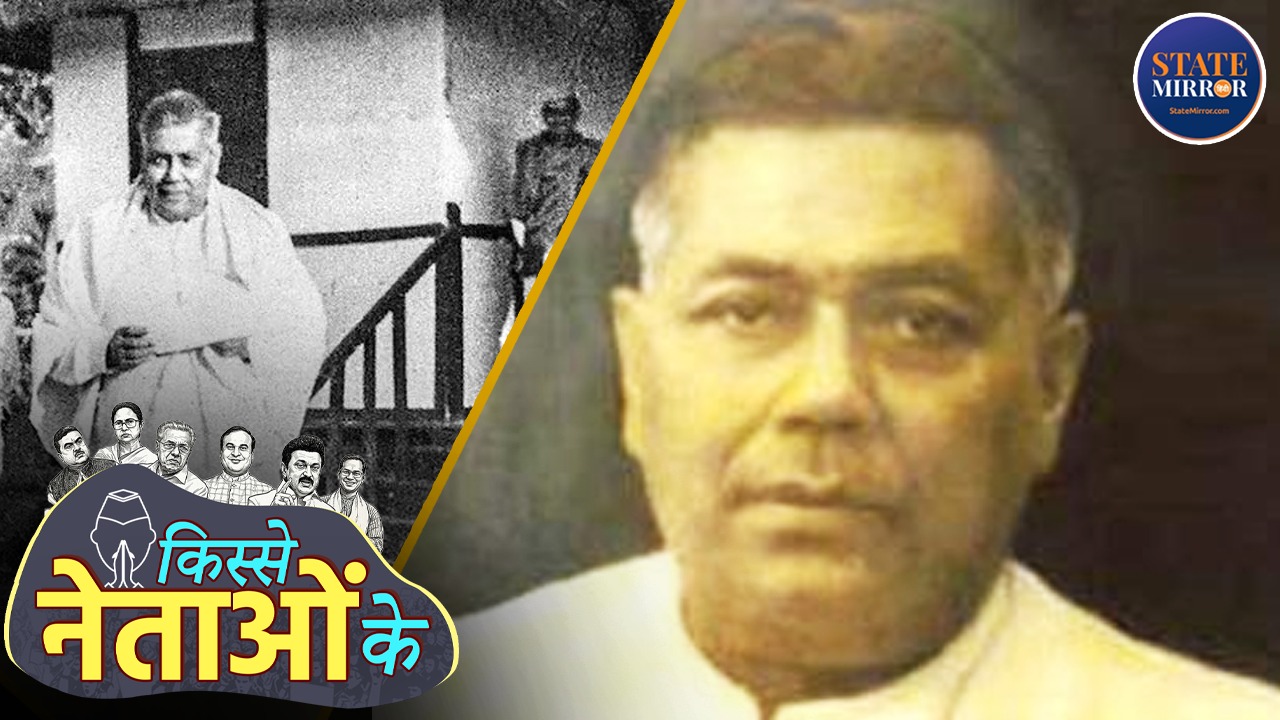

“If the direction of a decision had changed at that time, Assam might not have been a part of India today.” This is not a film dialogue, but the truth of history, in which a leader changed the fate of the entire state with his determination, strategy and thinking. That leader was – Gopinath Bordoloi, who is today called “Sher-e-Assam”. This is the reason why it is important to mention him during the elections in Assam. So that everyone can know, there was a leader of Assam, because of whom he is a citizen of India today.
Sher e Assam’Gopinath Bordoloi‘ is mentioned in many important books, where he has been presented as a leader who played an important role in the creation and preservation of Assam. The most prominent book is Lokopriya Gopinath Bordoloi: An Architect of Modern India, which focuses entirely on his life, contribution to the freedom struggle and his role in saving Assam from partition. It mentions his political decisions, administrative vision and leadership style.
Apart from this, in ULFA: The Mirage of Dawn, he is not mentioned directly as the main character, but in the context of the historical background of Assam. This is because this book focuses on ULFA and its political rebellion. This book tells how the political foundation laid during his time changed later. He is also mentioned in India After Gandhi in the context of post-independence India, especially in the context of the politics of North-East India. Apart from this, in many academic books and state level publications based on the history and freedom movement of Assam, Bordoloi has been remembered as the “savior of Assam” and a visionary leader.
From an ordinary boy to becoming the ‘savior of Assam’
The story starts from an ordinary family of Assam, where Bordoloi, born in India, made his mark through hard work and education. He was born on 6 June 1890 in Nagaon (then Naogaon), Assam. This region was an emerging administrative and cultural center at that time, which greatly influenced his early life and thinking. He studied law, but his real inclination was towards society and politics.
Inspired by Mahatma Gandhi’s movement, he entered the freedom struggle. He went to jail and struggled, but during this time he understood one thing very deeply. Assam is not just a state but a sensitive geopolitical region. This understanding later became the foundation of his biggest decision.
1940s: When Assam’s fate was at stake!
India was close to independence, but the future of every state was not decided. Meanwhile, Muslim League played a big political gamble. Plan to include Assam in East Pakistan by connecting it with Bengal. This scheme was brought through the “Grouping System” of the Cabinet Mission Plan 1946.
What does this mean?
Assam will go in a group with Bengal. Muslim League had more influence there. Gradually the political direction of Assam could change. That is, Assam could have come under the influence of Pakistan without direct partition. Interestingly, at that time, senior Congress leaders, including Jawaharlal Nehru, were in no mood to completely reject this grouping, but this is where Bordoloi chose a different path from the “high command”. He said – “The identity of Assam cannot be a part of any compromise.” This was not just a statement, but a political rebellion.
On which three fronts was the battle fought?
Bordoloi did not limit this issue to just speeches. He adopted a well-planned strategy. First resorted to the power of the assembly. Got a resolution passed against grouping in the Assam Assembly. This was a big political message. Secondly, he went from village to village and explained to the people how this decision could change their future. Thirdly, he put pressure on Delhi and British officials not to let this happen. Through continuous dialogue and pressure, he forced the Center to change its position.
Expert player of silent diplomacy
Very few people know that Bordoloi not only protested publicly but also played a big role behind the scenes. In this campaign he included the tribal leaders of Assam. It was explained to the British officials that the social structure of Assam was different from that of Bengal. He also argued that if Assam was forcibly annexed, instability would increase there. This “silent diplomacy” was his biggest strength. Ultimately the decision was reversed. After continuous pressure and opposition, the grouping plan started weakening. In the end it was decided to keep Assam out of that system.
How to be called the protector of Assam?
This was not just a political victory for Bordoloi. It was a victory to save the identity and future of a state. It is from here that Bordoloi was called “the protector of Assam”. After independence, he not only saved Assam but also created it.
India became independent in 1947 and Gopinath Bordoloi became the first Chief Minister of Assam, but his real test began from here. He did three big things. He laid the foundation of educational institutions in Assam, which strengthened the state administratively. He made policies which later became the basis of the Sixth Schedule of the Constitution. The result was that the security of tribal and hilly areas was strengthened. Furthermore, he laid emphasis on preserving the Assamese language and culture.
Differences with Nehru, but never confrontation, how?
There were differences between Jawaharlal Nehru and Bordoloi on many issues, but the special thing was that Bordoloi never did personal politics. He remained firm on the interests of Assam, but also gave priority to national unity. This balance makes him a different kind of leader.
Unheard Aspect – ‘Soft but Firm Leader’
Gopinath Bordoloi was often called a calm and humble leader, but those close to him say that he used to be very strict while taking decisions. If he felt that the interests of Assam were in danger, he would not have come under any pressure. Many times he took decisions going against the party line. That is, his leadership was a mixture of “soft nature + strong judgment”.
In Rajeev Bhattacharya’s book ULFA: The Mirage of Dawn, Bordoloi is not a main character, but is mentioned repeatedly in the “background”. As a contrast to the early politics of Assam, the foundation of identity and the separatism that emerged later, the author of the book tries to show how Bordoloi created unity and balance. Whereas in the later period the same balance got disturbed.
Is his politics still alive today?
Yes, completely. Today, whenever issues like NRC, CAA, Bangladeshi infiltration and regional identity arise in Assam, everyone remembers Bordoloi. Every political party tries to connect itself with his legacy.
So was the first CM Bordoloi like this?
In view of his role, the Government of India honored him posthumously with Bharat Ratna. But his real respect for the people of Assam is something else. And those names are “Lokpriy” and “Sher-e-Assam”. The people of the state respectfully and lovingly call him Sher-e-Assam. This is because one of his decisions changed the history of Assam. If he had not opposed the “Grouping System”, Assam would have been in Bangladesh today. Imagine what India would have been like today if this had happened.
Therefore, people of Assam say, there are many leaders in history, but there are only a few who decide the future of entire generations with one decision. Sher-e-Assam and Bharat Ratna Gopinath Bordoloi was one of them. If they had compromised at that time, the map, identity and politics of Assam would have been different today. The name of Guwahati’s international airport is ‘Lokpriya Gopinath Bordoloi International Airport’. He is remembered as the creator of modern Assam, who protected the distinct cultural identity of the state.

Comments are closed.