

Ahmedabad, Special Representative
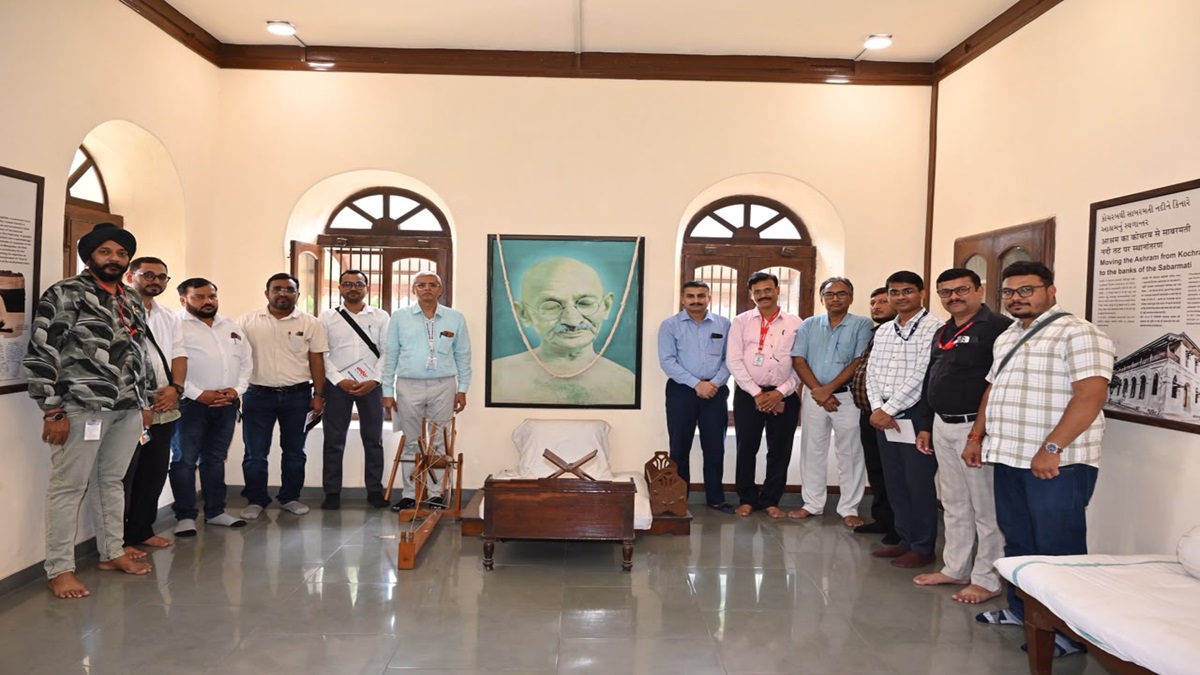
Whenever the history of the Indian independence movement will be written, it will include Sabarmati Ashram Must be mentioned, but before that there was an ashram which laid the foundation of Mahatma Gandhi’s thoughts, Satyagraha and community life. Kochrab Ashram located in Paldi area of Ahmedabad is the place where Mohandas Karamchand Gandhi, who returned from South Africa, put his ideas into practice for the first time and from here began the historic journey of a barrister becoming a ‘Mahatma’.
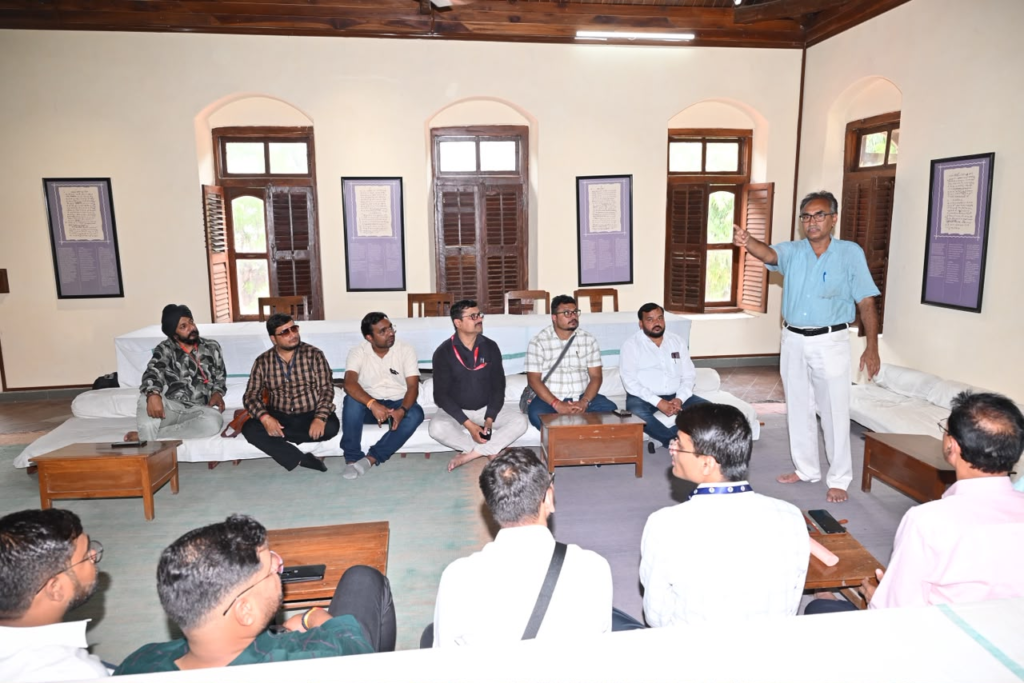
During the study tour of journalists, Dr. Prasanna Gandhi, manager of Kochrab Ashram, told that this ashram, established in the year 1915, was not just a residence, but was the first laboratory of Satyagraha, self-purification, community life and social reforms. He said that the experiences gained by Gandhiji in South Africa’s Phoenix Settlement and Tolstoy Farm were realized for the first time in Kochrab Ashram on Indian soil.
Ahmedabad chosen after Gokhale’s advice
After returning to India from South Africa on 9 January 1915, Gandhiji toured the country extensively on the advice of his political guru Gopal Krishna Gokhale. He considered many places to establish the ashram, but ultimately chose Ahmedabad. The main reasons behind this were that it was the main center of their mother tongue Gujarati, it was an important city of textile industry and there was a possibility of getting support for the national movement from the industrialists and businessmen here.
Satyagraha laboratory started from 150 year old bungalow
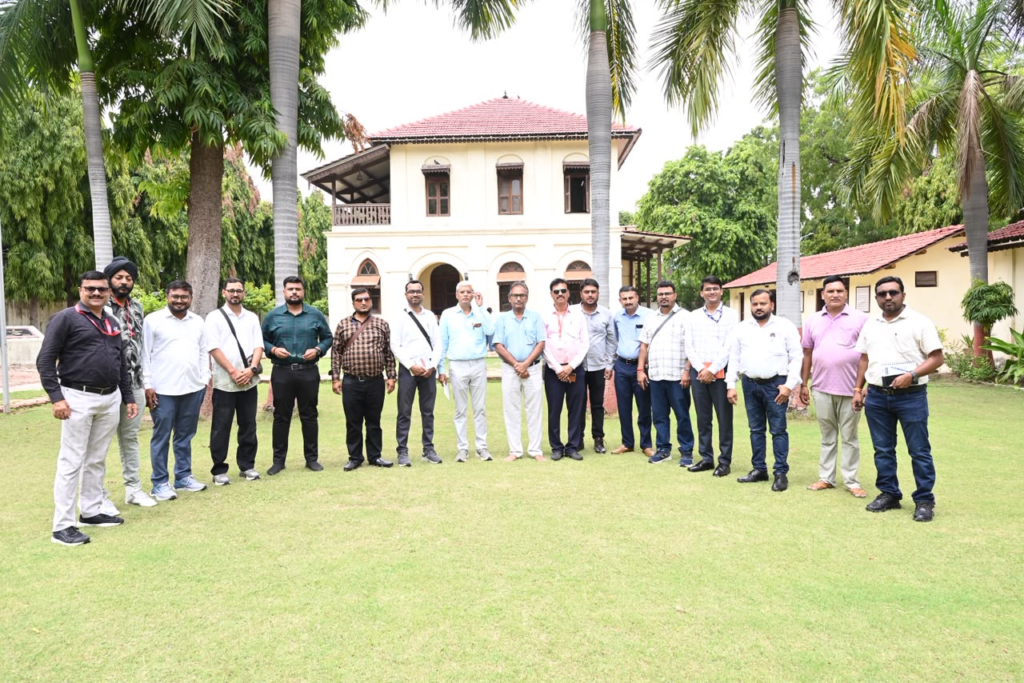
Kochrab Ashram started from the almost 150 years old bungalow of Gandhiji’s friend and barrister Jeevanlal Desai. The ashram residents lived on the lower floor of the building, while meetings were held on the upper floor. It was here that the initial strategies of the freedom movement were discussed. Even today this room is preserved as ‘Satyagraha Memorial Hall’, where the original wooden floor has been preserved.
Historical heritage preserved scientifically
In recent years, the Gujarat government has conserved and redeveloped the ashram. In the year 2022-23, the building was repaired using scientific techniques. The building was given structural strength while preserving as much of the original woodwork, windows, roof and walls as possible. Modern museums, exhibition galleries and activity centers have been developed in the complex, where events related to Gandhiji’s life, thoughts and freedom movement have been presented through modern technology.
The biggest social fight against untouchability started here
Kochrab Ashram also holds special importance in the history of Indian social reform. Shortly after the establishment of the Ashram, Gandhiji allowed a Dalit family – Doodhabhai, Daniben and their daughter Lakshmi – to live in the Ashram. This decision was opposed by some members of the Ashram and influential sections of the then society. Financial assistance was also stopped, due to which the Ashram faced a serious financial crisis.
Gandhiji remained firm on his decision. He clearly said that if financial assistance has to be stopped then it should be done, but the principles of equality and humanity will not be compromised. In this difficult time, industrialist Ambalal Sarabhai rescued the ashram from crisis by providing financial support.
Kasturba was Gandhiji’s biggest ally.
According to Dr. Prasanna Gandhi, Kasturba Gandhi’s role was very important in many important decisions of the Ashram. Gandhiji sought his advice on many subjects and respected his suggestions in conducting community life. The ashram had separate accommodation and a common kitchen for men and women.
Gandhiji’s 11 life vows were made here
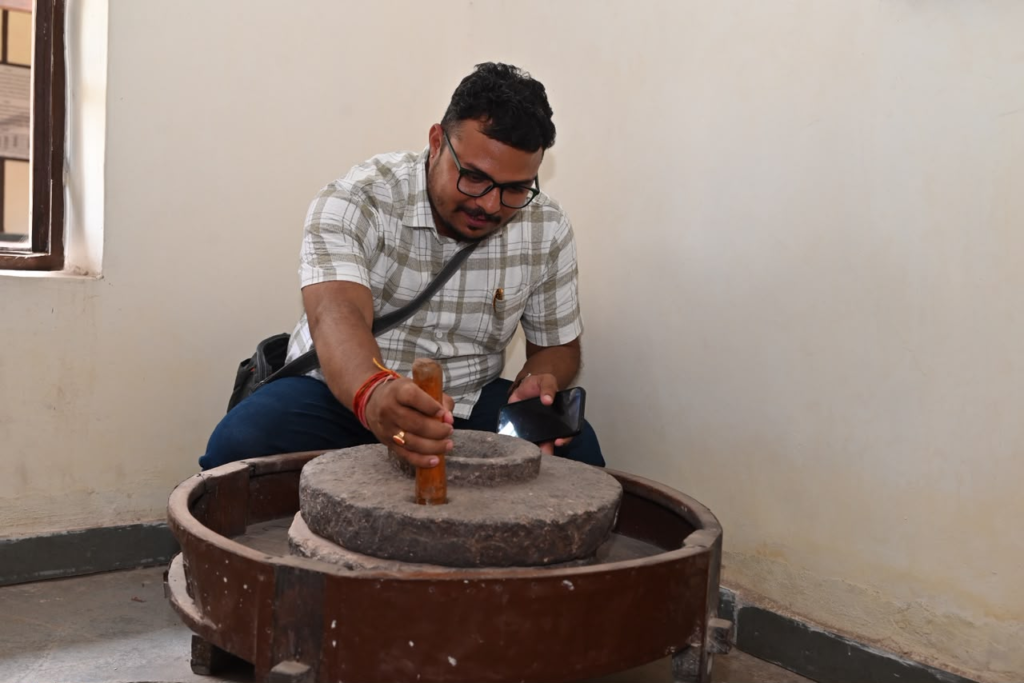
In Kochrab Ashram, Gandhiji developed a system of 11 vows for self-purification and social building. Among these, truth, non-violence, celibacy, selflessness, non-conceit, tastelessness, physical labour, indigenousness, fearlessness, prevention of untouchability and equality of all religions are prominent. He believed that building society and nation is possible only by building the character of an individual.
Transfer to Sabarmati Ashram due to plague
After the outbreak of plague in the Kochrab region in the year 1917, Gandhiji decided to shift the ashram to the banks of the Sabarmati river. His idea was that the Ashram should be at a place where there was a jail on one side and a crematorium on the other, so that the Satyagrahi would be mentally prepared for every situation. This idea later became the basis for the establishment of Sabarmati Ashram.
Museum introducing the heritage of ideas
Even today, pictures and thoughts of Gandhiji’s spiritual guru Shrimad Rajchandra, political guru Gopal Krishna Gokhale and his inspirations Leo Tolstoy, John Ruskin and Henry David Thoreau are displayed in the ashram. Information related to South Africa’s Phoenix Settlement and Tolstoy Farm is also an important part of the museum.
Modern form, but the challenge of maintaining the original spirit
After redevelopment, Kochrab Ashram has become equipped with modern facilities. Efforts are being made to connect the new generation with Gandhiji’s ideas through museums, activity centers and visitor facilities. However, the recent controversy over a social function organized in the ashram premises has also raised the question of how to maintain a balance between modern usage and Gandhian simplicity.
Kochrab Ashram is equally relevant even today
Kochrab Ashram is not just a historical building, but a living symbol of India’s social renaissance, Satyagraha and moral leadership. If Sabarmati Ashram gave national shape to the freedom movement, its ideological and moral foundation was laid in Kocharab Ashram. This is the reason that even today this ashram remains a major center of inspiration for history students, researchers, journalists and tourists coming from India and abroad.

Comments are closed.