
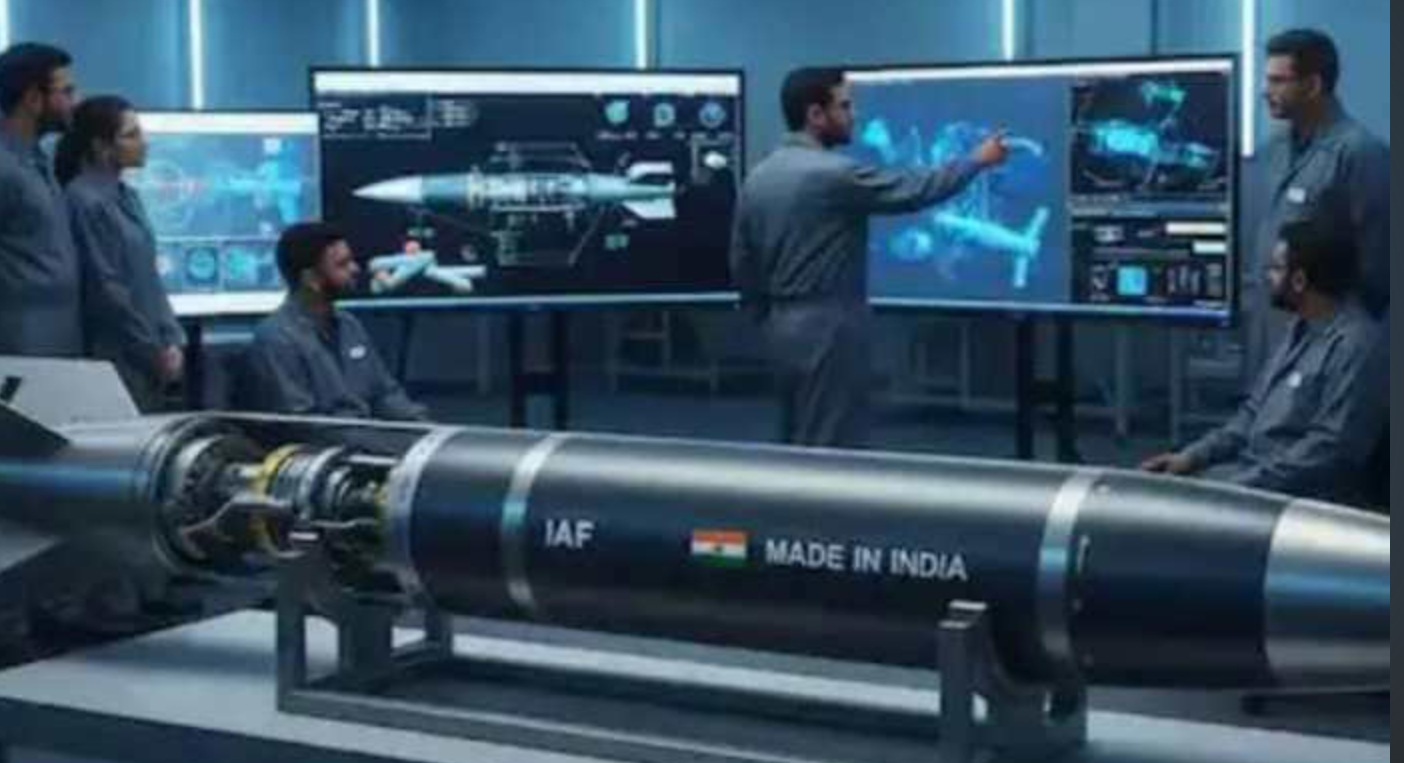

The Indian Air Force (IAF) is set to strengthen its offensive capabilities with the induction of 600 indigenously developed 1,000-kg aerial bombs. The Defense Ministry has issued an ‘Expression of Interest’ (EoI) for the design, development and procurement of these high-yield general-purpose bombs; These bombs are equivalent to MK-84 made in America.
Till now, the IAF has been dependent on imported bombs for this weight class. This new project, which will be run under Make-II category (Industry funded development) followed by Buy (Indian-IDDM) procurement, aims to promote self-reliance (*Atmanirbharta*) in defense manufacturing.
These bombs are designed as weapons that have a natural fragmentation effect and can spread shrapnel over a large area to have maximum impact on enemy targets and infrastructure. These will include the tail unit and associated equipment, and will be compatible with fighter aircraft of both Russian and Western origin in the IAF fleet—such as the Su-30MKI and others.
This project is divided into two phases. In the first phase six prototypes (active and passive versions) will be developed with the required systems. These will be extensively tested and evaluated as per ‘Air Staff Qualitative Requirements’ (Air Force quality requirements), which mandates at least 50% indigenous content. In the second phase, a commercial ‘Request for Proposal’ (RFP) will be issued to qualified Indian agencies for final production and procurement.
The entire process from development to deployment is expected to take approximately 2.5 years. All trials will be conducted within India, on designated IAF aircraft platforms, to ensure operational suitability. Companies from both private and public sectors can participate; It also provides for limited foreign collaboration through technology transfer or joint ventures, provided domestic participation remains predominant in design and manufacturing.
This initiative reflects India’s continued efforts to reduce dependence on foreign suppliers for critical ammunition, and at the same time, enhance the IAF’s lethality in the rapidly changing regional security scenario.

Comments are closed.