
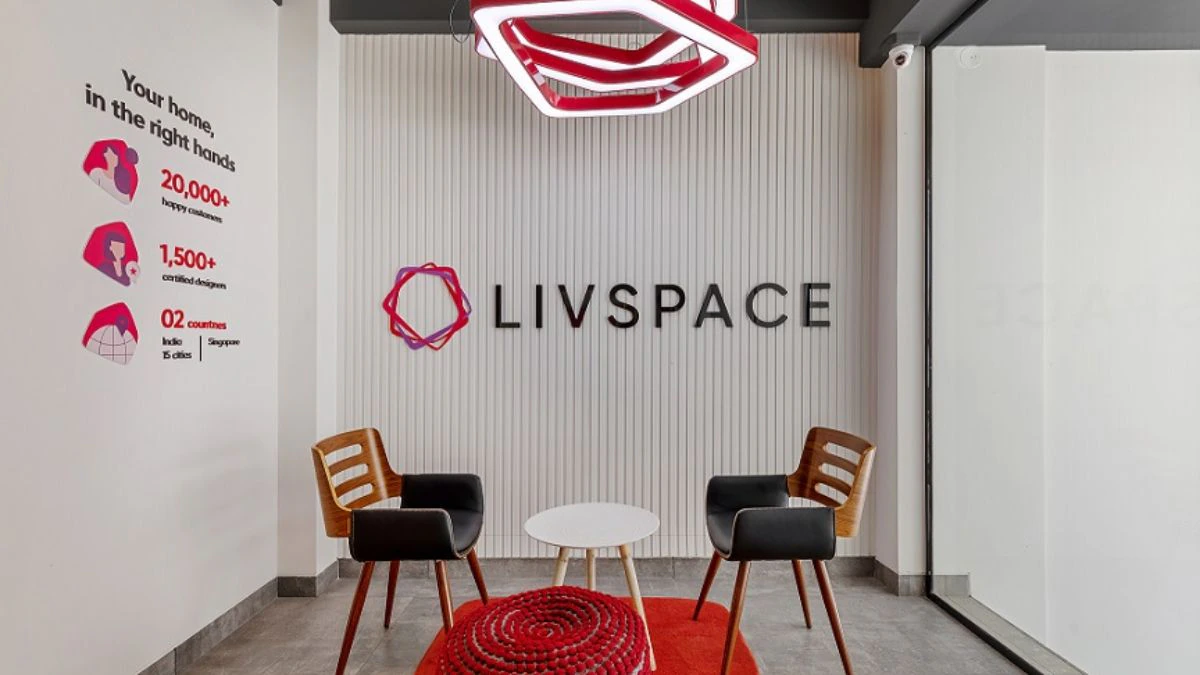

Livspace, an interiors and décor firm, has laid off over 1,000 employees (12% of its workforce) as it transitions to an AI-native, agentic organization. The restructuring, which aims to integrate artificial intelligence and automation across key tasks, coincided with the departure of one of Livspace’s co-founders, Saurabh Jain, who left the company after more than a decade.
The workforce reduction, spread over the past six months, represents one of the most significant layoffs in Livspace’s history. The Bengaluru-based startup, backed by global investors including KKR, has been progressively reshaping its operations as it adopts advanced AI systems for tasks previously done manually. The move underscores how emerging technologies like AI are reshaping business models in India’s startup ecosystem, but also highlights the challenges and tensions such transitions bring for employees and leadership alike.
AI-Led Transformation Results in Major Staff Cuts:
According to company statements, the layoffs at Livspace were not driven by short-term cost cutting, but by a deliberate strategic decision to reallocate resources toward technology-led growth. A spokesperson told Bussiness that the company is reorganising to integrate advanced AI agents and automation in key business areas such as sales, operations, design, and marketing. The integration of AI systems is intended to improve efficiency, reduce manual workload, and enhance productivity across departments.
Functions once handled manually from customer engagement and lead scoring to project design and execution are now increasingly being managed by intelligent systems. For example, AI-powered mood boarding and 3D visualisation tools are being used in design workflows, while predictive systems manage operational timelines and supply chains. Automating these tasks is expected to speed up delivery cycles and reduce dependency on human labour in routine operations.
While Livspace insists that the layoffs are part of a broader strategic pivot rather than a quick reaction to financial strain, the impact on employees has been significant. Workers across multiple verticals including design, sales, operations, and marketing have seen their roles phased out as AI systems assume more responsibilities. The phased reduction over months is meant to ensure that service levels to customers remain stable even as human roles transition.
Co-Founder Exit Amid Leadership Realignment:
Along with the layoffs, Livspace has announced the departure of co-founder Saurabh Jain, who has been with the company since 2015. Jain, who was promoted to executive positions such as Chief Business Officer in 2022, is leaving to pursue personal interests after more than 11 years with the business. The corporation described his departure as a natural leadership transfer in line with its technological evolution.
In a statement, Livspace said Jain has been “a cornerstone” of the company since its early days and played a pivotal role in scaling operations. However, with the company doubling down on AI and automation, the co-founder felt it was the right time to pursue opportunities outside the firm. The transition in leadership happens as Livspace seeks to redefine itself in the rapidly changing home interiors market.
The departure of a co-founder during such a critical transformation highlights the complex interplay between organizational change and leadership continuity. As startups move through different phases of growth and technological adoption, leadership changes often accompany strategic pivots, signalling new priorities and fresh directions.
Industry Implications and Future Outlook:
Livspace’s strategy to become an AI-native agentic organisation reflects a growing tendency among technology companies to embed AI deeply into business processes. While such transformations can boost efficiency and innovation, they also raise questions about workforce disruption and the future of work. Experts say that as AI and automation replace routine tasks, companies will need to balance technological progress with employment considerations, reskilling initiatives, and ethical workforce transitions.
The Livspace layoffs have generated broader talks about the impact of AI on jobs, which are taking place even as global leaders and CEOs explore the future of work at events such as the India AI Impact Summit 2026. Ironically, while many global corporations argue that AI will generate new job prospects, stories like Livspace highlight the physical displacement reality for people in specific roles.
For Livspace, the restructuring is projected to continue as AI systems take on larger operational responsibilities and the company seeks new growth opportunities. With a renewed focus on automation and technology, Livspace hopes to improve its position in the home interiors industry and reinvent how design and execution services are provided. The long-term success of this approach will be determined by how well the company combines innovation, human talent management, and organizational culture.Overall, Livspace’s shake-up is a turning point not only for the business, but also for the larger discussion over AI’s role in changing sectors and the workforce in the coming years.

Comments are closed.