
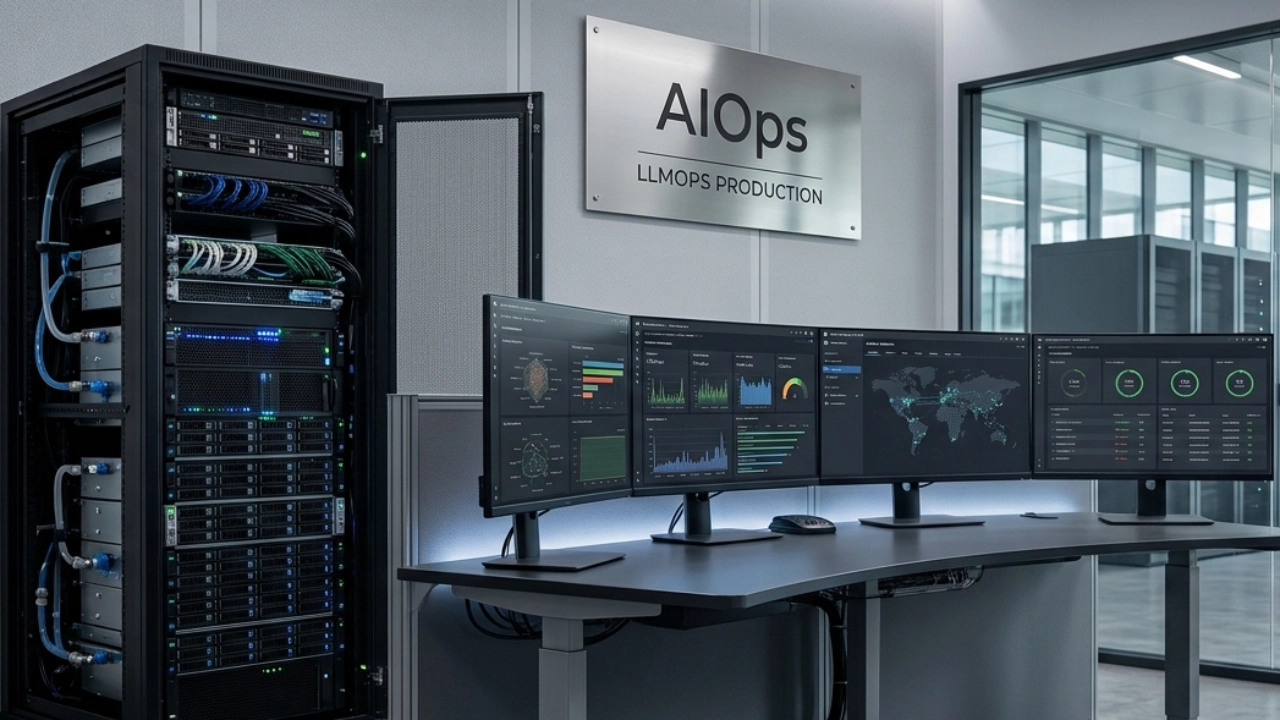

The gap between a language model that impresses in a demo and one that creates durable business value in production is not a model capability problem. It is an operations problem. Getting an LLM to produce a compelling output in a controlled environment is genuinely straightforward in 2026, with the models being capable, the APIs accessible and the tooling for initial integration maturing considerably.
What remains hard, and what most teams underestimate until they are already in production, is everything that happens after deployment, where the system is kept reliable as inputs change, tracking why outputs degrade, managing prompt versions across teams, maintaining audit trails for compliance and controlling costs at scale.
Gartner’s research attributes 85% of AI model failures to production deployment challenges. The S&P Global 2025 survey found 42% of companies abandoned AI initiatives in the past year, doubling the prior year’s rate, with governance gaps and unclear ROI cited as the leading causes. These numbers frame the stakes clearly. LLMOps, the discipline of managing the full lifecycle of LLM-based applications in production, is what separates teams building reliable AI systems from teams repeatedly debugging production incidents they did not see coming.
LLMOps vs. MLOps: Why the Distinction Matters
Before addressing what LLMOps requires, it is worth being precise about why traditional MLOps practices are insufficient for language model systems.
Machine learning models typically handle structured data and generate predictable outputs like scores, categories or forecasts. Large language models work with unstructured text and produce open-ended responses. This shift introduces new requirements in terms of infrastructure, monitoring, testing and governance. Traditional ML outputs are often easy to validate through metrics. LLM outputs, however, are subjective and context-dependent. You need additional validation layers and human feedback to keep them on track.
LLMOps also places a stronger focus on long-term performance. While MLOps may retrain models regularly to handle drift, LLMOps emphasises post-deployment monitoring to track quality and prevent failure in production. This includes tracking prompt performance, managing updates from external APIs and enforcing enterprise-level security.
The practical implication is that a team that has operated ML systems successfully for years cannot assume their processes translate cleanly. Prompt sensitivity, hallucination frequency, and output quality variation in response to subtle input changes are failure modes without precedent in structured ML, and detecting them requires instrumentation designed specifically for generative outputs rather than numeric predictions.
Prompt Engineering and Versioning: The Foundation Layer
The first operational pillar is prompt engineering and versioning. All five pillars of LLMOps function as a system, followed by prompt engineering and versioning, RAG pipeline management, fine-tuning strategy, observability and monitoring, and governance. You cannot buy reliability by investing in only one.
Prompts are the primary interface between an application and an LLM, and in production they function as code as they change, have dependencies, break things when modified without tracking and need to be rolled back when a new version degrades output quality. Best LLMOps practices for enterprises in 2026 include using prompt versioning and rollback for reliability, continuous monitoring for bias, drift and hallucinations.
What effective prompt versioning requires in practice, with full-stack visibility into prompts, responses, costs, latency and multi-step workflows; collaboration features that allow non-technical stakeholders to review prompt changes; and rollback capabilities that can restore a previous version when a new prompt degrades production quality. Without version control on prompts, two common failure modes emerge: (i) teams cannot identify which prompt change caused a quality regression and (ii) different engineers deploy conflicting prompt versions to the same endpoint with no record of what is currently live.
LangSmith and Azure Promptflow are the two most commonly deployed tools for prompt tracing and versioning in 2026 enterprise stacks. LangSmith excels for LangChain-based applications, while MLflow is the most widely adopted open-source option for model registry. The choice between them is largely determined by which orchestration framework the team is already using, the versioning tool and the orchestration layer need to share enough context to make traces interpretable.
Observability and Monitoring: Seeing What Is Actually Happening
LLM monitoring is the continuous measurement of an LLM system’s operational health in production, the equivalent of application performance monitoring for AI workloads. It is the operational function that most teams implement too late, typically after a production incident makes the absence of monitoring visible.
The core metrics that belong in every production LLM monitoring stack fall into four categories.
- Infrastructure metrics (latency, throughput, token consumption and API error rates) are the baseline layer and the closest to traditional APM.
- Output quality metrics (hallucination rate, response relevance, factual accuracy and toxicity scores) are the layer unique to language models and the hardest to measure at scale because they require either automated evaluation models or human review pipelines.
- Cost metrics (per-request token costs, total spend by model and endpoint, and cost-per-task benchmarks across model versions) are essential for any deployment using consumption-priced APIs.
- Drift metrics track whether the distribution of inputs, outputs or user feedback is shifting over time in ways that indicate the system is degrading or being used in ways it was not designed for.
Arize AI and Langfuse lead for observability-first workflows. Helicone provides lightweight logging for teams that need basic observability without the overhead of a full observability platform. Portkey functions as an AI gateway, providing traffic routing and cost attribution across multiple LLM providers simultaneously.
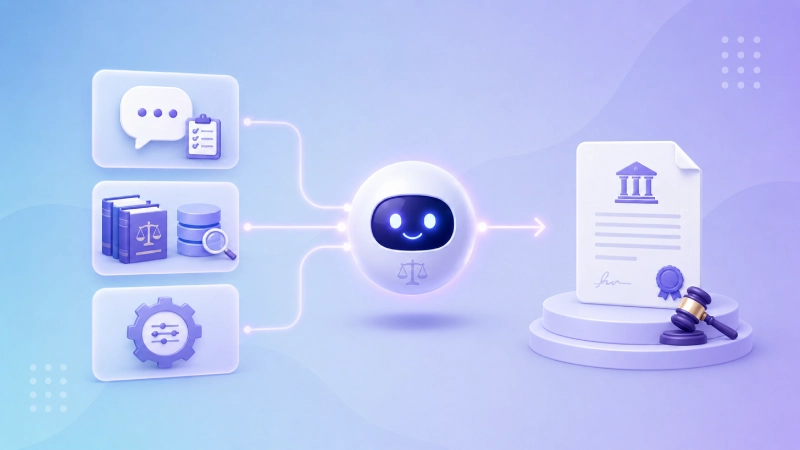
The ability to search millions of traces quickly is a production requirement, for when a quality incident occurs, the operational team needs to identify the affected subset of requests, examine the prompts and responses, and determine root cause within minutes, not hours. Observability platforms that cannot handle trace volumes at production scale become bottlenecks during the incidents where visibility matters most.
Deployment Architecture: Routing, Gateways, and Inference Control
Production LLM deployments in 2026 almost always involve multiple models. Different tasks have different latency, cost and quality requirements, and routing requests to the appropriate model – a smaller, faster model for classification tasks; a larger, more capable model for generation; a fine-tuned model for domain-specific queries, is itself an operational discipline.
LLMOps platforms integrate with cloud providers, on-premises infrastructure, and edge devices to deliver scalable inference and management. Key features include:
- prompt management
- model registry and versioning
- A/B testing
- human-in-the-loop feedback
- automated retraining pipelines
An LLM gateway (Portkey, LiteLLM, or a cloud-native equivalent) sits between the application and the model APIs, handling traffic routing, fallback logic when a primary provider is unavailable, rate limiting, and cost attribution by team or feature. For organisations using multiple providers simultaneously, a gateway is the only practical mechanism for maintaining a unified cost and reliability view across heterogeneous model endpoints.
In 2026, newer GPU architectures and specialised inference chips are making LLM deployment more efficient, for platforms that handle both traditional ML models and LLMs provide operational efficiencies and consistency. For teams that have historically run custom models on-premise, the economics of inference hardware are shifting in ways that make hybrid deployment (some models on proprietary inference infrastructure, some on cloud APIs) a realistic option for latency-sensitive workloads where cloud round-trip times are not acceptable.
Governance: The Operational Layer That Most Teams Build Too Late
Governance is significantly easier to implement proactively than reactively after a compliance event. This is the most consistently underweighted observation in LLMOps literature, and the numbers bear it out. The coming wave of regulatory enforcement will distinguish organisations with governance infrastructure from those without it, and the case for investment is written in $67.4 billion of hallucination losses and 42% project abandonment rates.
LLM governance in production encompasses four functional requirements. Data lineage (the ability to trace which data was used to fine-tune or prompt a model, and which version of a model produced which output) is the foundation for both internal audit and regulatory compliance. Access controls determine who can modify prompts, deploy model versions or access production traces, and need to be role-based and logged. PII guardrails detect and redact sensitive personal information before it enters an LLM context window or appears in a model response. Bias and safety monitoring flags outputs that cross defined thresholds for toxicity, discriminatory language, or factually incorrect claims about protected categories.
Human oversight provides a check on AI behaviour for consequential decisions. Designing systems for appropriate human involvement is a key practice. Contestability, the principle that people affected by AI decisions should be able to understand and challenge those decisions, requires maintaining records and providing explanations, both of which depend on having governance infrastructure in place before a challenge arises.
The governance and data lineage layer is what most LLMOps platforms do not natively cover, typically requiring a dedicated infrastructure layer. No single platform covers the full stack, most enterprise deployments use three to five specialised tools. For enterprise governance across these tools, a shared context infrastructure layer is what makes any LLMOps platform production-ready.
Evaluation: The Continuous Quality Signal
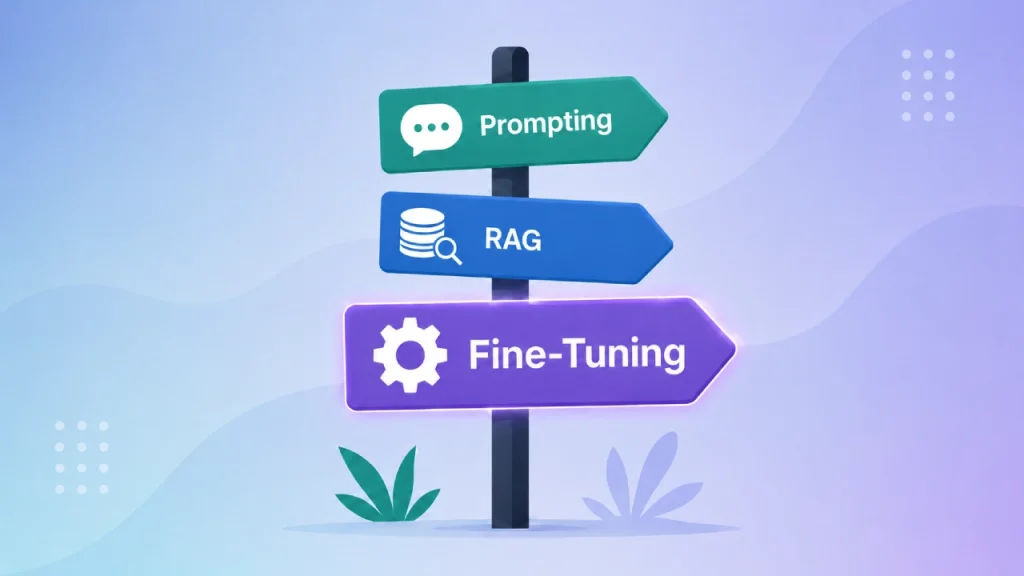
Evaluation in LLMOps is a continuous production function. Effective evaluation requires depth of automated and human-in-the-loop evaluation, dataset management, and regression testing workflows that run systematically.
Braintrust, which functions as an evaluation CI/CD platform, allows teams to run structured evaluations against a defined test set every time a prompt or model version changes, analogous to running a test suite before merging code. The output is a quantitative comparison of the new version against the previous baseline across the metrics the team has defined as critical, surfacing regressions before they reach production users.
Any LLM workflow handling real users or real data needs prompt versioning, monitoring, and a guardrail for PII. Most small businesses need LLMOps basics. The tooling required scales with deployment complexity, a single-model customer service assistant needs a simpler evaluation and monitoring stack than a multi-agent system making consequential decisions across multiple data sources.
What to Watch Next
According to Gartner, more than 30% of the increase in API demand by 2026 will come from LLM-powered tools, a trajectory that makes operational discipline a current requirement. The teams building production AI systems that compound in value are the ones that treated LLMOps as a first-class engineering discipline from the beginning of deployment.
The next frontier for LLMOps in the second half of 2026 is agentic system observability of tracing, evaluating and governing multi-step AI workflows where an LLM is executing a sequence of actions across tools, APIs and data sources. The observability and governance challenges for agentic systems are meaningfully harder than those for single-model deployments, and the platforms that solve them first will define the next generation of production AI infrastructure. For teams deploying today, the practical starting point remains the same as it has been all year: get prompt versioning, basic monitoring and PII guardrails in place before users do, and build the governance layer before a compliance event makes it urgent.
Data and research references drawn from Ailoitte LLMOps Enterprise Guide June 2026, Atlan Best LLMOps Platforms May 2026, Zedtreeo LLMOps Explained Guide February 2026, Braintrust Platform Comparison 2026, Calmops LLMOps Architecture March 2026, Wizr.ai Enterprise LLMOps March 2026, and Gartner AI deployment research 2025-2026.

Comments are closed.