
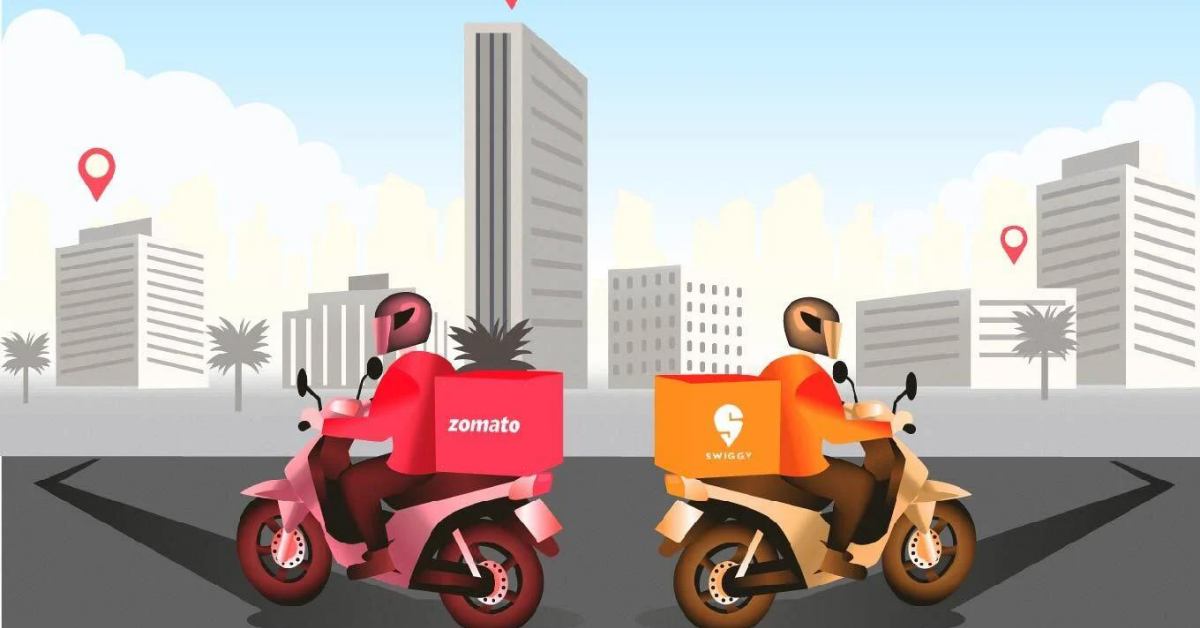

Food delivery platforms like Swiggy and Zomato are feeling the heat due to the shortage of LPG across India, triggered by the ongoing meltdown in the Gulf. These platforms are facing unprecedented supply-chain issues as several partner restaurants have been forced to restrict deliveries or halt operations altogether.
This has brought pressure on shares of Zomato parent Eternal and Swiggy. While Eternal’s shares plunged close to 5% during the intra-day trading to ₹213.06 today, Swiggy’s shares slid to a 52-week low of ₹271.2.
Both companies’ shares have remained under pressure for nearly a week, as escalating tensions stemming from the US-Israel-Iran conflict spilled over into global energy markets.
Restaurants Fear Deep Impact
As per National Restaurants Association of India’s (NRAI) former president and Indigo Hospitality’s founder Anurag Katriar, this could potentially have a severe impact on the Indian restaurant industry.
About 90% of the nearly 5 Lakh restaurants in India depend on commercial cylinders and maintain limited inventory buffers, he shared. A prolonged supply shortage could quickly translate to operational stress for 25-30% of restaurants, he added.
Many restaurants across major cities like Delhi-NCR, Bengaluru, Mumbai, Pune and Calcutta have already paused operations and some may not be able to recover from the losses and be forced to shut shop indefinitely, said NRAI president Sagar Daryani, who is also the co-founder of QSR chain Wow! Momo.
However, he added that some positive outlook in terms of LPG supply to restaurants has emerged over the past few days despite hurdles. As per him, the Centre has asked restaurant associations to furnish detailed information on their operations to determine a mechanism for proportionate distribution to restaurants, which might delay delivery of the essential fuel.
“Beyond profit and loss, this will have far reaching effects on the restaurant industry, which is the second largest job creator in the country. It could be a huge cost to those who depend on restaurants for their daily meals and also on the gig economy and the platforms that facilitate them which depend entirely on restaurants,” he said.
What’s Causing The LPG Crunch?
Till February, 90% of India’s LPG supply came from countries like Qatar, Saudi Arabia, the UAE and Kuwait. A large portion of the country’s energy supplies transit through the Strait of Hormuz, a key maritime passage that has been blocked by Iran.
Oil marketing companies increased the prices of non-subsidised domestic LPG gas cylinders by ₹60 across metropolitan cities in the country. As per Indian Oil Corporation Limited (IOCL), the price for a 14.2 kg gas cylinder was increased from ₹853 to ₹913 in Delhi with effect from March 7.
The new rates for LPG cylinders in Mumbai is ₹912.50, ₹939 in Kolkata and ₹928.5 in Chennai. The rates of commercial LPG gas cylinders were also increased by ₹115.
Amid this, union minister for petroleum and natural gas Hardeep Singh Puri told the Lok Sabha today (March 12) that despite having no role in causing the conflict, India, like many countries, has to navigate through its consequences.
He said that India currently has no shortage of petrol, diesel, kerosene, ATF or fuel oil.
“India has secured crude volumes that exceed what the disrupted Strait route would have delivered in the same period. Non-Hormuz sourcing has risen to approximately 70% of crude imports, up from 55% before the conflict began. This structural diversification, built through sustained policy over successive years, has given us options that other nations now find themselves without,” he noted.
To curb further price surge, the petroleum ministry has issued directives to oil refineries for higher LPG production. Most of this would be directed toward domestic use, which is being prioritised over non-essential industrial and commercial demand.
Food Delivery Under Pressure
Consequently, the shortage is expected to have a direct impact on near-term operations of Zomato and Swiggy, as further storage restrictions could further create supply disruption that can impede operations within 48-72 hours.
Many operators Inc42 talked to have already begun reducing menu options. Besides, if the situation persists, many would have to suspend operations altogether as platforms didn’t anticipate the crisis unfolding this quickly. Currently, food delivery platforms don’t have a contingency plan in place.
“Limited menu availability can hamper online food delivery volumes in the short term. In the longer run, this category will continue to enjoy healthy 2-digit growth on the back of penetration in new cities and increase in frequency of out of home consumption,” said Sunny Agrawal, head of fundamental equity research at SBI Securities.
Katriar noted that underlying demand is strong for the food service industry and the frequency of ordering-in has increased from 4.3 times/month in 2019 to 6.7 times.
Questions sent to Eternal and Swiggy remained unanswered at the time of publishing.
As per brokerage platform Motilal Oswal, LPG disruption could create a near-term hiccup if shortages persist through March. Reduced menus, limited cooking hours or temporarily shut kitchens at some restaurants may limit order availability on platforms, leading to temporary moderation in fourth quarter food delivery order volumes.
“Our estimates currently assume Zomato’s GOV growth at 15.3%/18.0% in FY26/27E and Swiggy at ~20.2%/17.3%, supported by gradual market share gains and continued expansion across cities…However, if the commercial LPG shortage persists through the remainder of March, it could begin to reflect in a temporary decline in order volumes in Q4,” it added.
Electricity To The Rescue
Meanwhile, QSR chains have seen limited impact to their operations, as most of them already rely on electric appliances rather than LPG or PNG for their cooking needs.
As per NRAI’s Katriar, such chains have embedded cold storage in their operations and might not see as much impact as restaurants that are more dependent on flame-based preparations that are hard to replicate electrically.
“The scope for menu adjustments to reduce LPG consumption is relatively limited. While some formats such as Italian restaurants or cafés may temporarily shift focus towards oven or fryer based items, most food-focused restaurants would need to adjust cooking equipment,” he said.
He added that operators can either choose to go electric or shut shop for the time being. This could also lessen some of the burden for food delivery platforms, as consumers may simply shift orders to alternative restaurants.
Amid this, QSR chain Rollsking said it was able to make a pivot to electric infrastructure rapidly to mitigate risk to quarterly growth.
“We observed a marginal dip of approximately 5% in the first 48 hours as the team calibrated to the new cooking tools. Our focus remains on optimising the new workflow to bring KPT back to standard levels. Zomato and Swiggy have not extended any support on this issue as of now but I am sure given the next few days, this will become an important conversation,” Rollsking cofounder Arjun Toor said.
While Rollsking was able to make this pivot quickly as it was already in the process of this shift, not everyone can go electric so fast. According to Wow! Momo’s Daryani, most restaurants do not have the required permits to run large electric loads, and such licenses take almost at least two months to be issued.
While Wow! Momo itself is 60% electric and hence not expecting a huge hit to its QSR chains, its verticals like Wow! Chicken and Wow! Chinese still operate on gas and so do the three food production factories operated by the company, which only have food supply remaining for 15-20 days, Daryani said.
He added that the company’s quarterly numbers will take a direct hit from this shortage, especially as February is already a negative month for the industry and March has also been impacted now.
Households are also embracing electric appliances as the hike in cylinder prices starts to affect their budgets and fear of extended shortages looms. This was evident through the rising popularity of appliances like induction stovetops, electric kettles, air fryers and other appliances on Indian ecommerce and quick commerce platforms.
Ecommerce platforms Amazon and Flipkart are seeing an increased demand for induction stove tops across pincodes in cities like Delhi NCR, Bengaluru, Pune and Hyderabad. Induction stove tops from like Pigeon, Lifelong, TTK Prestige and Phillips were out of stock on quick commerce platforms Blinkit, Instamart and Zepto as well.
Sales of induction stovetops jumped 30X in the last two days on Amazon, while rice cookers and electric pressure cookers have seen a 4X increase in sales during this time, a company spokesperson told ET Now. They added that sales of air fryers and multi-use kettles have also doubled during this time.
(Edited by Akshit Pushkarna)

Comments are closed.