
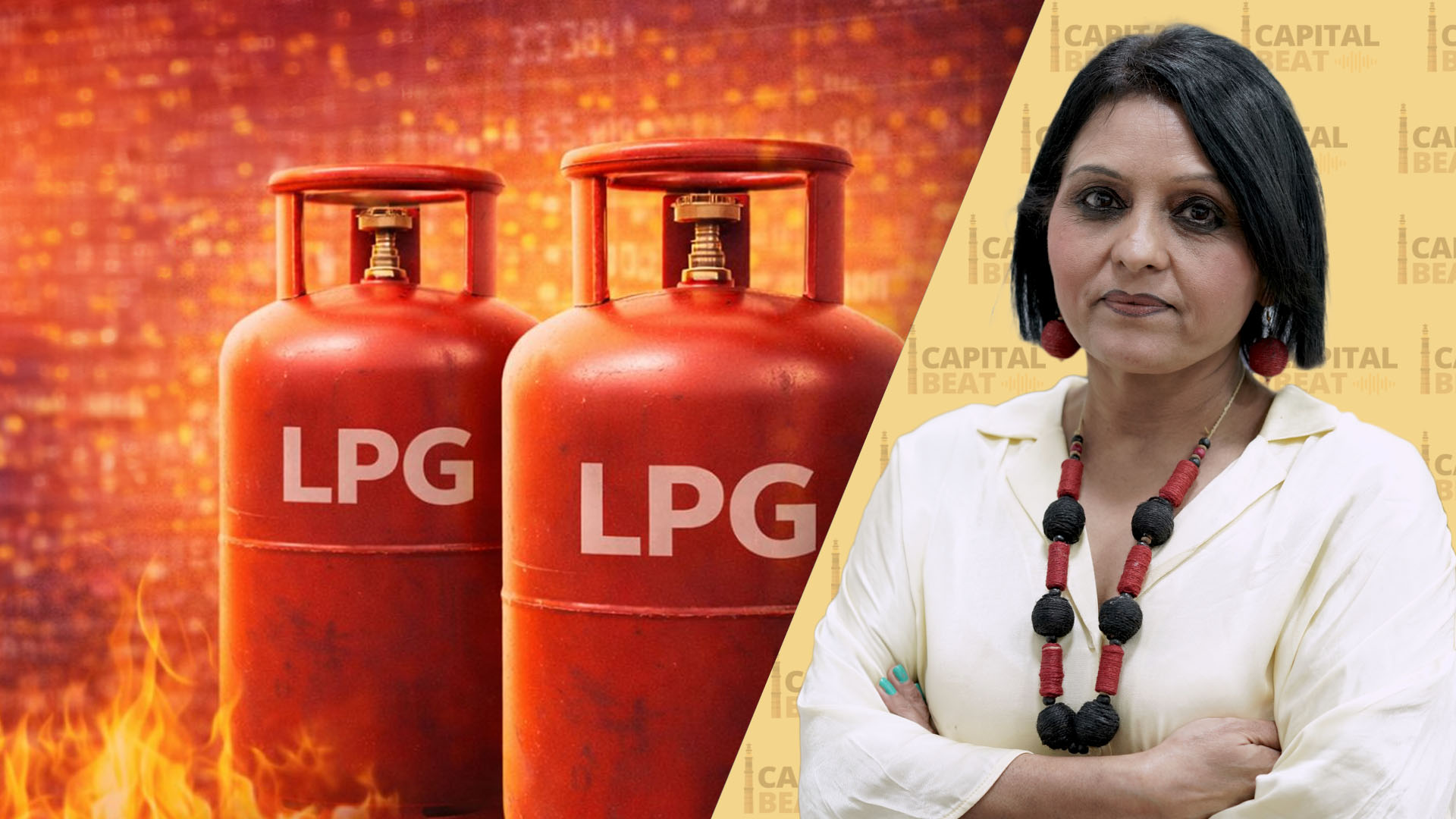

In the latest episode of Capital Beatexperts examined the emerging LPG supply disruption linked to the Iran war and its impact on India’s energy security. The panel featured KP Fabian, former Ambassador of India to Qatar, Sanjay Kapoor, senior journalist, and Bejon Kumar Misra, consumer activist. The discussion focused on the disruption to global gas supplies, India’s vulnerability due to import dependence, and the consequences for households and businesses.
The programme highlighted how the conflict has affected gas shipments through the Strait of Hormuz, a key global energy chokepoint. The disruption has triggered shortages of LPG cylinders in multiple Indian cities and raised concerns about the country’s supply resilience.
India imports more than 60 per cent of its LPG requirements, and about 85-90 per cent of these imports pass through the Strait of Hormuz. India consumes around 31 million tonnes of LPG annually, with nearly 87 per cent consumed by households and the remainder by hotels and restaurants.
Hospitality sector affected
The discussion noted that the disruption in the supply of commercial LPG cylinders has begun affecting the hospitality sector across major cities. Restaurants and hotels depend heavily on commercial LPG cylinders for daily kitchen operations.
Reports from cities including Bengaluru, Chennai, Mumbai, and Lucknow indicated that businesses dependent on commercial LPG were facing shortages. Hospitality associations in Bengaluru warned that restaurant operations across the city could be affected as early as March 10.
Also Read: Commercial LPG shortage hits restaurants across India; menus cut, shutdown fears rise
Restaurant owners warned that food items commonly sold in eateries, such as vada pav and sin problemcould become more expensive or temporarily disappear from menus if supply disruptions continue.
Dependence on Qatar
Fabian highlighted the role of Qatar in India’s gas supply chain. “India has to import 50 per cent of what it needs for its gas consumption and a good part of it comes from Qatar. We also get it from the United States and elsewhere, but the best part of it comes from Qatar,” Fabian said. He pointed to disruptions in Qatar’s production facilities following reported attacks.
Also Read: Centre rejigs gas allocation priority amid Iran war; LPG, CNG, piped cooking gas on top
“The Qatar LNG plant was attacked by drones or missiles from Iran and they have stopped functioning. Qatar has announced that it will take some time for the plant to resume operations. It has not specified how many days, but it will take some time. So that is why we are having this problem,” Fabian said.
He also stressed that reopening shipping routes alone may not resolve the crisis quickly. “Even if the Strait of Hormuz is opened, we have to understand that the Qatar LNG plant is not working,” Fabian said.
Govt measures
The discussion also highlighted steps taken by the Indian government to manage the supply situation. The Centre has maintained that there is no shortage of LPG cylinders while directing refineries to maximise production and prioritise domestic consumption.
Authorities have increased the LPG booking interval from 21 days to 25 days in an attempt to manage supply and prevent panic buying. The price of domestic LPG cylinders in Delhi has been increased by Rs 60, raising the price to Rs 913.
The prices of commercial LPG cylinders used by restaurants have also increased by Rs 214.5. Oil marketing companies have issued advisories prioritising LPG availability for households and institutions such as hospitals and educational facilities.
A statement issued by Bharat Petroleum indicated that additional production is being directed towards domestic consumption to stabilise supplies.
Need for transparent communication
Misra highlighted the importance of transparent communication during the crisis. “This is unprecedented and naturally it was not expected. But I am sure the people who are working behind the scenes to ensure uninterrupted supplies of essential commodities like LPG would have done their homework properly,” Misra said. He stressed that the authorities must communicate clearly with consumers.
Also Read: No LPG stock: Bengaluru hotels warn of shutdown from Tuesday
“The government should provide clear and credible information on what stocks are available, where they are located, and in what quantity,” Misra said.
Misra also emphasised the need to prevent panic buying and hoarding. “Consumers should not panic or start hoarding. Only what is essential should be used,” he said. He added that transparent sharing of data could help stabilise the market and prevent speculative behaviour.
Impact on South Asia
The panel also discussed the wider regional impact of the gas supply disruption. Countries across South Asia are experiencing similar energy pressures linked to the geopolitical conflict.
Kapoor pointed to developments in neighbouring countries. “Bangladesh has closed universities to conserve electricity and fuel, and similarly, Pakistan has closed down schools and colleges,” Kapoor said.
Also Read: India’s cooking gas crisis has a homegrown solution — induction stoves
He also warned about the broader economic consequences if the supply disruption continues. “Lakhs and lakhs of people who rely on the food business will go hungry or lose their means of earning a livelihood,” he said.
The discussion noted that India has, in the past, provided energy assistance to neighbouring countries such as Bangladesh and Sri Lanka during times of crisis.
Global geopolitics
Fabian emphasised that the supply disruption is closely tied to the geopolitical situation in West Asia. “Iran’s strategy is an asymmetrical one. Israel and the US have far greater military power than Iran, so Iran aims to inflict economic pain, driving up oil prices and causing gas shortages,” Fabian said.
He also noted that global energy markets remain sensitive to political signals. “President Trump sooner or later will declare victory and stop it, but the statement he made was vaguely worded and meant to bring down the oil prices,” he said.
Fabian added that if diplomatic developments do not materialise quickly, markets could react again and energy prices could rise further.
Coordinated response needed
Kapoor highlighted the need for coordinated action and greater clarity from the authorities during the crisis. “This is a serious crisis, and I think the government of India should make an effort to engage with all political parties and be very clear,” he said.
Also Read: Is India really facing an LPG shortage? This is what expert says
He also emphasised the importance of broader participation from both the public and private sectors to manage the supply challenge. “It is the responsibility of everyone possible. All hands must be on deck at the moment,” Kapoor said.
(The content above has been transcribed from video using a fine-tuned AI model. To ensure accuracy, quality, and editorial integrity, we employ a Human-In-The-Loop (HITL) process. While AI assists in creating the initial draft, our experienced editorial team carefully reviews, edits, and refines the content before publication. At The Federal, we combine the efficiency of AI with the expertise of human editors to deliver reliable and insightful journalism.)

Comments are closed.