
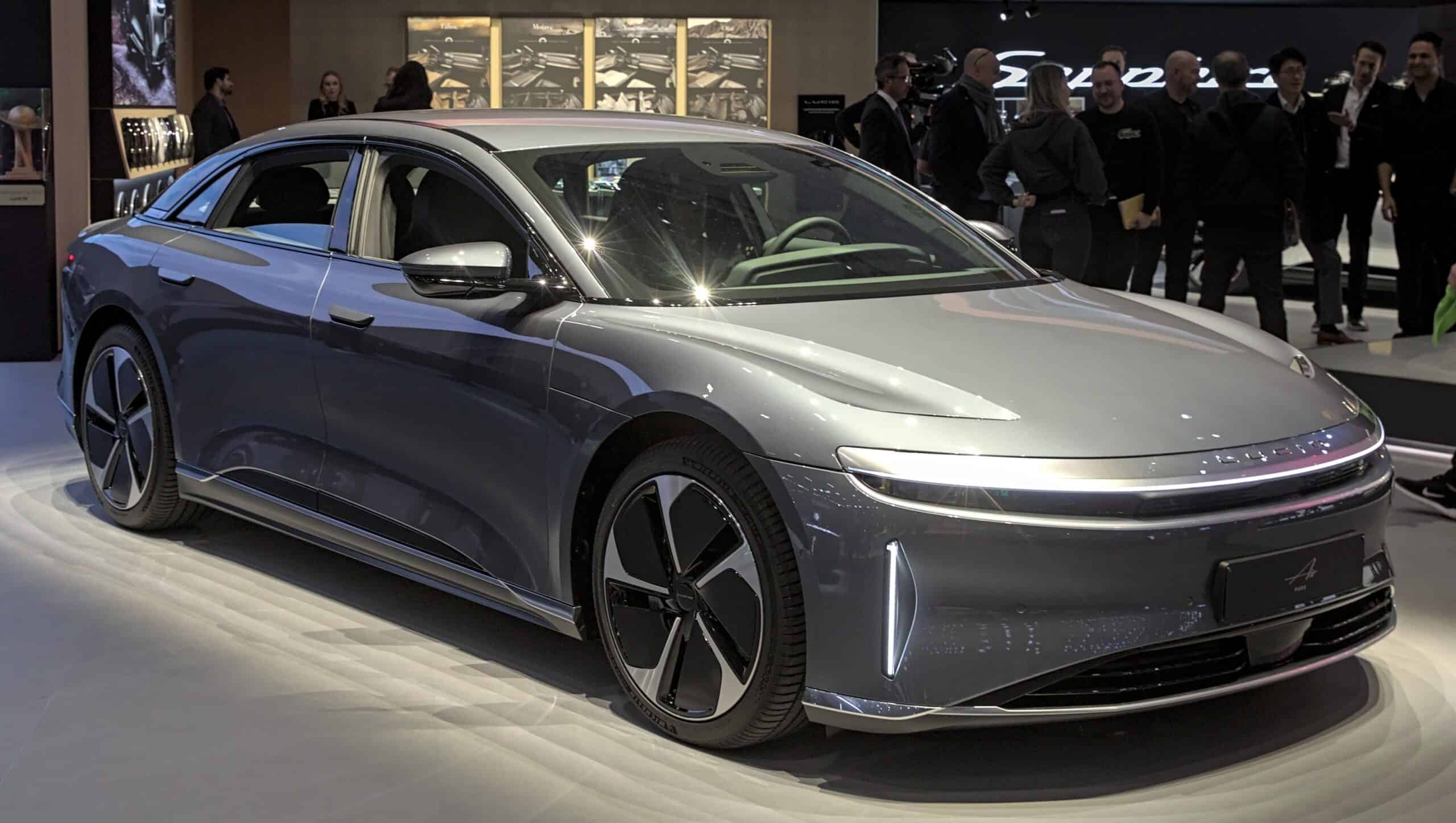

Luxury EV maker Lucid Motors is entering a critical phase as it struggles to balance ambitious production goals with slowing customer demand. The company has now suspended its 2026 production guidance after revealing that thousands of unsold vehicles are piling up in inventory, raising fresh concerns about its path to profitability.
The move comes just weeks after Lucid reaffirmed plans to manufacture between 25,000 and 27,000 vehicles this year. However, under the leadership of incoming CEO Silvio Napoli, the automaker is now reassessing its entire operational strategy amid growing financial pressure.
Too Many Cars, Too Few Buyers
Lucid’s biggest issue right now is straightforward: it is producing more EVs than customers are buying.
During the first quarter of 2026, the company built around 5,500 vehicles but delivered only 3,093 units. That gap added roughly 2,400 extra vehicles to inventory in just three months. As a result, Lucid’s total inventory value surged to nearly $1.47 billion by the end of March.
The company admitted it is dealing with “elevated inventory,” a phrase investors often interpret as slowing demand and operational imbalance.
This situation is especially concerning in today’s EV market, where competition has intensified sharply. Buyers now have more options than ever from brands like Tesla, BYD, Hyundai Motor Companyand traditional automakers rapidly expanding their electric lineups.
New CEO Signals a Shift in Strategy
Incoming CEO Silvio Napoli appears ready to take a more cautious and financially disciplined approach.
Speaking during Lucid’s earnings call, Napoli emphasized the need for tighter cost control and smarter investment decisions. He noted that the company must become “more cost-efficient” while carefully deciding where future spending should and should not go.
Napoli previously led the industrial giant Schindler Group and is expected to bring a more operationally focused leadership style compared to Lucid’s earlier growth-driven strategy.
Industry analysts believe this could mean slower expansion plans, tighter production targets, and a stronger focus on reducing inventory before ramping up manufacturing again.
Financial Losses Continue to Mount
Lucid’s inventory problem is only part of the larger challenge.
While quarterly revenue increased 20 percent year-over-year to $282.5 million, the figure still fell far below Wall Street expectations of approximately $440 million. At the same time, the automaker reported a staggering net loss exceeding $1 billion for the quarter.
The company also burned through around $1.44 billion in free cash flow, underlining how expensive it remains to scale EV production in a highly competitive market.
For a company still trying to establish itself in the premium EV segment, the combination of slowing deliveries and rising operational costs creates a difficult environment.
Saudi Backing Remains Lucid’s Lifeline
Despite the financial turbulence, Lucid still has a powerful supporter in Saudi Arabia’s Public Investment Fund, which continues to serve as the company’s primary financial backbone.
Lucid says current funding should sustain operations into the second half of 2027. However, analysts warn that continued oversupply and weak demand could eventually force deeper restructuring if sales do not improve.
The company’s immediate priority is now clear: reduce excess inventory, stabilize demand, and regain investor confidence before losses spiral further.
For Lucid, the next few quarters may determine whether it can mature into a serious EV contender or become another casualty in the increasingly crowded electric vehicle race.

Comments are closed.