
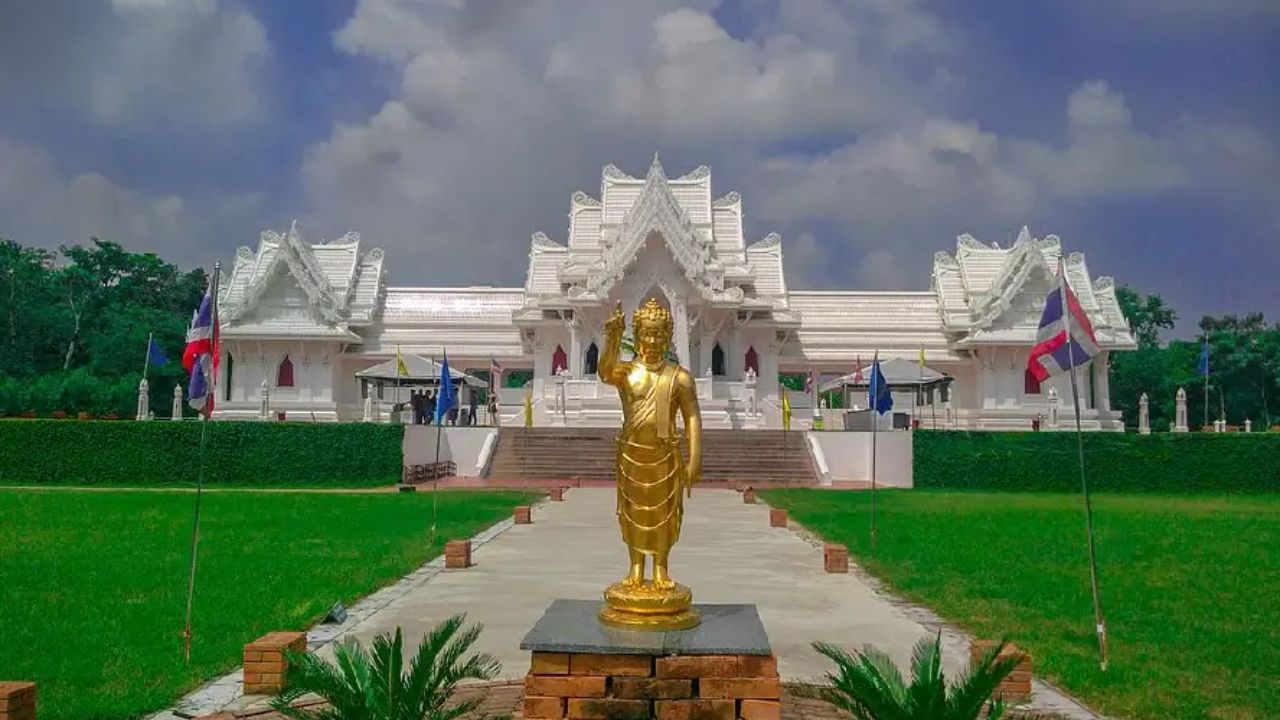

Lumbini, where Lord Buddha was born in 623 BC, is today one of the most important Buddhist pilgrimage sites in the world. This place is located in the Terai region of Nepal. Archaeological evidence suggests that Siddhartha Gautama was born in this sacred garden. Later this place became a major center of pilgrimage. Emperor Ashoka of India also visited here and installed a memorial pillar here in 249 BC. Today this entire area is being developed as an important Buddhist pilgrimage and archaeological site, where the relics associated with the birth of Buddha are the main attractions.
Under the master plan developed in collaboration with the United Nations and the Government of Nepal, this area is continuously developing as a modern pilgrimage site, but at the same time the increasing industrial activities and the number of tourists have also created new threats to its basic structure. Amidst the challenge of balancing conservation and development, Lumbini continues to retain its ancient glory and spiritual significance.
Also read: What is the difference between a priest and a nun, how different are their names?
Was born in 623 BC?
The Pali language inscription in Brahmi script written on the pillar of Emperor Ashoka proves that Lord Buddha was born in this Lumbini area in 623 BC. It is considered the holiest site of Buddhism, one of the world’s major religious traditions. The remains present here show that there has been a tradition of pilgrimage here since the 3rd century BC.
Major sites included in the archaeological zone of Lumbini:
- Shakya Kund
- Ancient brick structures inside Maya Devi Temple
- Pillar of Emperor Ashoka
- Remains of Buddhist monasteries
- Remains of Buddhist stupas
- This entire area is today emerging as an important international Buddhist pilgrimage site.
Also read:How different is Pidiya from Bhai Dooj and Raksha Bandhan, know everything from fast to story.
How big is the legacy?
- Based on the Ashoka Pillar inscriptions, Lumbini is the birthplace of Lord Buddha, hence it is considered the most sacred site of Buddhism.
- The remains of monasteries and stupas found here show that Buddhist pilgrimage had begun in ancient times, around the third century BC.
integrity
The archaeological remains have been preserved to protect the integrity of the Lumbini area. A buffer zone has been created around the main site, which provides additional security. The entire area is owned by the Government of Nepal and operated by the Lumbini Development Trust. However, the impact of the surrounding industrial area has been considered a threat to the site.
authenticity
- Since the Ashoka Pillar was found in 1896, several archaeological excavations have been carried out.
- It is actually the birthplace of Buddha.
- Viharas, stupas and brick structures are present here from the 3rd century BC till today.
- To protect these remains, regular conservation, monitoring and control of natural damage (moisture, weather, crowd) are necessary.
Conservation and Management
This site is protected under the Nepal Ancient Monument Preservation Act 1956. Lumbini Development Trust manages it completely. The entire area is protected under a master plan developed in cooperation with UNESCO and the United Nations, which was designed by Japanese architect Kenzo Tange between (1972–1978).
Main challenges for long term conservation
- pressure of increasing tourists
- natural moisture
- Nearby Industrial Activities
- Keeping all this in mind, a new management plan is being prepared, so that the place remains open for pilgrims and tourists and the archaeological heritage is also protected.

Comments are closed.