
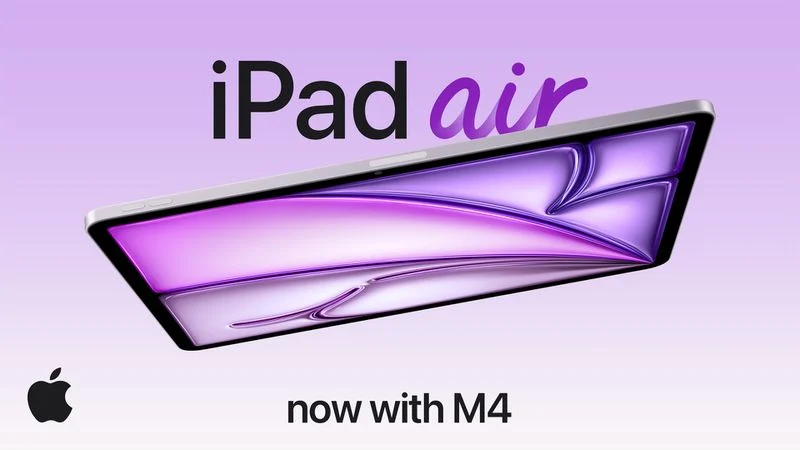

On March 3, 2026, just days after its official press release announcement, the first concrete performance data for the new M4 iPad Air surfaced on Geekbench. For users who have been waiting to see if the “Air” could finally close the gap with the “Pro,” the results offer a fascinating look at Apple’s deliberate tiering of its silicon. While the M4 iPad Air is a significant leap forward from its M3-powered predecessor, it confirms that Apple is using a strategically “binned” version of the M4 chip to keep the iPad Pro on its throne.
The leaked benchmarks, identified under the model string “iPad16,11“ (corresponding to the 13-inch Wi-Fi + Cellular model), reveal a device that excels in the tasks most users actually perform.
Single-Core Score: Average of 3,576
Multi-Core Score: Average of 12,591
When compared to the 2025 M3 iPad Air, the gains are impressive. The single-core performance has jumped by roughly 17.3%, making the M4 Air incredibly snappy for app launches and web browsing. Multi-core performance sees a more modest, but healthy, 8% increase. However, when held up against the M4 iPad Pro, the “Air” starts to show its ceiling. The M4 Pro still leads with a multi-core score of over 13,800, roughly 10% faster than the new Air in heavy-duty multitasking and rendering.
The “Binned” Reality: 8 Cores vs. 10 Cores
Why the discrepancy? The benchmarks confirm what many suspected: the M4 in the iPad Air is not a carbon copy of the M4 in the iPad Pro.
The version found in the new Air features an 8-core CPU (3 performance cores and 5 efficiency cores). In contrast, the high-end M4 iPad Pro units utilize a 10-core CPU (4 performance and 6 efficiency cores). By “binning” the chips essentially using versions with fewer active cores Apple can maximize its manufacturing yield while ensuring that those who pay the “Pro” premium actually get more raw horsepower.
Similarly, the GPU in the Air has been scaled back to 9 cores, compared to the 10-core GPU in the Pro. While this might sound like a downgrade, the M4 architecture’s second-generation ray tracing and mesh shading mean the Air is still a gaming powerhouse, capable of 4x faster 3D rendering than the old M1 models.
The 12GB RAM Revolution
Perhaps the most significant “stealth” upgrade revealed by the benchmarks and official specs isn’t the CPU speed, but the memory. The M4 iPad Air has jumped to 12GB of unified memory, up from the 8GB found in the M3 model.
This 50% increase in RAM is the “secret sauce” for Apple Intelligence. With 12GB of memory and an increased bandwidth of 120GB/s, the iPad Air can keep more large language models (LLMs) resident in memory, leading to faster Siri responses, better “Image Wand” generation, and more fluid multitasking via the new windowing system in iPadOS 26.
Connectivity: Wi-Fi 7 and the Apple N1 Chip
Beyond the raw speed, the 2026 iPad Air is the first in its line to feature Apple’s custom-designed wireless silicon.
N1 Chip: This enables Wi-Fi 7 and Bluetooth 6, providing significantly lower latency and better stability in crowded environments.
C1X Modem: For those opting for the cellular model, the new Apple-designed modem promises 50% faster 5G speeds while being 30% more energy-efficient than the Qualcomm chips used previously.
Despite the “Pro” being faster, the M4 iPad Air makes a compelling case for itself at its $599 starting price. It offers nearly identical single-core performance to the Pro meaning for 90% of users, the tablet will feel exactly as fast. You lose out on the ProMotion 120Hz display and the Tandem OLED tech, but you gain a device that is arguably “overpowered” for almost any task a student or casual creative could throw at it.

Comments are closed.