
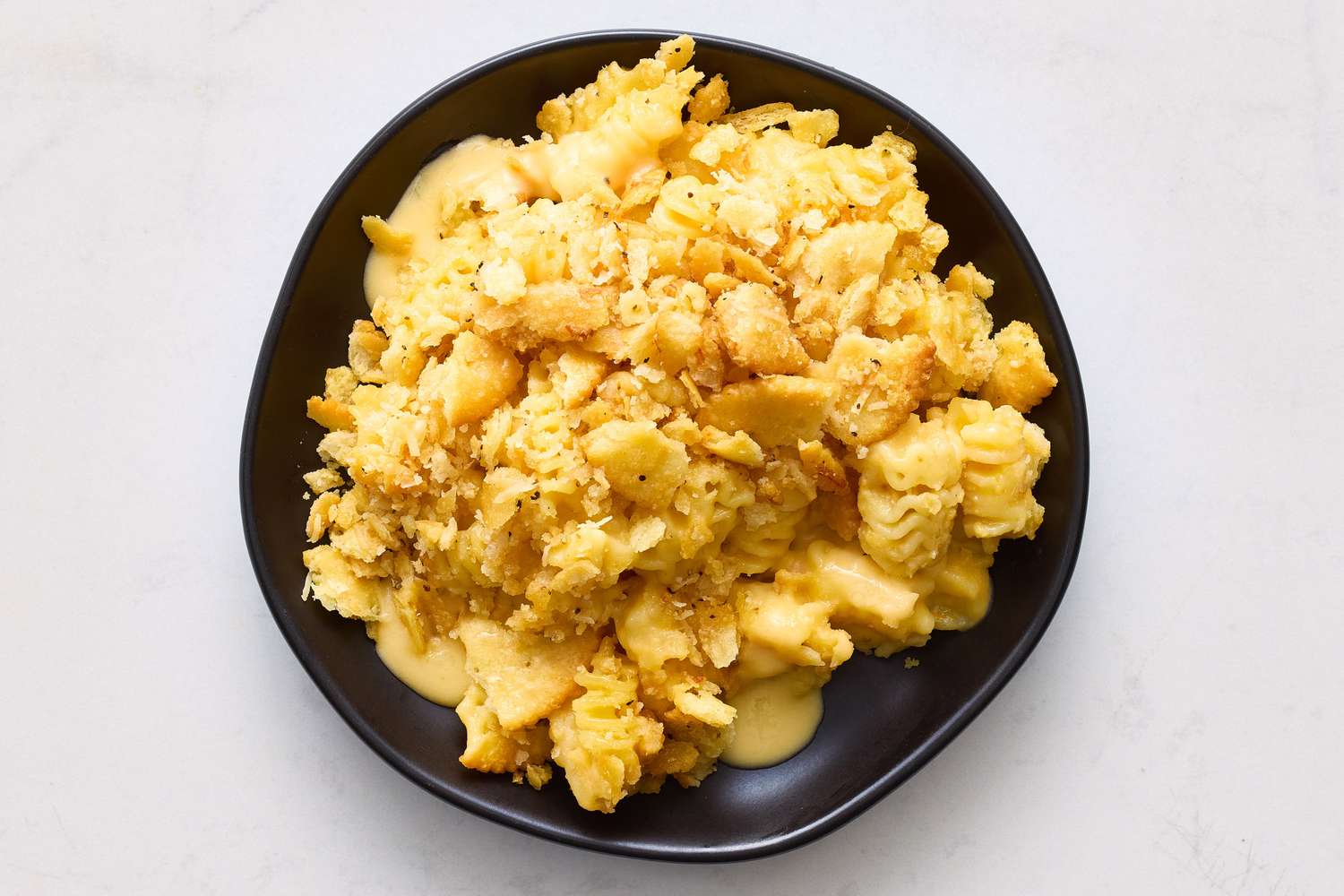

- Aged extra-sharp cheddar delivers bold, tangy, deeply cheesy flavor that defines the sauce.
- Simmering the milk with sodium citrate before adding cheese ensures the sauce melts smoothly and coats the pasta evenly.
- The cracker topping brings rich, buttery crunch and a hint of saltiness from Parmigiano-Reggiano that contrasts with the creamy pasta beneath.
To create a mac and cheese with the silky consistency of Velveeta but the bold flavor of an aged cheddar, chefs and brothers Bryan and Michael Voltaggio add sodium citrate to bind their cheese sauce. “Sodium citrate will be your new best friend for cheese sauces,” says Bryan. “It gives you that creamy, melty, gooey texture, but with nutty, sharp cheeses that don’t typically melt smoothly.” Think of the nacho cheese possibilities!
How to make mac and cheese without sodium citrate
To prepare this recipe without sodium citrate, you can make a roux instead. In a large saucepan, melt 4 tablespoons butter. Whisk in 4 tablespoons flour and cook over moderate heat until bubbling but not browned, about 1 minute. Whisk in 3 cups milk until smooth; bring to a simmer. Remove from heat and gradually add cheese, 1/2 cup at a time, until incorporated. Continue with the recipe as written.
Swapping in other pasta shapes
Shaped like an old-fashioned radiator, radiatori is a short, chunky pasta with ruffled edges and lots of surface area, perfect for trapping the creamy, cheesy sauce in its crevices. If you can’t find it or would like to use another shape, cascatelli, fusilli, gemelli, cavatappi, rotini, and orecchiette are all great alternatives.
Notes from the Food & Wine Test Kitchen
- Sodium citrate is available online at Amazon or from Modernist Pantry.
- To make this recipe in eight 1-cup ramekins, halve the crumble and bake the mac and cheese at 375°F for 8 to 10 minutes.

Comments are closed.