
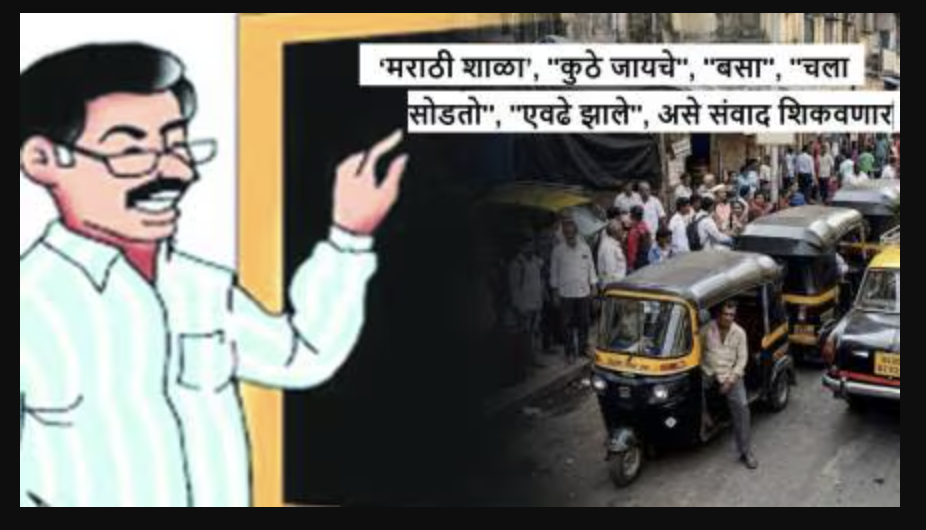

The Maharashtra government is rolling out a pilot programme to teach Marathi to auto-rickshaw and taxi driversaiming to improve communication with passengers and enforce upcoming language rules.
Pilot Begins Ahead of May 1 Checks
The initiative comes just before May 1 (Maharashtra Day)when the state plans to begin a verification drive to check whether drivers can read, write, and speak basic Marathi.
Under the pilot:
- Drivers will be offered basic Marathi lessons
- Training modules are being designed for functional communication
- The focus is on practical usagenot fluency
Authorities have indicated that this approach is meant to prepare drivers before strict enforcement begins.
Why the Government Is Doing This
The policy is part of a broader move to make Marathi proficiency mandatory for public transport drivers in the state.
The key reasons include:
- Improving driver-passenger communication
- Addressing complaints about language barriers
- Promoting local language and culture
Officials say many passengers face inconvenience when drivers cannot understand basic instructions in Marathi.
Free Classes & Training Support
To ease concerns, the government is not just enforcing rules—it is also offering free training support.
- Language classes will be conducted through cultural organisations
- Both online and offline sessions are being planned
- A basic curriculum will help drivers handle everyday interactions
This shift shows the government is trying to move from punitive action to capacity building.
Not Just Testing—A Larger Reform
The Marathi learning programme is part of a wider reform that includes:
- Linking licences and permits to Marathi knowledge
- Conducting checks across 59 RTO offices
- Identifying irregularities in permits alongside language verification
Officials say this is also aimed at cleaning up the system and ensuring only genuine drivers operate legally.
Pushback & Concerns
The move has sparked resistance from driver unions:
- Many argue that learning a new language is difficult with long working hours
- Some fear licence cancellations could impact livelihoods
- Protests and a possible statewide strike have been announced
At the same time, the government has softened its stance slightly by prioritising training before strict penalties.
Bigger Picture
This development highlights a broader debate around:
- Language vs livelihood
- Local identity vs migrant workforce
- Regulation vs practicality
While the intent is to improve service quality, execution will determine whether the policy succeeds without causing disruption.
Image Source
Comments are closed.