
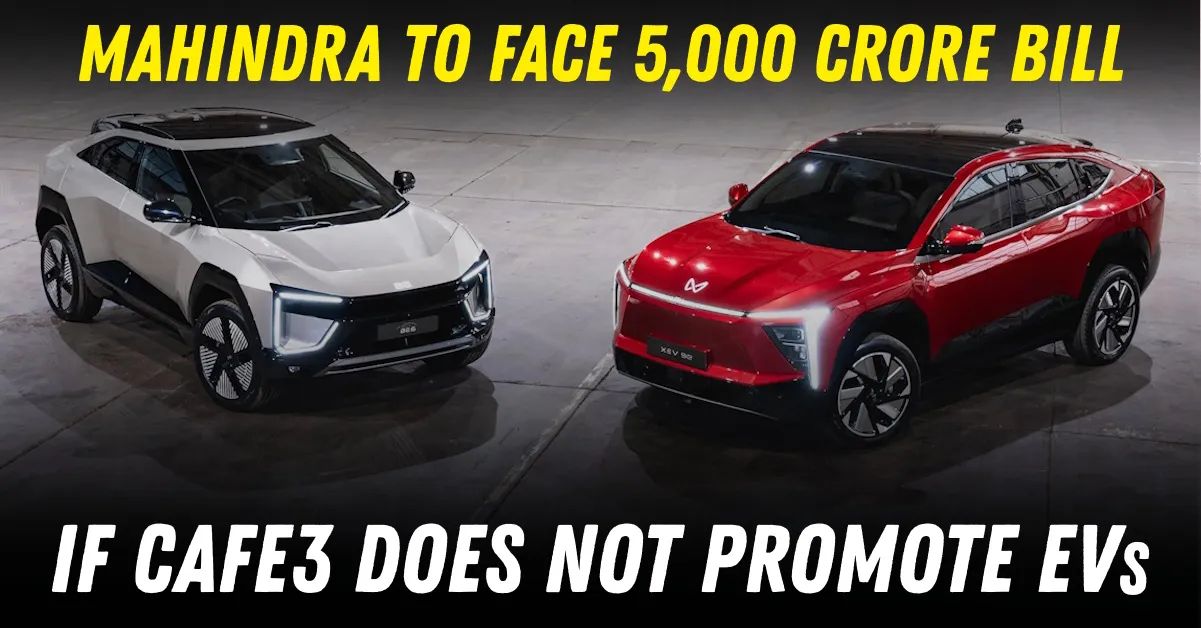

Mahindra has put a hard number on what tougher fuel-efficiency rules could mean for an SUV-heavy carmaker. The company has warned that under the proposed CAFE III regime, its potential financial exposure could run to roughly ₹5,000 crore unless the policy is tweaked to better account for electric vehicles. This highlights how the next round of emission and efficiency rules could directly impact product planning, pricing, and the pace of future vehicle launches if the final framework stays completely rigid.
At the centre of the issue is CAFE, short for Corporate Average Fuel Efficiency. The rule does not judge one individual model. It looks at the average efficiency of a manufacturer’s entire passenger vehicle fleet. That sounds simple enough, but the problem begins when a company sells a large share of bigger, heavier utility vehicles. Those vehicles are naturally harder to push into tighter average efficiency bands unless the automaker has enough low-emission models, especially EVs, to balance the overall mix.
This is where we think Mahindra’s concern starts to make practical sense. Its core business today is built almost entirely around high-demand SUVs. Models such as the Scorpio-N, Scorpio Classic, Thar, XUV700, and Bolero continue to anchor both its volumes and profit margins.
These are exactly the vehicles buyers are lining up for, but they are also the kind of vehicles that make fleet-average efficiency targets much tougher to meet. If a policy framework does not properly reward EV adoption to offset these combustion engine sales, a company like Mahindra could end up paying heavily for the very market demand it is currently serving.
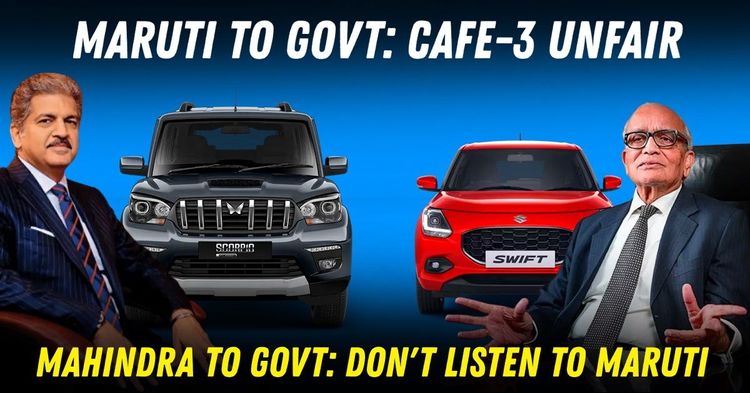
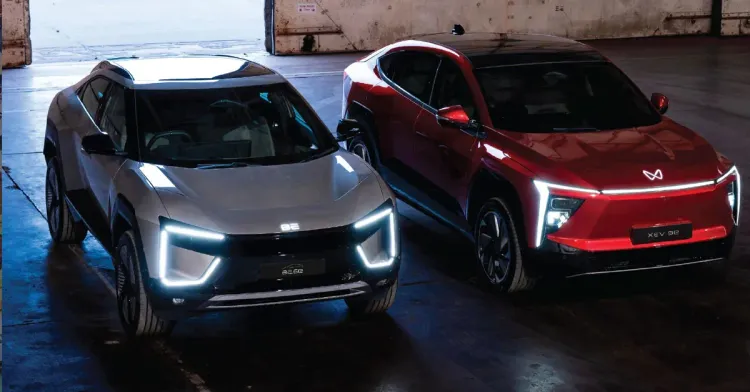
Our take is that Mahindra is not arguing against cleaner mobility. It has already committed major resources to its electric transition, including the XUV400 and the newer electric-origin products under the XEV and BE sub-brands. The point the automaker is making is far more specific.
If CAFE III is framed in a way that treats EVs too narrowly in the fleet average calculation, or does not offer a realistic transition path for manufacturers with a high SUV mix, the penalty burden becomes disconnected from on-ground consumer demand.
Regulation ultimately shapes what buyers see in the showroom. A company facing the risk of a multi-thousand-crore compliance hit has only a few practical options. It can raise prices across its line-up, alter its model mix, cut back on certain powertrain combinations, or accelerate EV sales with heavy internal subsidies. None of those choices is painless for the consumer. Higher vehicle prices hurt demand, forced mix changes weaken customer choice, and internal discounting on EVs can severely hurt profit margins.
Looking at the broader auto sector, we believe the timing of Mahindra’s intervention is highly relevant. EV adoption is growing steadily, but it is still not at a stage where every carmaker can quickly offset a large petrol and diesel utility vehicle business with massive electric volume.
Charging infrastructure is improving but remains uneven. Battery costs have eased, but EVs still demand a noticeable price premium in many segments. Mass-market acceptance is expanding, yet not at a pace that allows every manufacturer to rebalance its fleet overnight to meet sudden, strict fleet averages.
This explains why Mahindra is asking for EV-friendly policy tweaks rather than a complete rollback of the upcoming standards. Cleaner rules are coming regardless. The real discussion is about the calibration of these rules. Should EVs carry a stronger weighting in the average calculations?
Should there be more flexibility during the transition period? These technical questions will have real financial consequences for buyers. If the final rules ignore market realities, manufacturers will still comply, but consumers will end up paying for it through higher vehicle prices and a narrower set of choices.
Via FE

Comments are closed.