
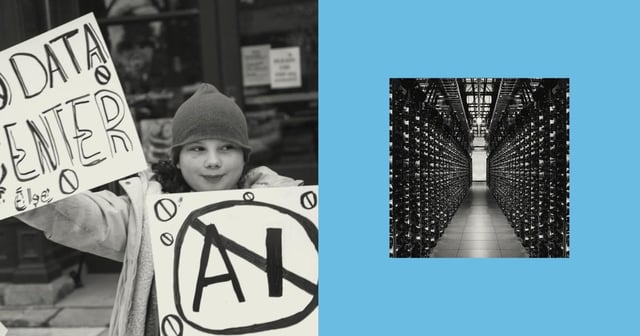

The dispute over artificial intelligence infrastructure has left zoning meetings behind. The issue is currently being addressed through politics in state legislatures. In Maine, the state legislature enacted the country’s first statewide moratorium on data centers. The act prohibits the construction of facilities requiring more than 20 megawatts of energy for the next 18 months. At such an energy threshold, training and implementing AI technologies become possible.
It appears that such projects might turn out to be a greater burden than a blessing.
Costs associated with electricity generation are one of the main concerns regarding AI infrastructure. Over the last five years, energy prices in Maine increased by nearly 58 percent. One of the reasons for such a price increase lies in the utilization of natural gas in energy production.
However, citizens are concerned that large power-consuming data centers would only add to the growing expenses. As such, they work continuously and require high electricity capacities.
Analyzing the Socio-Economic and Environmental Implications of Data Center Expansion
In contrast, industry stakeholders insist that such facilities provide employment opportunities and generate tax revenues. For instance, Dan Diorio, a spokesperson for the Data Center Coalition, argued that the moratorium was going to send the wrong message to businesses. Specifically, he said that this was an indication that Maine would not accommodate any projects in its territory.
On the other hand, the proponents of the legislation have their reservations regarding this claim. According to State Representative Melanie Sachs, there are no credible data that show that these facilities would benefit local communities.
Furthermore, they do not see proof of economic growth as a result of investing in data center development. Sachs raised concerns related to water consumption and increased energy demands, which could be detrimental to small towns.
Finally, it should be noted that environmental considerations cannot be neglected. Large data centers may affect power generation systems negatively and generate additional emissions of greenhouse gases if the energy sources involved were fossil fuel-based.
For example, the NAACP recently filed a lawsuit against Elon Musk’s xAI in Memphis. The organization believes that the company may violate clean air laws because of operating natural gas turbine generators at one of the facilities.
Transparency and the Data Center Boom
Transparency is another concern. Companies may develop data centers using shell corporations or under aliases. Non-disclosure contracts may be demanded by local authorities. Such an approach hinders the accurate evaluation of potential costs and benefits of the project. According to Greg LeRoy who researches corporate incentives, such confidentiality serves as a warning sign. In his opinion, good projects should withstand public criticism.
The issue cannot be overlooked since building data centers plays a pivotal role in the economy. Their contribution to GDP growth has reached 3 percent in the last year. The need for further development will only increase. Electricity consumption in data centers powered by AI can be expected to expand by up to 165 percent by 2030.
This process has not gone unnoticed. Donald Trump has expressed support for swift data center expansion, calling it essential for economic dominance in international rivalry.
The Maine Moratorium: A Turning Point in the Battle Over Data Centers
At the same time, opposition has begun spreading. Maine is not the only state facing these issues. There are currently another dozen states considering implementing something similar. Cities, too, have been enacting similar restrictions. In the United States Congress, Senator Bernie Sanders and Representative Alexandria Ocasio-Cortez have put forward a bill halting new construction of massive data centers across the country.
There may be some room in between. Industry experts agree that tech companies prioritize convenience above all else. This leaves room for negotiations and compromises, allowing policymakers to increase the rate of energy consumed by data centers. Revenue generated from this move can then be redirected to funding green technology research or lowering residents’ bills.
In the meantime, such a compromise has yet to be reached. Skeptics claim that no concrete plans for either compensation nor mitigation have been presented thus far. Proponents of the moratorium, on the other hand, view it as an opportunity for negotiation.
This development in Maine marks a turning point. While AI does operate through the internet, its physical presence cannot be ignored. More and more communities are starting to question how this development affects them.

Comments are closed.