
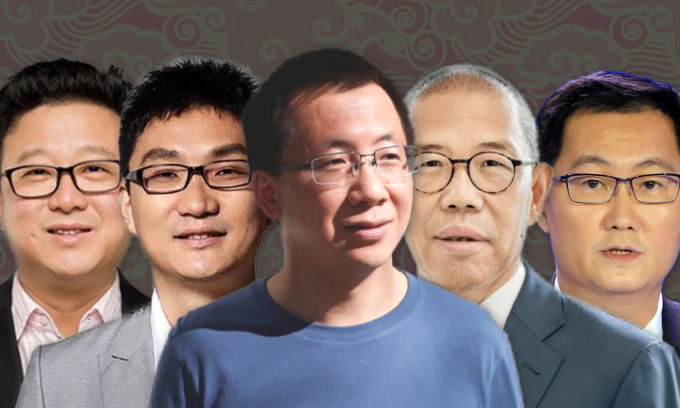

Zhang Yiming
Zhang Yiming, founder and CEO of tech company Bytedance, attends a meeting in Fuzhou city, southeast China’s Fujian province, 18 June 2016. Photo by Reuters |
ByteDance founder Zhang Yiming, 41, with a fortune of $69.3 billion, remains the country’s richest individual, with wealth rising 5.8% to a new high, according to Forbes.
In January, a deal over TikTok ownership was finalized, transferring control of the platform’s U.S. operations to a group of investors approved by former U.S. President Donald Trump.
ByteDance is expected to retain a minority stake in the new joint venture managing TikTok’s U.S. business.
Zhang founded ByteDance in 2012 and later resigned as its CEO and chairman in 2020-21, but still owns a stake in the company.
Zhong Shanshan
 |
Zhong Shanshan, Chairman of Nongfu Spring Co., Ltd., delivers a speech at a press conference in Beijing, China, May 6, 2013. Photo by Imaginechina via AFP |
Zhong Shanshan, 71, chairman of beverage giant Nongfu Spring, ranks second with $68.1 billion, an 18% gain.
Hangzhou-born Zhong dropped out of elementary school, had jobs as a construction worker, a newspaper reporter and a beverage sales agent before starting his own business.
Zhong has been featured on Forbes’ list eight times, starting in 2019 with a net worth of $1.8 billion.
Ma Huateof
 |
Tencent chairman Ma Huateng. Photo by Reuters |
Tencent chairman Ma Huateng came in third place with $53.8 billion, down 4.3% from last year.
The technology tycoon is intensifying efforts to compete with rivals in attracting users to AI-powered digital assistants.
In the third quarter of 2025—the latest available financial data—Delta Force helped drive a 15% year-on-year increase in revenue to $28 billion.
To strengthen its AI research, Tencent recruited former OpenAI researcher Yao Shunyu late last year to head its newly formed AI infrastructure department.
William Ding
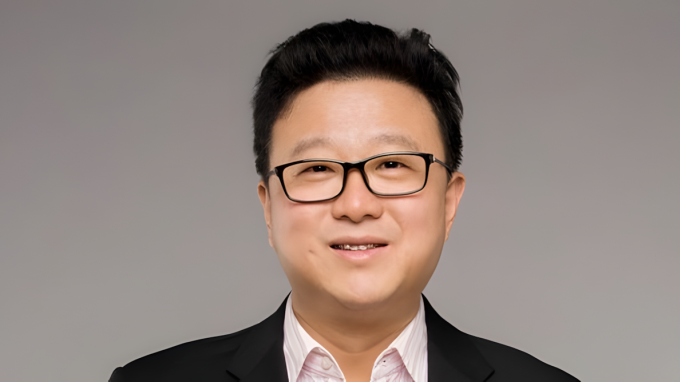 |
William Ding, founder of NetEase. Photo courtesy of NetEase |
In the fourth place, William Ding saw his net worth surging 13.8% to $37.9 billion.
Gaming company NetEase founder Ding has continued to scale back international gaming investments in favor of concentrating on fewer titles.
In 2025, NetEase recorded a 7% year-on-year increase in revenue to $16.1 billion, while net income rose 13.8% to $4.8 billion.
The gaming company is looking to upcoming releases such as the online adventure title Sea of Remnants to sustain growth, alongside established franchises including Fantasy Westward Journey and the battle royale game Eggy Party.
Colin Huang
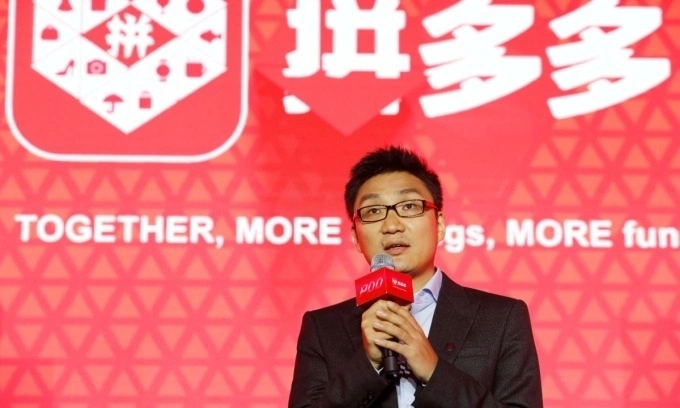 |
Colin Huang, founder and CEO of online group discounter Pinduoduo, speaks during the company’s stock trading debut at the Nasdaq Stock Market in New York, during an event in Shanghai, China July 26, 2018. Photo by Yin Liqin/CNS via Reuters |
The wealth of Colin Huang, founder of Nasdaq-listed discount retailer PDD Holdings, declined by 15% to $35.8 billion last year, ending a gain streak of three years.
In December, authorities raided the Dublin headquarters of its Temu unit amid a crackdown on low-cost imports and an investigation into whether the platform benefited from unfair subsidies.
The combined wealth of mainland Chinese billionaires on Forbes’ annual ranking reached nearly $2.2 trillion this year, a 31% increase from 2025. The country counts 539 members of the billionaire club, up from 450 last year.
It was near the record $2.5 trillion set in 2021 before the pandemic and regulatory crackdowns on the private sector wiped out significant market value among tech giants.
The Hang Seng Index has climbed 10% since last year’s World’s Billionaires list, while the CSI 300 Index – tracking 300 companies listed in Shanghai and Shenzhen – has surged nearly 20%.
Despite volatility linked to the Iran War, onshore equities could continue rising and enter a “slow bull” phase as corporate earnings improve. This outlook is supported by Beijing’s push to curb excessive competition and price wars across industries ranging from electric vehicles to food delivery, UBS Securities said in March.

Comments are closed.