
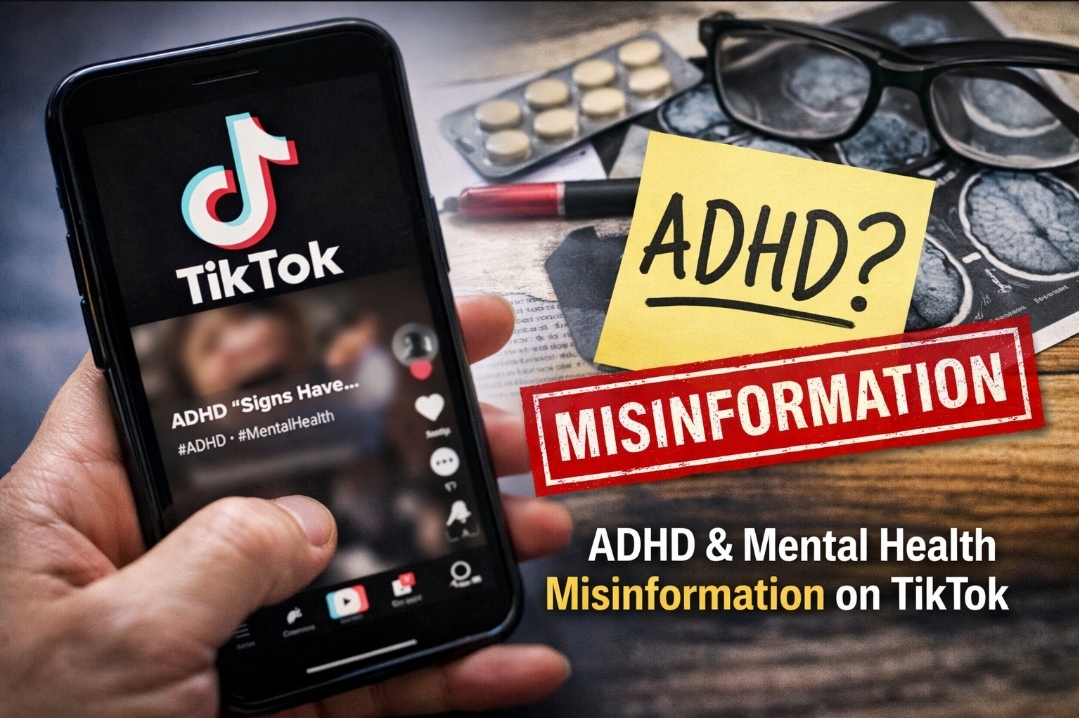
Majority of ADHD Content on TikTok Found Misleading, Study Highlights Growing Mental Health Misinformation

A new academic study has raised serious concerns about the quality of mental health information circulating on social media, revealing that a large share of such content is inaccurate or misleading. The issue appears particularly severe on short-form video platforms like TikTok, where discussions around conditions such as Attention Deficit Hyperactivity Disorder (ADHD) have gained massive popularity.
According to the research, more than half of ADHD-related videos on TikTok contain misleading or unverified information. This finding has sparked concern among experts, especially as younger users increasingly turn to social media platforms as a primary source of health-related knowledge.
Extensive Study Examines Thousands of Posts
The study analyzed more than 5,000 social media posts covering a broad spectrum of mental health and neurodivergent conditions. These included ADHD, autism, schizophrenia, bipolar disorder, depression, eating disorders, obsessive-compulsive disorder (OCD), anxiety, and phobias.
To better understand how misinformation varies across platforms, researchers evaluated content from several major social media networks, including YouTube, Facebook, Instagram, and X.
The results revealed notable differences in the reliability of information. TikTok stood out for having the highest levels of misinformation, with 52 percent of ADHD-related videos found to be inaccurate. Similarly, content about autism on the platform showed high levels of inaccuracy, with 41 percent of posts identified as misleading or lacking scientific support.
In contrast, other platforms performed better. YouTube showed an average misinformation rate of 22 percent, while Facebook had comparatively lower levels, with just under 15 percent of its mental health content deemed inaccurate.
Neurodivergent Topics More Vulnerable to Misinformation
The research also found that content related to neurodivergent conditions—particularly ADHD and autism—was more likely to contain misinformation compared to other mental health topics.
These subjects tend to generate high engagement online, which can accelerate the spread of both accurate and inaccurate information. The format of short, easily digestible videos, especially on TikTok, may further contribute to the rapid circulation of oversimplified or incorrect claims.
As a result, users are often exposed to content that may appear relatable or convincing but lacks proper medical validation.
Social Media’s Influence on Young Audiences
One of the key concerns highlighted in the study is the growing role of social media as a source of mental health education, particularly among younger users. Platforms like TikTok and Instagram have become spaces where people seek explanations for their experiences, symptoms, and emotions.
However, the study suggests that the accessibility and viral nature of content can lead to the rapid spread of misleading narratives. When accurate, evidence-based information is less visible or harder to access, users may rely on content that is incomplete or incorrect.
This trend increases the risk of widespread misunderstanding of mental health conditions and may shape public perception in ways that are not aligned with medical evidence.
Lack of Professional Representation Online
Another major finding from the study is the limited presence of qualified healthcare professionals in the online mental health conversation. While content created by medical experts tends to be more accurate, it represents only a small portion of the total content available on social media platforms.
This imbalance allows non-experts to dominate discussions, often sharing personal experiences or opinions that may not reflect established medical knowledge. While such content can be engaging and relatable, it may also contribute to confusion or the spread of misinformation.
Researchers stress that increasing the visibility of expert-driven, evidence-based content is essential to improving the overall quality of information available online.
Potential Consequences for Public Health
The spread of inaccurate mental health information can have significant real-world consequences. One major risk is the possibility of individuals misinterpreting their own symptoms based on misleading content. This can lead to self-diagnosis without proper medical evaluation, which may result in unnecessary anxiety or incorrect assumptions.
In other cases, misinformation may cause people who genuinely need help to delay seeking professional care. Misleading portrayals of symptoms or treatments can create confusion about when and how to seek support.
Additionally, inaccurate content can reinforce stigma surrounding mental health conditions. By presenting these conditions in exaggerated or incorrect ways, such content may make them appear more severe or hopeless than they actually are, discouraging individuals from reaching out for help.
Another concern is the promotion of unverified or ineffective treatments. When users encounter advice that is not backed by scientific evidence, they may delay accessing appropriate care, potentially worsening their condition over time.
Calls for Improved Regulation and Better Content
In light of these findings, researchers are calling for stronger measures to address misinformation on social media. They emphasize the need for:
- Greater involvement of healthcare professionals and organizations in creating content
- Improved moderation policies by social media platforms
- Development of standardized methods to evaluate the accuracy of online health information
- Clearer definitions of what qualifies as misinformation in the context of mental health
Such steps could help ensure that users have access to reliable and trustworthy information, while also limiting the spread of harmful or misleading content.
Platforms Defend Their Efforts
In response to the study, TikTok has disputed the findings, arguing that the research is flawed and based on outdated data. The company maintains that it actively removes harmful health misinformation and works to connect users with credible sources, including information from the World Health Organization.
TikTok also highlighted initiatives aimed at improving the quality of content on its platform, including collaborations with healthcare professionals who share medically accurate information with large audiences.
Similarly, YouTube stated that it prioritizes reliable health information by working with licensed medical experts. The platform also noted that it has policies in place to remove harmful misinformation, restrict inappropriate content for younger users, and promote trustworthy sources.
The research, published in the Journal of Social Media Research, is among the first to take a comprehensive look at mental health and neurodivergence content across multiple social media platforms.
By examining trends across different networks, the study provides valuable insights into how misinformation spreads and where the biggest challenges lie.

Comments are closed.