
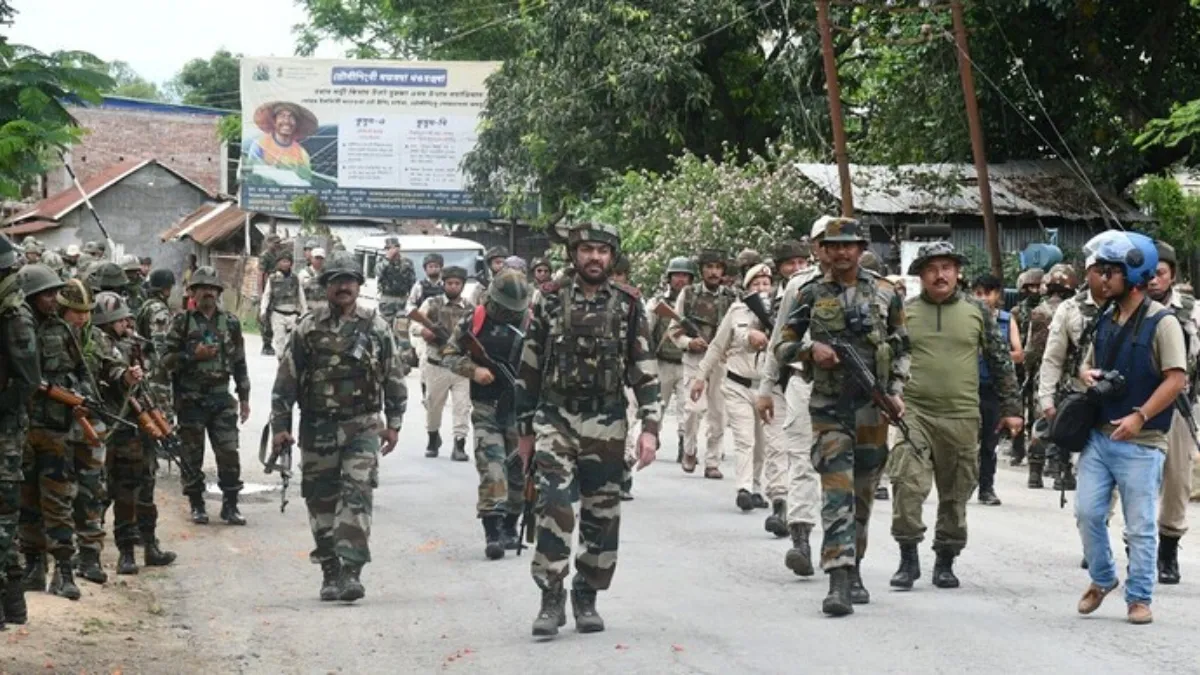
Manipur trapped in the trap of illegal ‘tax’, extortion and drug trade ruined the lives of common people.

Tezzbuzz Desk – Manipur has long been known as a state of ethnic violence and political tension. But there is also an aspect of this conflict that is relatively less discussed, its economic cost. The biggest burden of violence is being borne by the common citizens, who are forced to pay a kind of ‘hidden tax’ even on daily needs.
‘Hidden tax’ on every important thing
For people living in Imphal, Kangpokpi and surrounding areas, petrol, LPG cylinders, medicines, school fees and even salaries of government employees are not out of the scope of extortion. This tax is not collected by the government, but by extremist organizations, criminal gangs and groups associated with drug networks. These organizations have created a parallel illegal economy.
Drugs network becomes economic power
Manipur is situated at the western end of the ‘Golden Triangle’. In the last few years, it has not only been a transit route for heroin coming from Myanmar, but has also become a center of illegal opium production. Despite the state government’s ‘War on Drugs’ campaign, opium cultivation is continuously coming to the fore in thousands of acres.
Only between November 2025 and February 2026, 2,618 acres of illegal opium plantations were destroyed. And between July 2022 and July 2023, illegal drugs worth about Rs 1,500 crore were seized. According to the investigating agencies, the earnings from the drugs trade are also used to buy weapons and recruit new people.
organized extortion network
Along with drugs, extortion has also become the biggest economic problem of Manipur. Many illegal checkpoints are active on major highways of the state, where transporters are extorted on every trip. A part of their salary is also collected from government employees in the name of “tax”.
Schools, colleges, traders, pharmacies, brick kilns and government contractors are also in the grip of this network. Investigative agencies have revealed cases where funds released for development projects also reached militant networks.
biggest hit of inflation
The impact of this illegal system directly falls on the pockets of common people. Many times during the blockade, the price of petrol has reached Rs 250 per liter. There have been incidents of domestic LPG cylinders costing around Rs 1,000 being sold for up to Rs 5,000. The supply of medicines and essential goods is also seriously affected.
Manipur lagging behind in economic development
The impact of continuous violence and instability is clearly visible on the state’s economy. Manipur’s per capita income is much lower than the national average. Neighboring Mizoram, where peace was established years ago, has moved ahead in both per capita income and Human Development Index (HDI). Assam is also registering rapid economic growth, while Manipur is still largely dependent on government spending and aid.
What is the biggest challenge?
Experts believe that merely stopping violence in Manipur will not be enough. Unless drug networks, extortion and their economic mechanisms are eliminated, lasting peace and development is not possible. Only effective curbs on opium cultivation, confiscation of illegal assets, safe transportation and crackdown on financial networks can weaken this parallel economy.
The real fight of Manipur is not just to silence the guns, but to end the illegal economic system that has held both the life of the common citizen and the development of the state hostage.

Comments are closed.