
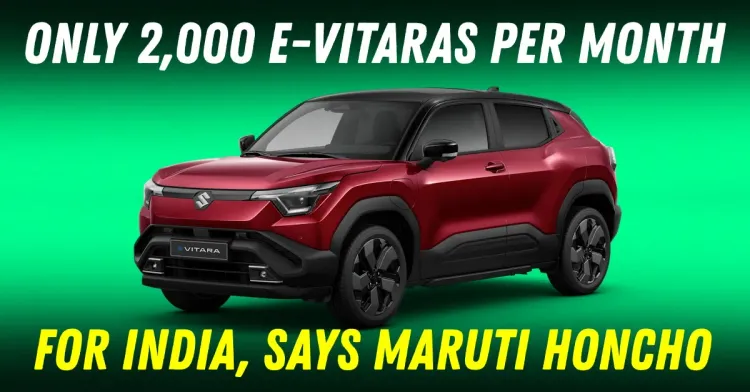

Maruti Suzuki recently entered the electric vehicle segment with the launch of the e Vitara. While initial deliveries have started, early buyers are facing constrained supplies. The company is currently operating with a strict production cap on the electric SUV, which has pushed waiting periods up to two months for certain variants. However, relief is in sight for prospective owners as the carmaker plans to significantly expand its manufacturing capacity at the Gujarat facility by July 2026.
Current Waiting Periods And Demand
At present, buyers looking to bring home the e Vitara face a standard waiting period ranging between six to eight weeks across the entire lineup. The electric SUV is offered in three main trims, which are the Delta, Zeta, and Alpha. Dealership trends indicate that the entry-level Delta variant is currently generating the highest amount of buyer interest compared to the fully loaded options.
The waiting time extends slightly for buyers who prefer specific paint options. Customers opting for the Opulent Red or the Bluish Black exterior colours are looking at a longer wait time of about eight to nine weeks. Other paint shades like Arctic White, Nexa Blue, Land Breeze Green, and Splendid Silver are generally available within the standard six-to-seven-week timeframe.
The Math Behind The Production Cap
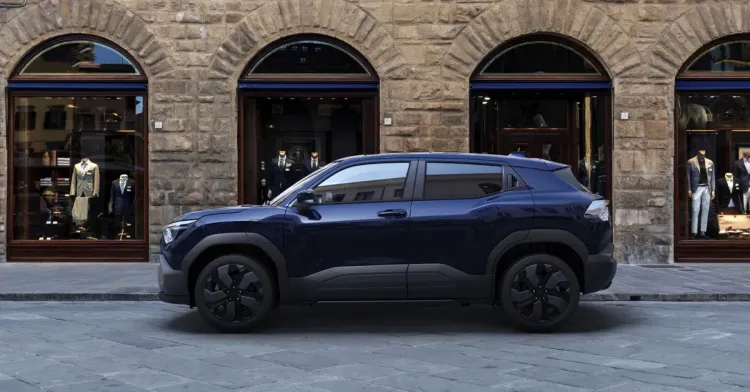
The primary reason behind these extended waiting periods is a hard production cap at the manufacturing level. Currently, the Gujarat plant can only allocate between 2,000 and 2,500 units of the e Vitara per month for the local market. This limitation exists because the facility serves as a massive global production hub. Maruti Suzuki is not just building cars for the local showrooms; it has to fulfil substantial global demand.
The e Vitara is being exported to multiple international markets where it has already been launched. Furthermore, under the global partnership between the two Japanese brands, Maruti Suzuki also manufactures the exact same electric vehicle for Toyota, which sells it globally as the Urban Cruiser eBella. Balancing local domestic demand with these heavy export requirements and partner commitments has severely stretched the current production bandwidth at the Gujarat facility, which is already running at 100 percent capacity.
Capacity Expansion Plans For July
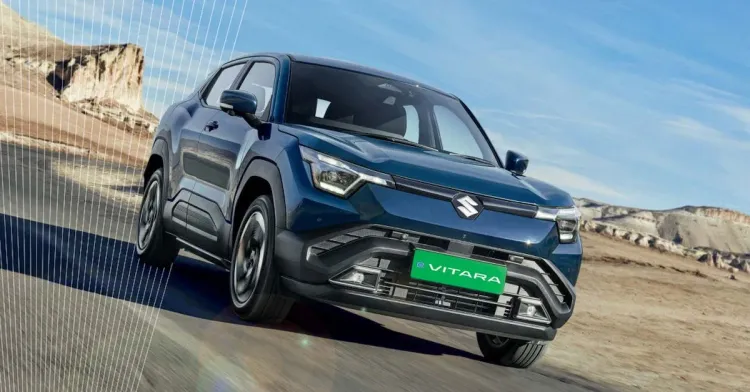
To resolve this production bottleneck, Maruti Suzuki is actively working on adding a fourth assembly line to the Gujarat plant. This new line is scheduled to become fully operational by July 2026. Once this expansion is complete, the total manufacturing bandwidth will increase significantly, allowing the company to allocate a much larger number of e Vitara units to local dealerships.
This expansion will be supported by the start of production at the new Kharkhoda facility in May. Together, these two plant upgrades are expected to add a massive five lakh units of total production capacity by the end of the current financial year. Looking further ahead, the company has also announced an investment of Rs 4,960 crore to build an entirely new second plant in Gujarat, which is slated to go online by the financial year 2029.
Pricing, Specs, And Rivals
For buyers entering the showroom today, the regular ex-showroom price of the e Vitara starts at Rs 15.99 lakh for the base Delta variant and goes up to Rs 20.01 lakh for the top-spec Alpha trim. The base variant features a 49-kWh battery paired with a front-axle-mounted motor making 144 horsepower and 193 Nm of torque. The higher trims utilize a larger 61 kWh battery with a 174-horsepower motor, offering an ARAI claimed range of 543 kilometres on a single charge.
To make the acquisition cost more attractive, the carmaker also offers a Battery-as-a-Service scheme. Under this rental model, the upfront cost drops to a starting price of Rs 10.99 lakh. Buyers then pay a battery subscription fee of Rs 3.99 or Rs 4.39 per kilometre. This flexible pricing helps the e Vitara compete aggressively against rivals like the MG Windsor EV, Hyundai Creta Electric, Mahindra BE 6, and the Tata Curvv EV.

Comments are closed.