
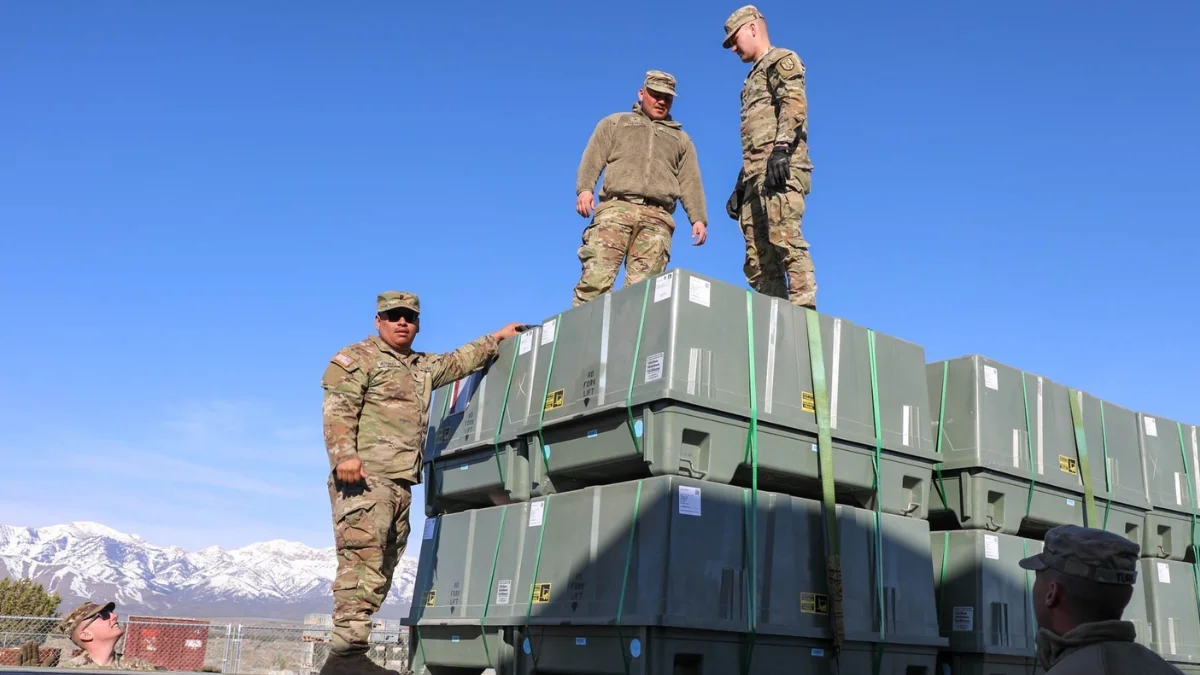
Massive United States munitions expenditure in war raises legal and strategic questions over military sustainability

A recent estimate reportedly shared with Congress by the United States Department of Defence indicates that American forces consumed billions of dollars’ worth of munitions within the first two days of the current conflict. The disclosure has drawn attention from lawmakers and defence analysts who are examining the financial, legal and strategic implications of such rapid expenditure during the opening phase of modern warfare. The scale of the reported consumption reflects the evolving nature of high-intensity conflict in which precision-guided weapons, advanced missile systems and complex air defence operations dominate early military engagements. In contemporary combat environments, technologically sophisticated munitions often carry extremely high procurement costs, meaning that even short periods of intense combat can generate enormous financial expenditure. From a legal and international relations perspective, the disclosure raises broader questions about the governance of defence spending, congressional oversight of military operations and the sustainability of large-scale military campaigns conducted under modern weapons systems.
Constitutional authority and congressional oversight of war expenditure
Within the constitutional framework of the United States, the authority to finance military operations ultimately resides with the legislative branch. The Constitution grants Congress the power to raise and support armed forces and to appropriate funds for defence purposes. The executive branch, led by the president, retains authority as commander in chief to direct military operations once authorised or funded. The disclosure of munitions expenditure, therefore, falls within a broader legal process in which the executive branch must periodically inform Congress about the financial requirements of ongoing military engagements. Such reporting enables legislators to evaluate whether existing defence appropriations remain sufficient and whether additional funding legislation may be required. The interaction between these branches reflects the constitutional principle of checks and balances. While the executive branch directs military strategy, Congress maintains responsibility for ensuring that public funds allocated to defence operations are spent within authorised legal frameworks. Large-scale consumption of munitions early in a conflict may therefore trigger legislative scrutiny regarding budgetary sustainability and the long-term financial implications of continued operations.
The economics of precision warfare in modern conflicts
The reported expenditure also highlights the economic transformation of warfare in the twenty-first century. Modern military operations rely heavily on precision-guided munitions designed to strike targets with extraordinary accuracy. These systems incorporate advanced guidance technology, satellite navigation and sophisticated targeting capabilities. Although such weapons improve operational effectiveness and can reduce collateral damage, they are significantly more expensive than traditional ordnance. Individual missiles or guided bombs can cost hundreds of thousands or even millions of dollars, depending on their technological complexity. When deployed in large numbers during intensive combat operations, the cumulative cost can escalate rapidly. In conflicts involving missile defence systems, naval strike capabilities and aerial bombardment campaigns, billions of dollars in munitions may be expended within extremely short periods. This economic reality has prompted growing debate among defence planners regarding the sustainability of modern warfare when advanced weapon systems are consumed at such accelerated rates.
Legal considerations under international humanitarian law
The scale of munitions deployment also carries legal implications under the framework of international humanitarian law. Military operations conducted during armed conflict must comply with the legal principles established by the Geneva Conventions and related rules governing the conduct of hostilities. The principle of distinction requires combatants to differentiate between military objectives and civilian objects. Precision-guided munitions are often justified within this legal framework because they allow armed forces to target specific objectives while minimising unintended harm to civilian populations. Another central principle is proportionality, which prohibits attacks expected to cause civilian damage that is excessive in relation to the anticipated military advantage. The use of technologically advanced munitions may assist military planners in satisfying this requirement by enabling more accurate targeting. Nevertheless, the legality of military operations ultimately depends not on the quantity of weapons used but on how they are deployed and whether commanders take all feasible precautions to protect civilian populations.
Strategic implications for global military balance
The extraordinary consumption of advanced munitions during the opening phase of the conflict also raises strategic questions about long-term military readiness. Modern defence systems depend on complex industrial supply chains involving advanced electronics, specialised materials and precision manufacturing processes. Unlike traditional ammunition that could be produced rapidly in large quantities, many contemporary missile systems require lengthy production timelines. Defence planners must therefore consider how quickly inventories can be replenished if combat operations continue for extended periods. The situation also highlights the importance of defence industrial capacity in modern geopolitical competition. Countries with robust manufacturing capabilities and diversified supply chains may possess strategic advantages when sustaining prolonged military campaigns. This reality has encouraged many governments to reassess the resilience of their defence production systems in order to ensure adequate stockpiles of advanced weapons.
International legal implications and alliance dynamics
The disclosure of munitions expenditure also carries diplomatic implications for international alliances. Many advanced weapon systems are produced through multinational cooperation programmes or involve components sourced from allied countries. When major conflicts occur, allied governments often coordinate defence production and logistics in order to support shared security objectives. Such cooperation can involve technology sharing agreements, joint procurement arrangements and coordinated industrial planning. The scale of early combat expenditure may therefore influence diplomatic discussions among allied states regarding the allocation of defence resources and the capacity of global defence industries to sustain extended operations.
The future challenge of military sustainability
The estimate presented to Congress ultimately underscores the profound transformation of warfare in the contemporary era. Modern conflicts increasingly rely on highly sophisticated weapons systems that deliver extraordinary operational capabilities but also generate unprecedented financial costs. Legal frameworks governing defence spending, military accountability and the conduct of hostilities must therefore adapt to the realities of technologically advanced warfare. Governments must ensure that strategic planning incorporates not only battlefield effectiveness but also the economic and legal sustainability of prolonged military operations. As defence analysts and lawmakers continue to evaluate the implications of rapid munitions consumption, the broader debate surrounding military preparedness, industrial capacity and fiscal responsibility will likely intensify. The intersection of law, economics and strategy in modern warfare demonstrates that the management of military resources remains one of the most complex challenges facing contemporary security policy.

Comments are closed.