
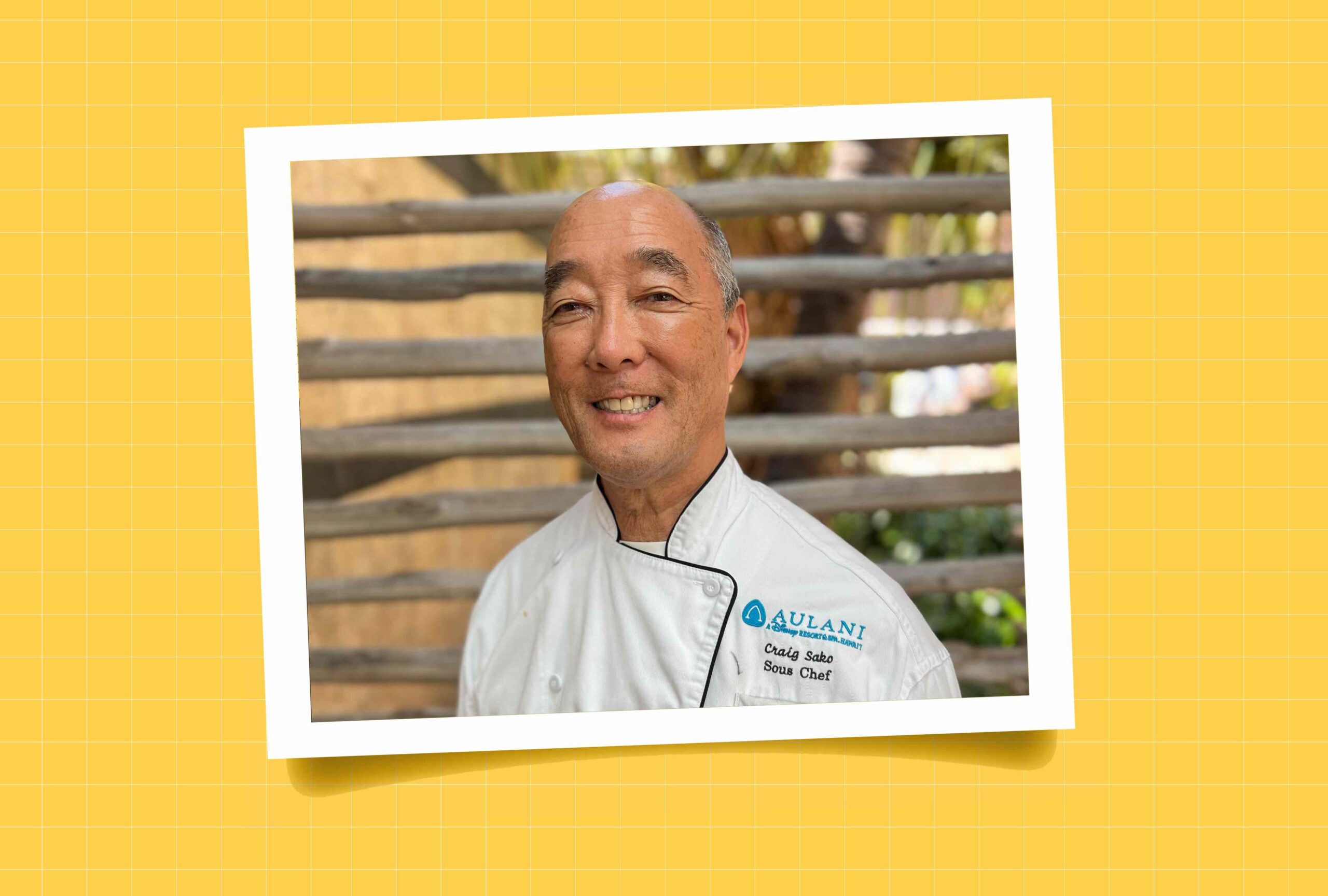

Through hands-on poke classes, Chef Craig Sako helps visitors connect with the traditions at the heart of Hawaiian cuisine.
Key Points
- Hawaiian food tells a deeper story about culture, history and community.
- Chef Craig Sako makes traditional poke easier for guests to recreate at home.
- Teaching food traditions helps preserve them for future generations.
At Aulani, a Disney resort in Kapolei, Hawaii, guests can take photos with Goofy in a Hawaiian shirt, eat Mickey Mouse–shaped Spam musubi and learn to hula dance alongside Mickey and Minnie. But it’s also important to Disney that visitors are immersed in the rich Hawaiian culture beyond the resort’s character experiences—including its food traditions.
After all, many Hawaiian traditions, from music to cuisine, were once almost lost altogether. After the Hawaiian Kingdom was overthrown in 1893, the Hawaiian language was banned in schools and traditions like hula dancing were suppressed. Since the 1970s, however, there’s been a renaissance of Hawaiian traditions.
Kama Hopkinscultural ambassador at Aulani, works to ensure that his ancestors’ stories and cultural heritage are preserved at the resort. And he takes that work beyond language and dance into the kitchen, where Craig Sakosous chef and culinary educator, helps keep traditional Hawaiian cooking techniques alive.
“A lot of times, and this is true with cultures around the world but especially ours in Hawaii, when a language is decimated and almost taken out of existence, it’s very difficult to recapture the meanings or the stories that happened before people came from the outside world,” Hopkins explains. “By fighting to save it, we’re able to remember these stories from times gone past and share them.”
Hopkins points to Sako as someone who plays a key role in that mission. Sako, who grew up in Hawaii, learned how to cook not just in school but from older generations. “He learned how to cook Hawaiian-stylemeaning he can teach others how to make certain dishes the way they were made years ago,” Hopkins adds, “because if we forget that, we lose a part of that cultural knowledge.”
Chef Craig Sako’s Passion for Hawaiian Cooking
Sako says he didn’t always want to be a chef. Early on, he dreamed of being an ichthyologist, a biologist who studies fish. “I actually got into cooking by mistake,” he says, “because I liked fishing, but I wasn’t smart enough or maybe I just didn’t apply myself. After a year studying marine science technology, I realized it wasn’t fun, and my friend’s mom said, ‘You should try cooking.’”
He started his career in a pantry position at a restaurant on O’ahu, where the chef would teach him a little at a time. “It’s kind of hard at first,” Sako says, “but you get used to using a knife and working with a lot of people and then you realize, hey, this is fun.”
Sako later studied cooking in Japan and worked at a neighboring resort in Hawaii for many years before joining Aulani in 2019. Today, he works as a sous chef in the resort’s restaurants and teaches a class on how to make poke—a traditional Hawaiian fish dish—and pair it with sake.
Sako describes modern Hawaiian cooking as a “melting pot from the island’s sugar cane days,” influenced by the plantation workers who were employed by Hawaii’s now-defunct sugar cane industry. “It’s Portuguese, Chinese, Japanese, Korean, Filipino and Puerto Rican, too,” he says. “There’s been this huge influx of different foods and the cuisine we have now is based on the plantation workers—what they were cooking for lunch themselves and what they would share with each other.”
Still, he says, at its heart, Hawaiian cuisine is rooted in foods that have long been part of the islands. “It has our roots,” he explained, “the roots of our ancestors, I like to say.”
Teaching a Love of Hawaiian Cuisine Across O’ahu
Like hula dancing, ukulele music or lei-making, Hawaiian cuisine was once in danger of being lost—not just outside Hawaii but across its islands as well. That’s why Sako teaches the poke and sake class at Aulani: to preserve tradition and give guests the knowledge to recreate the dish at home.
“Poke is such a popular dish now throughout the world,” he says. “We give guests a bit of history about the poke, the types of fish we use and the origins of the dish. We talk about the ingredients of a traditional poke … It’s pretty basic—ahi tuna, kukui nut, which is a nut that you have to pick and dry roast, and then there’s onions, green onions, sea salt and seaweed that you would gather from the shores.”
Sako also teaches guests how to make traditional shoyu poke and a ginger-flavored poke he says “is a great poke to introduce to their friends who are afraid to eat raw fish.”
In a kukui nutshell, Sako’s class is about making the traditional dish accessible to everyone while staying connected to its roots. “It’s about connection to the dish,” Sako explains, “and making it more approachable.” He even sends guests home with instructions on how to make poke with tofu or grilled rare steak.
Shaping the Next Generation of Hawaiian Chefs
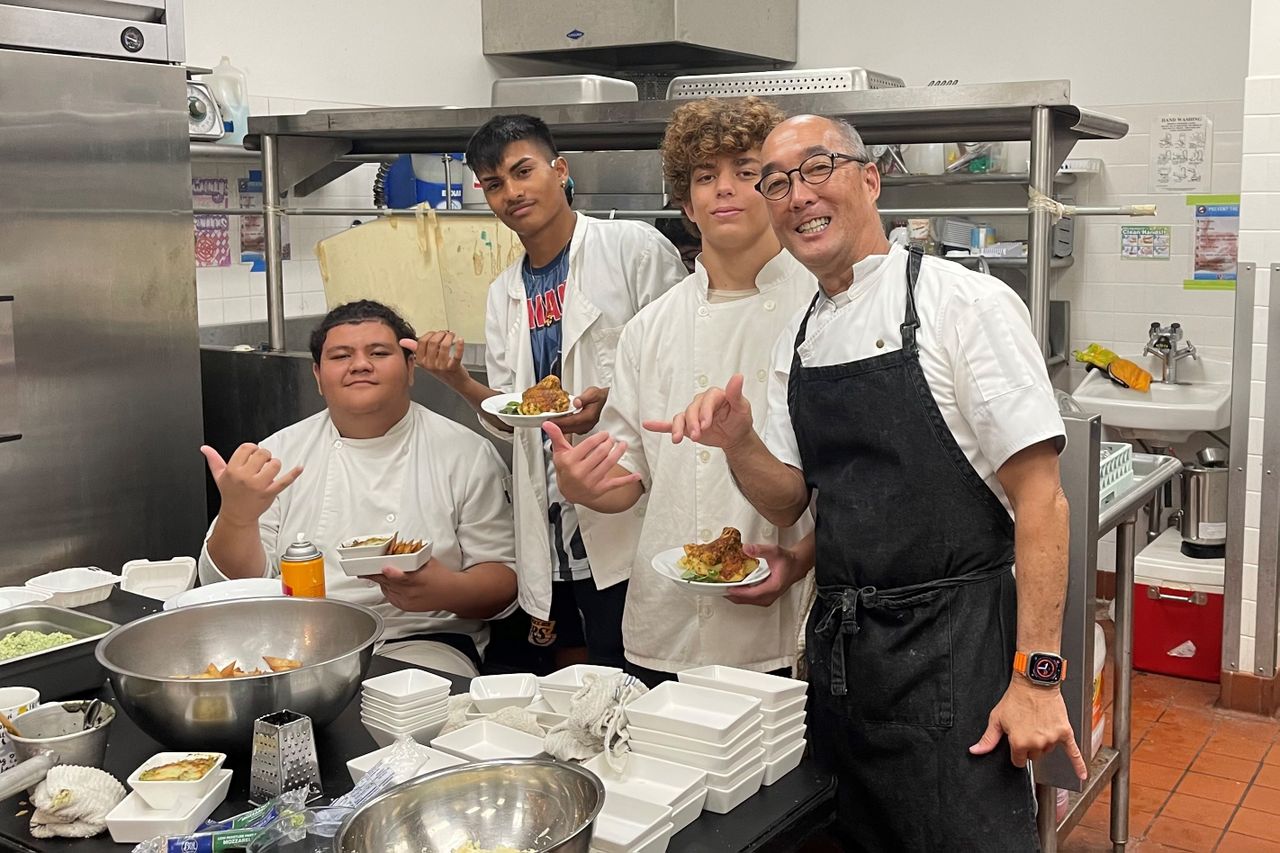
The busy chef also finds time to volunteer in his community, teaching young students at nearby schools Hawaiian recipes, kitchen skills and how to interview for jobs.
Hayley Matson-Mathesexecutive director of the Hawaii Culinary Education Foundation, says Sako is an impactful leader who has an “interest in shaping the next generation of culinary professionals” in Hawaii.
“His approach is encouraging and inspiring, and he motivates students to believe in what is possible if they work hard,” says Matson-Mathes. “He offers culinary career pathways to the students … His skills are among the best in the profession, and he always takes learning to a higher level.”
One of the places Sako often volunteers is Waianae High School in Honolulu. “It’s a school with probably the most native kids—lower-income kids who may seem not as privileged,” he explains. “I wanna help these kids succeed. I tell them that culinary is a great profession to get into.”
His lessons go beyond cooking. “I guide them with skill sets like safely cleaning a fish, food storage and cleanliness,” he says. “The end goal is making an impact and telling the kids if they want to know more about a country or a people, they should eat their food.”
Building Community Through Poke
In an area where the culture nearly disappeared, Sako teaches guests about Hawaiian cuisine so they can share it with their friends and loved ones at home. And through his volunteer work, he’s also helping shape the next generation of chefs who can carry these traditions forward.
For Sako, it’s about community.
“In the dining room [at Aulani] we do the poke classes behind this wall mural which depicts ahupua’a—the community from the mountains to the oceans. There’s your community of people and everyone has a gift: you may be a great baker, someone else is a good farmer, another person is a fisherman and everyone contributes.”
“We all get to help each other,” Sako says, “and everyone gets to eat good.”

Comments are closed.