

The German luxury carmaker Mercedes Benz’ Korean subsidiary has been fined a whopping $7.64 million or Rs 70 crore by the Korea Fair Trade Commission. For those who may be wondering why this fine was levied, back in 2024 a Mercedes Benz EV exploded in a hospital parking lot, causing a lot of damage. After which an investigation was launched, which revealed that Mercedes Benz Korea engaged in deceptive marketing practices related to EV battery technology.
Mercedes Benz Korea fined Rs 70 crore
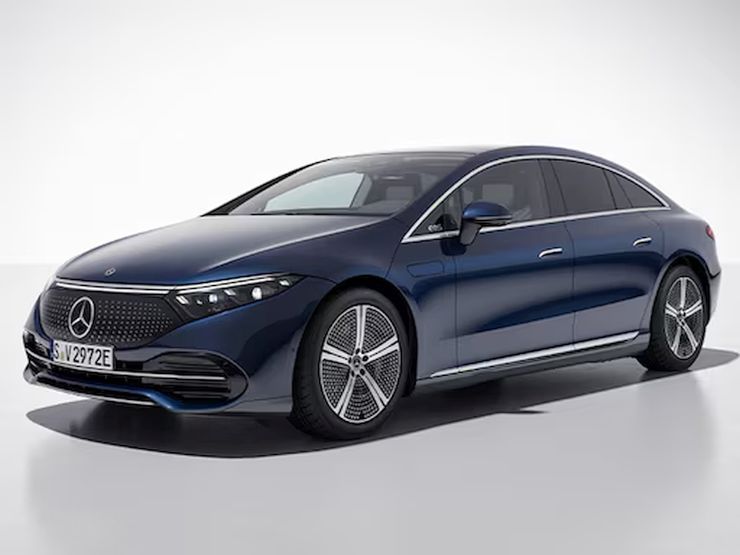
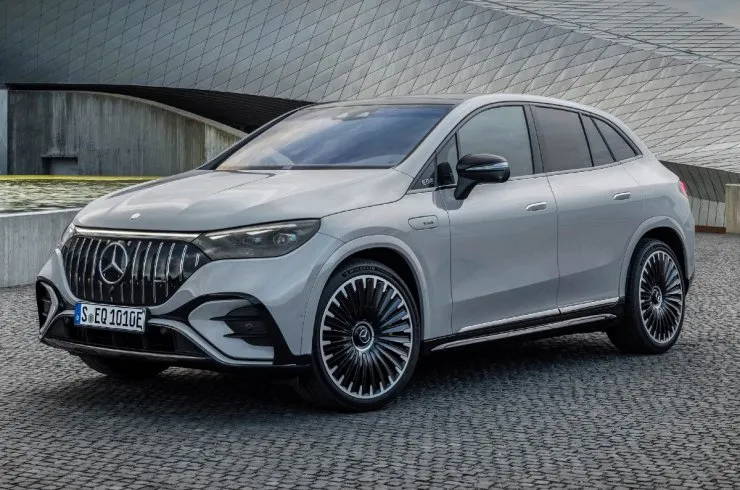
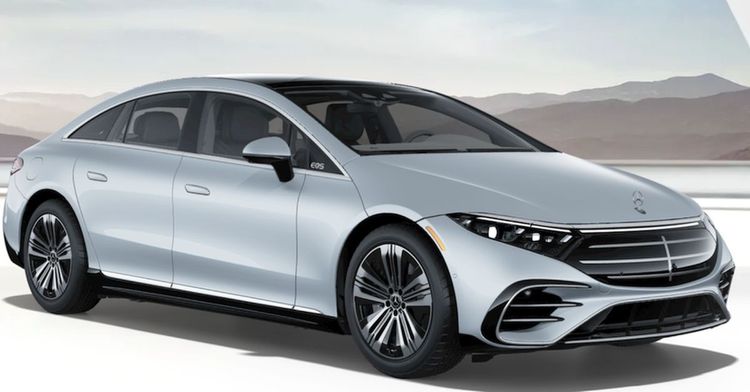
According to the reports, Mercedes Benz Korea falsely advertised that its models, the EQE and the EQS, were equipped with batteries from Contemporary Amperex Technology Co. Ltd. (CATL), which is a major and very reliable battery manufacturing company from China. However, in reality, these models use batteries supplied by Farasis Energy, which is a lesser-known and smaller Chinese battery supplier.
The Fair Trade Commission (FTC) of Korea highlighted that Mercedes Benz Korea, in its promotional materials, claimed that its models were equipped with CATL-sourced battery packs. However, in reality, they were equipped with batteries from Farasis Energy. The FTC stated that the company “unfairly induced customers” by misleading them about a key component influencing their purchase decision.
Additionally, it stated that the battery technology of any electric vehicle is the most crucial safety and performance information for any EV buyer, and withholding and falsely advertising such critical information constitutes deceptive marketing. Hence, Mercedes Benz Korea has been fined $7.64 million or Rs 70 crore.
Back in June of 2023, Mercedes Benz Korea distributed an internal EV sales manual to its dealers. This guide contained detailed explanations of the brand’s electric vehicle lineup. During the investigation, it was noted that the manual highlighted the advantages of CATL battery technology. However, it did not mention that some models were equipped with Farasis Energy battery packs.
The dealers were also unaware that certain models, such as the EQS and EQE, did not have CATL battery technology. Due to this, they promoted the EVs based on the assumption that they were equipped with CATL batteries. As a result, it unintentionally led to misinformation reaching customers.
What is even more interesting is that the FTC has revealed that the omission was not accidental. Rather, Mercedes Benz Korea received detailed battery supplier information from its German headquarters back in May 2021. However, despite knowing the truth, the Korean subsidiary of Mercedes Benz excluded the Farasis Energy battery pack information from its dealer guides.
Over the period of June 2023 and August 2024, over 3,000 units of the Mercedes Benz EVs equipped with Farasis batteries were sold in South Korea. The FTC also calculated that, in total, around $175 million or Rs 1,607 crore in revenue was generated by the sales of these EVs.
What caused this revelation?
For those who may have forgotten, back in August of 2024, a Mercedes Benz EQE electric SUV caught on fire in an underground parking lot in Incheon, South Korea. It was highlighted that the vehicle was parked for three days and was not charging when the fire occurred.
What was unfortunate about this incident is that over 140 vehicles parked in the parking lot caught fire, and 23 residents were hospitalized due to smoke inhalation. Also, 103 residents had to be evacuated, and over 500 households lost electricity and water supply for 5 days.
Following this, an investigation was launched, and it was found that the Mercedes Benz EQE which caught fire was built in China and was fitted with Nickel-Cobalt-Manganese (NCM) battery cells supplied by Farasis Energy. Mercedes Benz’ parent company owns a 3 percent stake in Farasis Energy, and over 50 percent of battery packs produced by the company are supplied to Mercedes Benz EVs.
Source

Comments are closed.