
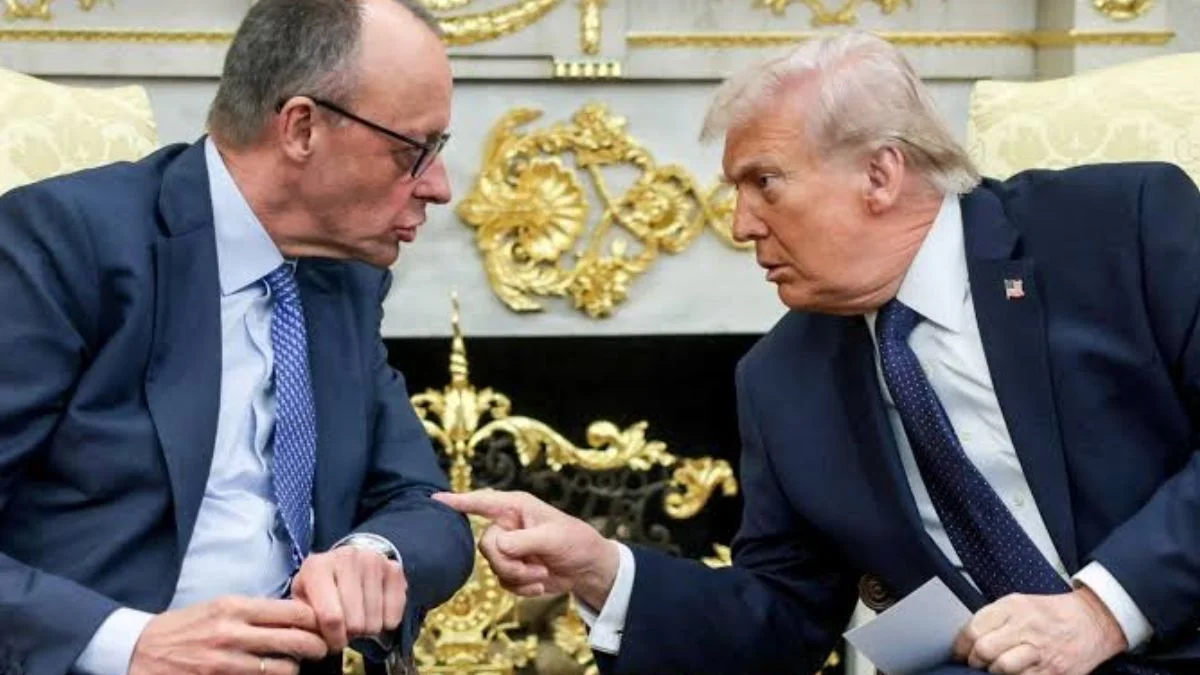

German Chancellor Friedrich Merz on Friday defended Lithuania’s decision to pursue the removal of its constitutional ban on nuclear weapons and foreign military bases, saying he could not criticize Vilnius for reassessing its security policies amid a deteriorating geopolitical environment.
Merz’s remarks come a day after Lithuania’s political leadership agreed to begin the process of amending the country’s constitution, a move that would eliminate restrictions adopted more than three decades ago following its independence from the Soviet Union. Lithuanian President Gitanas Nausėda said the security environment has fundamentally changed, making the constitutional provisions outdated. The amendments will require approval by a two-thirds majority in two parliamentary votes before taking effect.
Lithuania, which shares borders with Russia’s Kaliningrad exclave and Belarus, has significantly increased defence spending since Russia’s full-scale invasion of Ukraine in 2022. While Vilnius has clarified that it has no immediate plans to host nuclear weapons, officials argue that removing the constitutional prohibition would provide greater strategic flexibility if regional security conditions worsen. The country will remain a signatory to the Nuclear Non-Proliferation Treaty (NPT).
Commenting on the development, Merz said Germany understood the security concerns driving Lithuania’s decision and indicated that Berlin would not question the sovereign choices of a frontline NATO ally facing an increasingly challenging security landscape.
The German chancellor also addressed recent comments by U.S. President Donald Trump regarding NATO burden-sharing. Merz said he intends to remind Trump during next week’s NATO Summit that Germany and other European allies have substantially increased defence spending and are contributing more to the alliance than in previous years.
Germany has accelerated military investment under Merz’s government, while European NATO members have broadly expanded defence budgets in response to Russia’s military posture and Washington’s repeated calls for greater burden-sharing. NATO Secretary General Mark Rutte has recently praised Germany for its growing defence commitments, including the permanent deployment of a German brigade in Lithuania and increased support for NATO’s eastern flank.
Merz has consistently argued that Europe must strengthen the European pillar of NATO while preserving the transatlantic alliance. His government has also supported discussions on enhancing European deterrence capabilities, although Berlin remains bound by international treaties that prohibit Germany from developing its own nuclear weapons.
The NATO summit, scheduled for next week in Ankara, is expected to focus on defence spending targets, military readiness, support for Ukraine and the alliance’s long-term strategy amid continuing tensions with Russia. European leaders are expected to emphasize that increased defence investments demonstrate their commitment to collective security and burden-sharing within NATO.

Comments are closed.