
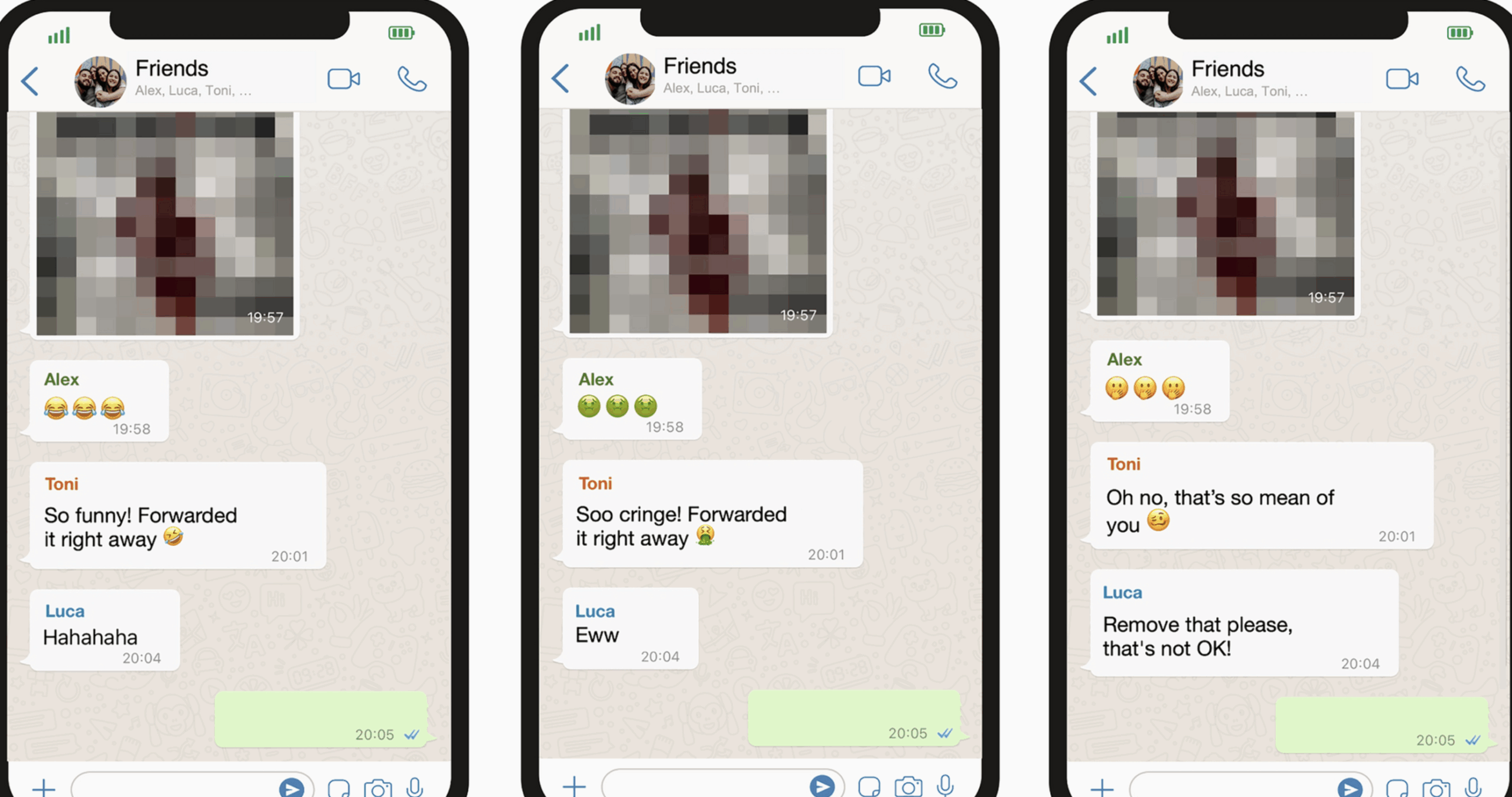

In a significant ruling addressing the legal status of digital communications, the Punjab and Haryana High Court has clarified that messages posted in a WhatsApp group can amount to a “public utterance” for the purposes of India’s obscenity laws. This interpretation has implications for how online comments could be treated in criminal cases.
Case Background: WhatsApp Comment Leads to FIR
The case involved a Gurugram resident, Dheeraj Guptawho responded to a woman’s photo shared in a WhatsApp group with the comment “Who knows after how many days the moon came out in the society” (roughly translating to “After ages, the moon has finally shown up in the society!”). The woman alleged that this response was offensive and filed a First Information Report (FIR) accusing the man of obscenity, sexual harassment, and insulting modesty under Sections 294, 354-A, and 509 of the IPC.
Court’s Ruling: Group Messages as Public Speech
Justice Shalini Singh Nagpal of the High Court observed that while end-to-end encrypted messages exchanged one-on-one remain private, a message posted in a group chat is accessible by all members. Because of this, the court said it constitutes an “utterance in a public place” within the meaning of Section 294 IPC — a provision dealing with obscene acts and songs.
The court noted that such messages cannot be considered strictly personal, given the multiple recipients. This interpretation updates how ancient criminal laws are applied in the context of modern digital communication platforms.
Not All Offensive Comments Are Obscene
Despite recognising the public nature of group messages, the High Court also clarified that not every offensive word or remark amounts to legal obscenity. The bench highlighted that just because a comment is in poor taste or may offend someone does not automatically make it “obscene” under the law’s definition. In this instance, although the comment and accompanying emojis were inappropriate, they did not satisfy the legal criteria for obscenity under Section 294.
The court also observed that the remark lacked sexual undertones and was more humorous than malicious, which meant it did not attract liability under Sections 354-A or 509 either.
Legal Context and Digital Communication
This ruling builds on earlier judicial reasoning — such as the Bombay High Court’s finding that personal WhatsApp chats don’t qualify as public utterancesbut group messages might — because of their accessibility to multiple users.
As digital communication becomes central to public discourse and interpersonal interactions, courts are increasingly asked to interpret existing criminal law provisions in light of modern messaging platforms like WhatsApp.
Image Source

Comments are closed.