

Virendra Pandit
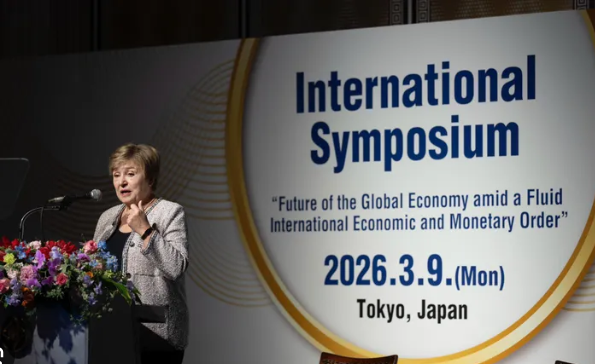
New Delhi: International Monetary Fund (IMF) Managing Director Kristalina Georgieva said on Monday that lengthy hostilities in West Asia would risk hitting markets and economies, while throwing up unexpected challenges that require policymakers to prepare for a “new normal,” the media reported.
“If the new conflict proves prolonged, it has clear and obvious potential to affect market sentiment, growth and inflation, placing new demands on policymakers,” she said at a symposium in Tokyo.
New shocks could emerge even after the conflict ends, underscoring the outlook for continued uncertainty. “In this new global environment, think of the unthinkable and prepare for it,” she added.
These points backed up the IMF’s view that nations need to sort out their domestic policies to ensure they have bandwidth to deal with shocks, she indicated.
Georgieva spoke after oil surged toward USD 120 a barrel on Monday before paring gains amid escalating conflict in West Asia and widening strain on oil shipping routes and the global energy infrastructure.
The United Arab Emirates and Kuwait joined Iraq in reducing output on Sunday, as storage rapidly fills up due to the effective closure of the Strait of Hormuz.
The IMF chief said shipping traffic through Hormuz has fallen by 90 percent. The strait carries about a fifth of global oil supply and LNG trade, including roughly half of Asia’s oil imports and a quarter of its LNG imports, she said.
For Japan, that traffic accounts for nearly 60 percent of its oil and 11 percent of its LNG supplies, she said.
US President Donald Trump weighed in on the oil spike with a late-night post on his social media platform Truth Socialsaying that short-term movements are a “very small price to pay.” Prices will fall rapidly “when the destruction of the Iran nuclear threat is over,” he added.
Georgieva sketched out some of the economic damage that may result from West Asia crisis. She said a 10 percent increase in energy prices persisting for a year would push global inflation up by 40 basis points and slow economic growth.
The IMF will release a more detailed analysis in its upcoming World Economic Outlook report due in April, she added.
In the face of shocks, Georgieva urged policymakers to invest in strong institutions and policy frameworks to support resilient economies and private-sector-led growth at home. She also proposed using available policy space as needed provided that nations rebuild their buffers afterward.
In Japan, which relies on West Asia for about 90 percent of its oil imports, the surge in crude prices combined with a weak yen raises the risk of stagflation. The shock could push the government to ramp up fiscal spending while complicating the central bank’s efforts to normalize policy.
“You have control over your domestic policies,” Georgieva said. “You can get your own house in the best position to face these shocks.”

Comments are closed.