
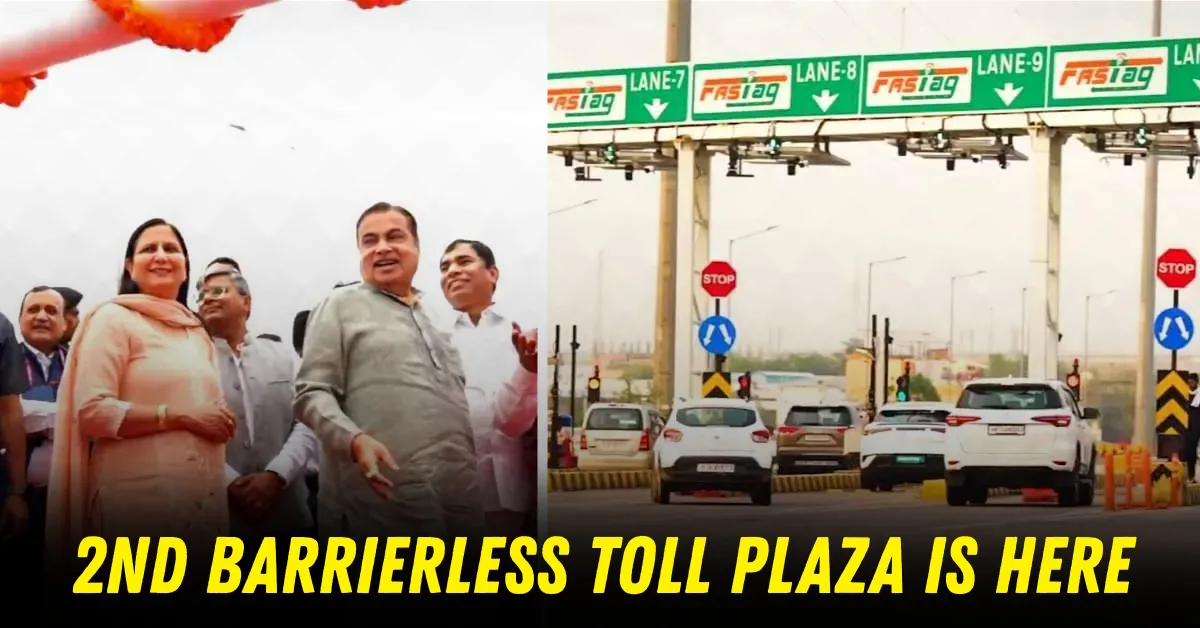

The video showing India’s second barrier-less toll plaza and its inauguration has been shared on X by the official account of Nitin Gadkari. In the short video, Gadkari, along with many other officials, was seen inaugurating the new Mundka-Bakkarwala Toll Plaza on Urban Extension Road-II. He mentioned that he is proud of his department setting up this toll plaza, which is based on international standards.
Gadkari also highlighted that setting up this toll plaza was very difficult. However, a lot of technology and effort have made this inauguration possible. He also mentioned that, under the leadership of Prime Minister Narendra Modi, this feat has been achieved. He concluded by stating that these barrier-less tolls will help in saving Rs 15,000 to Rs 16,000 crore of taxpayers’ money, which will then be reinvested for the benefit of the taxpayers.
The Mundka-Bakkarwala MLFF is the second toll plaza which has now become operational. The first such plaza was inaugurated on May 1st, and it is the Choryasi Toll Plaza on the Surat-Bharuch section of NH-48 in Gujarat. Delhi has now become the second city in India which has adopted this advanced tolling technology.
The government has chosen Mundka-Bakkarwala as the second location for barrier-less tolling, as this particular corridor has a lot of heavy traffic movement and congestion. This project aims to eliminate bottlenecks in the national capital region.
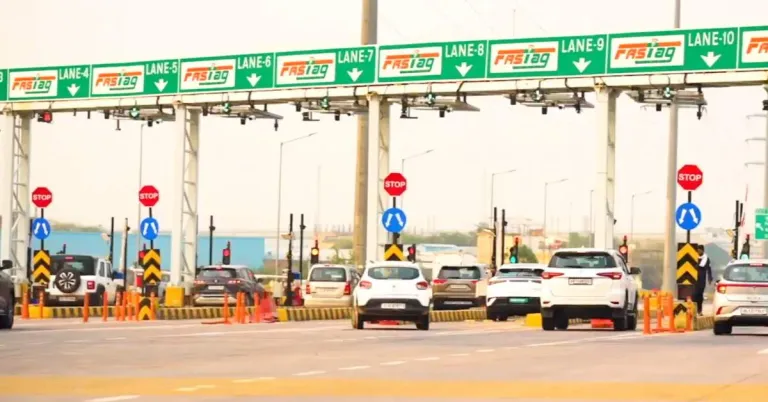
For those who may not be aware of what MLFF stands for, its full form is Multi-Lane Free Flow tolling. It is a completely barrier-less toll collection system. In these toll plazas, the vehicles do not have to stop at toll booths. Additionally, there are no physical barriers or gates. The vehicles can continue moving at highway speeds while tolls are automatically deducted.
The system has been designed to make sure that there is “zero waiting time” at toll plazas. Now, to facilitate the tolling setup, these toll plazas use Automatic Number Plate Recognition (ANPR) cameras. Additionally, they also use advanced FASTag readers, AI-enabled cameras, and Number Plate Recognition technology.
With all of these systems and cameras in place, the vehicle is identified through FASTag scanning and vehicle registration plate recognition, while AI cameras also help in accurate vehicle detection and tracking. Following this, toll charges are automatically deducted from FASTag accounts. The system can detect vehicles at high speeds without requiring them to slow down significantly. It has been reported that these toll plazas can scan vehicles crossing them at 80 kmph.
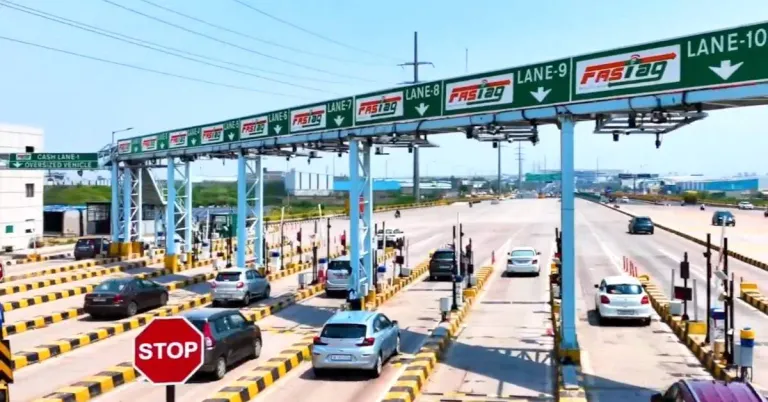
There are a few main benefits of the barrier-less toll plazas. The first and the most obvious one is the reduction in traffic congestion. These plazas eliminate long queues and remove stop-and-go traffic conditions. They will be specifically beneficial during peak traffic hours. Also, the vehicles no longer need to stop for toll payment, which makes highway travel faster. Apart from these, other benefits include fuel savings, faster movement of commercial vehicles, and overall improvement of the highway driving experience.
The National Highways Authority of India (NHAI) has highlighted that, in the first phase, 17 barrier-less plazas will be inaugurated. These will be spread across nine states and, by September 2026, they will become operational. These 17 toll plazas will be located across Gujarat, Delhi, Haryana, Rajasthan, Tamil Nadu, Karnataka, Maharashtra, and Assam. Meanwhile, in the Phase 2 expansion, 108+ additional toll plazas will be inaugurated, and the target has been set for March 2027.
Comments are closed.